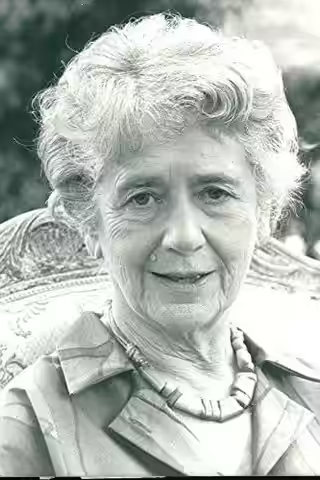
Peggy Ashcroft gives supporting characters a life beyond whatever the plot needs them to do. We value her warmth and intelligence, and the way she makes sympathy possible without making people simpler.
Fi1m perspective
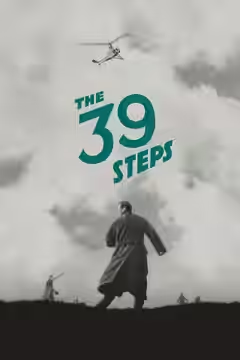
In the crofter’s cottage in Alfred Hitchcock’s The 39 Steps (1935), Peggy Ashcroft makes the chase seem briefly less urgent. As Margaret, the crofter’s wife, she gives us someone worth staying with while the thriller has other business to attend to. We were moved by her warmth here, because it lets us care about someone besides the fugitive. Alongside John Laurie as John the Crofter, she gives a brief encounter a weight that the larger conspiracy hardly needs.
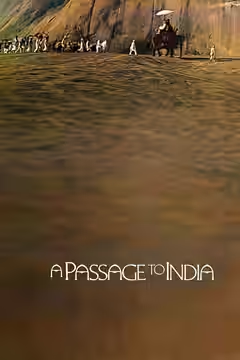
Her screen career was intermittent, with the stage taking much of her attention and John Gielgud and Laurence Olivier among her collaborators there. We need not turn that scarcity into a virtue: there is simply less screen work to explore. The 1970s and 1980s brought more character parts, including Mrs Greville in Sunday Bloody Sunday (1971) and Mrs Moore in A Passage to India (1984). In Mrs Moore, the sympathy remains unsentimental; she does not settle for being a grand old lady.
As Barbie Batchelor, the missionary in The Jewel in the Crown (1984), she has to hold our interest among many other characters. Ashcroft, Art Malik as Hari Kumar and Geraldine James as Sarah Layton keep the individual stories interesting even when the writing grows formal. We care about these people before we have sorted out their significance to the history. That is a considerable help across fourteen episodes, with so many names and stories to hold in mind.
There are limits to what that acting can repair. The series’ slow pace sometimes leaves the drama stranded, and Ashcroft cannot make the wait worthwhile on every occasion. But we would still recommend spending time with Barbie, because the interest in her survives the stiffness of the writing. For a shorter introduction, start with The 39 Steps and see how much she makes of a pause in the chase.
Biography
Dame Peggy Ashcroft was an English actress whose career on stage and screen spanned more than six decades. Born Edith Margaret Emily Ashcroft on 22 December 1907 in Croydon, she trained at the Central School of Dramatic Art and made her professional stage debut in 1926.
She appeared in numerous Shakespeare productions and other classic plays with the Old Vic and elsewhere. Her film roles were fewer but included the crofter's wife in The 39 Steps (1935) and Mrs Moore in A Passage to India (1984), for which she received an Academy Award for best supporting actress. She was appointed DBE in 1956 and died in London on 14 June 1991.