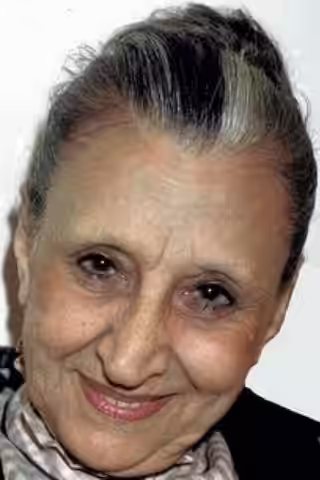
Pupella Maggio gives maternal authority a voice that expects an answer. We rate her for the conviction beneath the noise: in Amarcord, her broad comedy feels like ordinary behaviour inside a demanding household.
Fi1m perspective
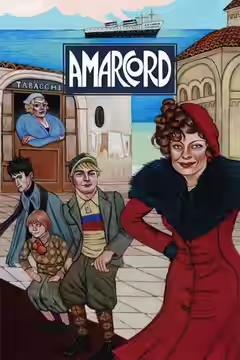
Pupella Maggio's Miranda Biondi expects to be heard, and has little patience for anyone who thinks otherwise. In Federico Fellini's Amarcord (1973), she and Armando Brancia, as Aurelio Biondi, make the household's clamour funny by treating every demand for attention as urgent. We laughed at their refusal to be ignored, because both make this exhausting behaviour seem entirely reasonable to the person doing it. The acting is large, but the reason for it is clear: these people are accustomed to making themselves heard.
Her substantial film work began in the 1960s, with Vittorio De Sica's Two Women (1960) and Nanni Loy's The Four Days of Naples (1962) among the early credits. Theatre remained central, including collaborations with Eduardo De Filippo and Antonio Calenda. She worked across Neapolitan dialect comedy and more experimental projects, even if cinema frequently called on her to play mothers and older women. Those parts can sound restrictive on paper; Miranda gives us little sense of an actor waiting for something better.
Maggio's strength here is that she makes Miranda convincing without reducing the volume. The theatrical scale suits Fellini's domestic scenes, and Brancia supplies a partner with an equally firm belief in his right to be listened to. Neither needs to seem ridiculous for the family to be funny; recognising the behaviour is enough. We do tire of Amarcord's jokes about women, which become wearing in a film otherwise generous towards its townspeople. Maggio gives us a specific person to attend to when the humour threatens to settle for a type.
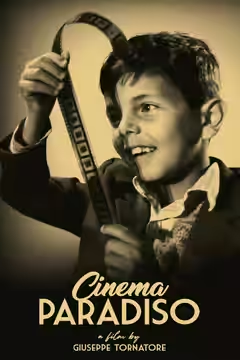
In Giuseppe Tornatore's Cinema Paradiso (1988), she plays the older Maria Di Vita. We recommend the film, though its determination to leave us in tears is sometimes too apparent. Salvatore Cascio and Philippe Noiret make the central friendship persuasive enough to withstand the sweetness, with Maggio among the supporting cast. It is worth an evening, but for a clearer introduction to her comic authority, begin with the Biondi household in Amarcord.
Biography
Pupella Maggio, born Giustina Maria Maggio, was an Italian actress. She was born in Naples on 24 April 1910 and died in Rome on 8 December 1999.
Maggio came from a theatrical family and began her stage career as a child. She became known for her work in Neapolitan theatre, particularly in productions by Eduardo De Filippo, and appeared in numerous films from the 1940s onwards. Her film roles include Miranda Biondi in Federico Fellini's Amarcord (1973) and the elderly Maria Di Vita in Giuseppe Tornatore's Cinema Paradiso (1988). She received the Nastro d'Argento for Best Supporting Actress for her performance in Be Sick… It's Free (1968).