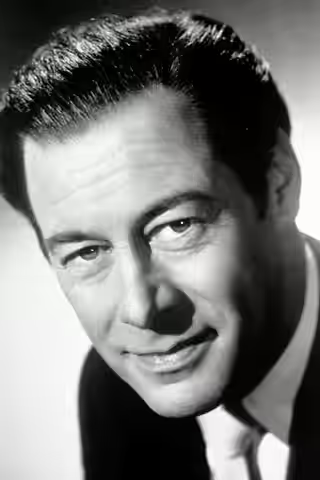
Rex Harrison listens as though he has already written the reply. That tilted, amused attention made him the finest talker in English screen comedy, and his best work is conversation. When the script gives him nothing worth answering, there is not much else.
Fi1m perspective
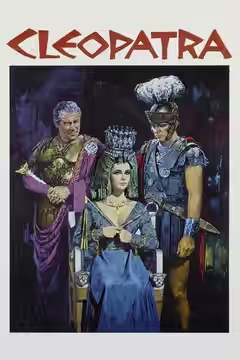
Rex Harrison listens with his head on one side. In Cleopatra (1963) his Caesar hears out every speech in Alexandria as if he had already drafted the answer, and when it comes it is short, dry and faintly bored, which is a reasonable way to sound about a queen delivered in a carpet. The listening is the performance. Other actors of his type wait for their line; Harrison makes you watch him decide whether the line is worth saying.
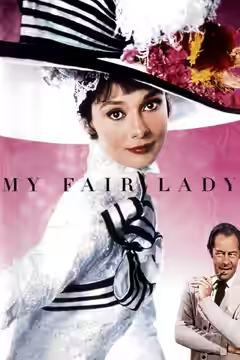
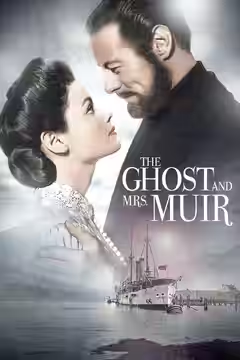
He learned it in repertory at Liverpool from 1924 and spent the 1930s polishing it in light comedy, French Without Tears among them, before the RAF took him from 1942 to 1945. He came back with Blithe Spirit (1945), the first of his Noël Coward parts, and The Rake’s Progress (1945), in which the quizzical, elegant man-about-town became his fixed type: charming, cynical, not to be trusted near anyone’s wife. Hollywood took him for The Ghost and Mrs. Muir (1947), Broadway for Anne of the Thousand Days (1948), and from 1956 he was Henry Higgins, on stage and then in George Cukor’s film of My Fair Lady (1964), talking the songs rather than singing them because, as he put it, "'My Fair Lady' is a play with music, not a musical pageant." He went on alternating stage and screen into the 1980s and was appearing in The Circle on Broadway when he died in 1990.
What works is the talk, and it works best when the writing deserves to be listened to. Joseph L. Mankiewicz wrote speeches, and Cleopatra is a Mankiewicz film for exactly as long as Harrison is in it. We enjoyed those first two hours far more than a four-hour Roman picture has any right to be enjoyed, and it was Harrison doing it: Elizabeth Taylor goes at him at full tilt and he answers like a civil servant correcting a memo, and the lines land because he declines to sell them. When Richard Burton takes over after the interval and plays the same prose straight and loud, you hear how much Harrison’s timing had been hiding.
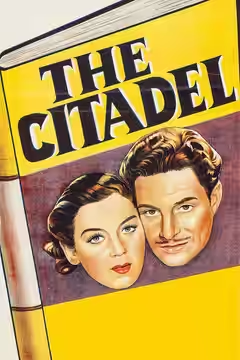
The same manner could work against him. In The Citadel (1938) his Dr Lawford is meant to be the smooth London corrupter of Robert Donat’s idealist, and Harrison is so pleasant to watch teaching Donat’s Manson to charge handsomely for doing nothing that the film’s disapproval seems ungrateful. He could not make a cad unattractive, and the type was narrow: an upper-class Englishman, urbane, a little predatory, always the cleverest man at the table. He had no singing voice to speak of and kept away from Shakespeare, so the parts that asked for more than wit went to other men.
Start with the first two hours of Cleopatra, then The Citadel, where the same manner is used against him and half wins anyway.
Biography
Rex Harrison (5 March 1908 – 2 June 1990) was an English actor. He began his stage career with the Liverpool Repertory Theatre in the mid-1920s and made his West End debut in 1930. He appeared in British films from the 1930s and later worked extensively in Hollywood.
Harrison received critical acclaim for stage and screen roles including Blithe Spirit (1945) and Anna and the King of Siam (1946). He played Julius Caesar in Cleopatra (1963) and reprised his stage role as Professor Henry Higgins in the 1964 film My Fair Lady, for which he won the Academy Award for Best Actor. He was knighted in 1989.