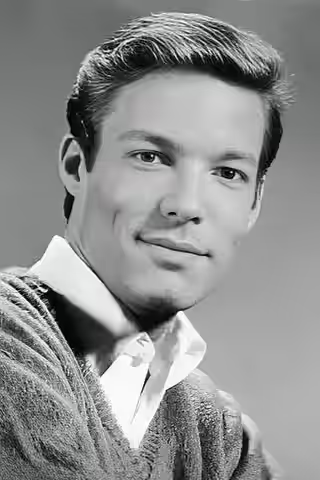
A leading man who needed time. Given a two-hour film he held one handsome expression until the credits; given ten hours of television he could turn a costume into a person, and that is where his reputation rightly sits.
Fi1m perspective
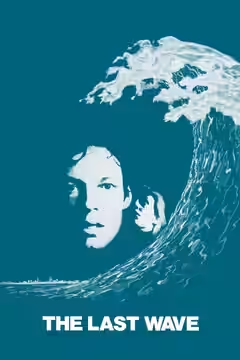
Watch him wake up in The Last Wave (1977). David Burton, a Sydney tax lawyer, has dreamed of David Gulpilil standing in his hallway at night holding out a stone, and the weather over the city has started to behave as if it knows something. Chamberlain's face does what it did in the first scene: a slight frown, a good jaw, a man waiting for someone to explain. Peter Weir's rain unsettled us far more than we expected, and each time we looked to Chamberlain to be as frightened as we were, he was mildly inconvenienced. It is a fine film with its lead as the weak point, and we said so.
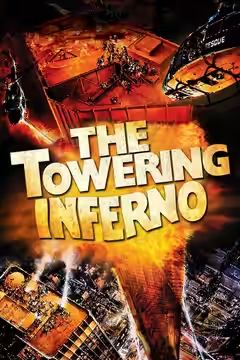
That face had already made him. Dr. Kildare (1961–66) turned him into a television star and a pin-up, and he spent the next decade trying to become something else: England, repertory, Hamlet at Birmingham in 1969, Petulia (1968), The Music Lovers (1971) for Ken Russell. Richard Lester cast him as Aramis in The Three Musketeers (1973) and kept him for two more films, and the charm suited a swordsman. Then came The Towering Inferno (1974), where his Simmons, the contractor who cheapened the wiring, sweats and sneers like a villain in a school play. The features kept asking him for one note and he kept obliging.
The turn was long-form television. Centennial (1978–79), Shōgun (1980) as the pilot John Blackthorne and The Thorn Birds (1983) as Father Ralph de Bricassart made him the king of the miniseries, and we do not quarrel with the title. What read as a single held expression over ninety minutes reads, over ten evenings, as steadiness, and in a period costume that steadiness passes for dignity. He understood the job himself: "It's a very special knack to keep the ideas clear through a whole soliloquy with qualifying asides and pick up the line again. A 10-hour mini-series is similar. You must keep the overall design in your mind while shooting totally out of sequence." That is a stage actor's description of a television actor's craft, and it explains why the theatre and the miniseries served him and the feature film did not.
He carried the adventure-hero manner into King Solomon's Mines (1985), went back to Broadway for revivals, and took guest parts on television into the 2010s. The Kildare image never entirely left him, and there were always critics ready to call him wooden or too pretty, which was unkind and not entirely wrong. If you meet him first in the two films we have reviewed you will wonder what the fuss was about. Give him a week of evenings instead. He was an actor who improved with the running time, which is a rarer gift than it sounds and a hard one to fit inside a cinema.
Biography
Richard Chamberlain was an American actor of stage and screen. Born George Richard Chamberlain on 31 March 1934 in Beverly Hills, California, he died on 29 March 2025.
He rose to fame as the idealistic young doctor in the television series Dr. Kildare (1961–1966). He later appeared in several acclaimed television miniseries, including Shōgun (1980) and The Thorn Birds (1983), and played the first screen Jason Bourne in the 1988 television film The Bourne Identity. His film credits include The Three Musketeers (1973) and its sequel, The Towering Inferno (1974) as Simmons, and The Last Wave (1977).
Chamberlain performed classical stage roles, including Hamlet, and worked in musical theatre. He trained at Pomona College and studied acting with Jeff Corey.