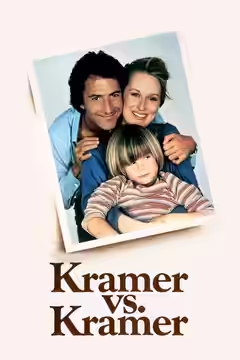
Robert Benton wrote the getaway that made audiences laugh before the bullets came, then spent his career on families, small towns and people learning to look after one another. The quieter films are his best; Kramer vs. Kramer is the one to start with.
Fi1m perspective
A man who has never had to think about looking after a small boy finds that he must, and Kramer vs. Kramer (1979) watches him get it wrong and then, slowly, less wrong. That is Benton's subject in a sentence: care as something an adult has to learn, shown in the detail of doing it. He did not go in for big statements. He went in for the morning after the big statement, when somebody still has to get a child to school.
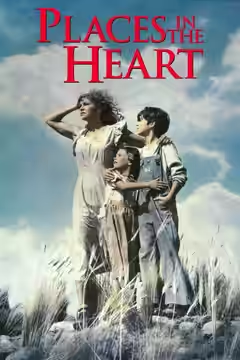
He came to films sideways, from the art director's desk at Esquire, and he arrived with a bang. Bonnie and Clyde (1967), written with David Newman, the first of seven scripts together, lets you enjoy the robbery and then puts a bullet through a face, and Dede Allen's cutting makes the switch land. It is still a shock. It is also a script that cannot see anyone outside its two stars: the clerks are faces, the farmers a cheering chorus, and Blanche is written as a fool so that Bonnie looks cooler beside her, which is mean. Benton began directing with Bad Company (1972), tried the detective film in The Late Show (1977), and found his ground with Kramer. After that came Places in the Heart (1984), Nobody's Fool (1994) with Paul Newman, and later The Human Stain (2003) and Feast of Love (2007), with Billy Bathgate (1991) the one nobody much liked.
He said he had learned to do as little directing as possible, and the results bear him out. Dustin Hoffman and Justin Henry in Kramer look like a father and son who have been left alone in a room, not two actors given a scene, and Meryl Streep does more for the mother than the script does. That film moved us more than we were prepared for, and then it nagged at us, because we noticed how easily it had got us onto the father's side. The mother's dissatisfaction is treated as a problem to be answered before she can be forgiven. It is the same habit as the faceless clerks, thirty years on and much gentler: Benton decides whom we are to like and clears the ground around them.
The usual complaint is that he had no signature to speak of, that beside his louder contemporaries he simply disappears into the story. We think the disappearing was the point, and he knew it. "I am a director of small things," he said, and small things, watched closely, were what he was good at. If you want the fireworks, see Bonnie and Clyde and notice who is missing from it. If you want the man himself, start with Ted Kramer, and keep an eye on his wife.
Biography
Robert Benton was an American screenwriter and film director. He wrote and directed the 1979 film Kramer vs. Kramer, for which he won Academy Awards for Best Director and Best Adapted Screenplay. He also co-wrote the screenplay for Bonnie and Clyde (1967) with David Newman.
Benton began his career in the art department at Esquire magazine before moving into screenwriting. He directed and wrote several other films, including Places in the Heart (1984), for which he won an Academy Award for Best Original Screenplay. His other credits include the screenplay for Superman (1978) and directing Nobody's Fool (1994).
Born in Texas, Benton was married to artist Sallie Rendig from 1964 until her death in 2023. He died in New York City on 11 May 2025.