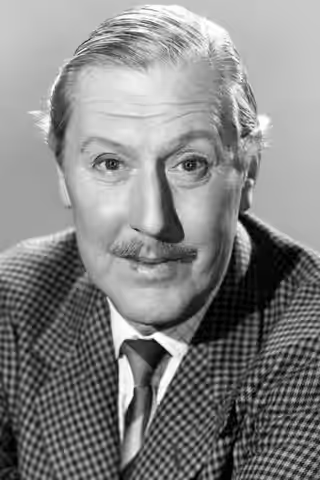
Robert Coote was the Englishman who is sure of himself and wrong: the rich fool, the blimpish officer, the club bore. He played him in supporting parts for forty years, and his Roderigo for Welles shows why he kept getting asked.
Fi1m perspective
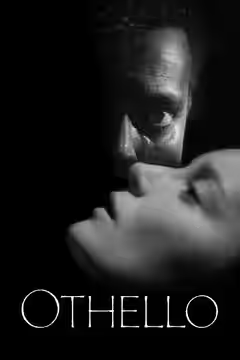
In Welles’s Othello (1951) Robert Coote wears a feathered hat and keeps handing over money. His Roderigo has been promised Desdemona and has paid for her several times, and every time he reappears it is to ask why nothing has happened yet. We laughed at him more than we expected to in a film that is otherwise shadow and dubbed thunder, and the reason is that Coote never lets Roderigo know he is the joke. He asks his question in earnest. The plot needs a rich man who cannot see what is in front of him, and Coote supplies one without once looking at the camera for credit.
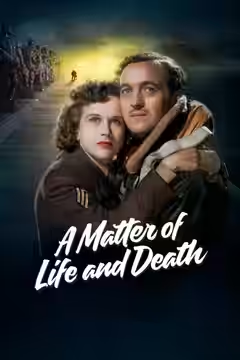
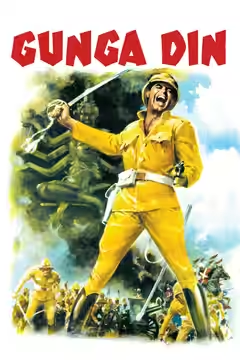
That was his trade. He left school at sixteen for touring repertory, reached the West End in 1931 and Hollywood late in the decade, where Gunga Din (1939) cast him as Sergeant Bertie Higginbotham and fixed the type: the bumbling English soldier who is fond of himself and not much use. He then spent six years in the Royal Canadian Air Force as a squadron leader and came back in 1946 to the same sort of part, starting with Bob Trubshawe in Powell and Pressburger’s A Matter of Life and Death (1946), a film we hold about as high as we hold anything. He was cast alongside David Niven four times, which tells you the kind of picture he was hired for.
The parts were pompous aristocrats and military men, affable or blimpish, and the criticism that follows him is that he never got past them: a supporting player for forty years, rarely billed above the title after his early work. We do not think that is a criticism. Somebody has to be the man at the club who is wrong about everything, and it is harder than it looks; play him too broad and the scene dies, play him too knowing and the joke goes. Coote’s Roderigo gets it right, and that is the scale he worked at, a few minutes at a time.
The stage gave him the part people remember. He originated Colonel Pickering in My Fair Lady on Broadway in 1956 and went on playing him in London, on tour and in the 1976 revival, and four years after the first Pickering he originated King Pellinore in Camelot (1960) for the same writers. Asked about Pickering in 1976, he said: “A dude is an extinct breed these days; dudes go back to the turn of the century, when Englishmen not only wore monocles but always got the girl in the end. Pickering doesn’t do either.” Nor did any part of his we have seen on screen.
His last film part was Oliver Larding in Theatre of Blood (1973), a victim in a Vincent Price horror-comedy, and his last television role came in 1981. If you want to see what he did, go to Othello and wait for the hat. It will not take long, and he does not need long.
Biography
Robert Coote (4 February 1909 – 26 November 1982) was an English actor. Born in London, he was educated at Hurstpierpoint College in Sussex and began his stage career at the age of 16, performing in Britain, South Africa and Australia. He arrived in Hollywood in the late 1930s. His acting career was interrupted by service as a squadron leader in the Royal Canadian Air Force during the Second World War.
Coote appeared in supporting roles in many films, often as aristocrats or British military types. His credits include Gunga Din (1939), A Matter of Life and Death (1946) as Bob Trubshawe, The Ghost and Mrs. Muir (1947), The Three Musketeers (1948) and Othello (1951).
On stage, he originated the role of Colonel Hugh Pickering in the original Broadway production of My Fair Lady (1956–62), for which he received a Tony Award nomination, and reprised it in the 1976–77 revival. He also originated the role of King Pellinore in Camelot (1960–63). He was nominated for an Emmy Award for his performance in the television series The Rogues (1964–65).