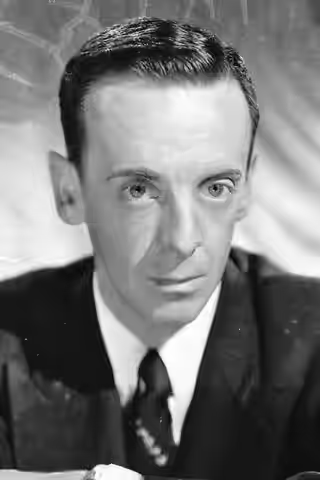
A dancer who acted with his whole body, Robert Helpmann is the exact, slightly chilly presence in some of the best-looking British films of the 1940s and 1950s. He is never naturalistic and he was never trying to be, which is why he lasts.
Fi1m perspective
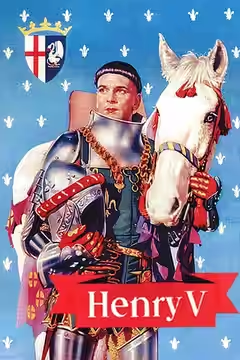
In Henry V (1944), Robert Helpmann and Felix Aylmer play the two bishops as old men who cannot find the right page, and the groundlings in Olivier's Globe laugh at them so we know we may. It is a small part. What we noticed was how much of the joke is in the hands and shoulders: a man fussing at a book with the precision of someone who has spent his adult life knowing exactly where his weight is. Helpmann was a dancer before he was anything else, and on film he never stopped being one.
He came to Britain from Australia in 1932 and joined the Vic-Wells Ballet, the company that became the Royal Ballet, as a principal, partnering Alicia Markova and then Margot Fonteyn under Ninette de Valois. During the war he choreographed as well as danced, and the ballets he made, Hamlet (1942) and Miracle in the Gorbals (1944) among them, were stories rather than patterns, with plots and a lead he could act. From the 1940s he moved into straight theatre, playing Shakespeare at the Old Vic and at Stratford. He said he kept going so that when he left the ballet nobody would say, 'Oh, just a dancer who's got too old'. It reads as a plan, and he followed it.
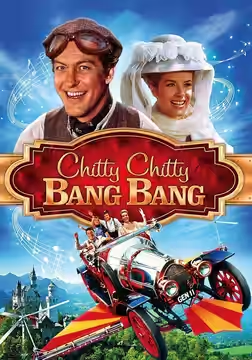
The Red Shoes (1948) is where the two halves of him meet. He plays Ivan Boleslawsky, the company's leading man, and he co-choreographed the ballet at the centre of the film, the stretch in which Powell and Pressburger stop pretending the stage has edges. We had seen it before and it still got at us, because of the painted streets and the shoes that will not stop and a dancer's body pushed until it is the whole point of the film. Helpmann on screen is precise and a little cold, which suits a man whose job is to be watched. Three years later, in Powell and Pressburger's The Tales of Hoffmann (1951), he played four villains in one evening, and in 1968 he was the Child Catcher in Chitty Chitty Bang Bang, the part for which most people know his face. Neither is subtle. Both are remembered the way a child remembers a fright.
What does not work is the voice. His verse-speaking was thought light and not always in step with what the body was doing; his Hamlet of 1944 drew that complaint, and you can hear a little of it in the Ely, where the comedy is all physical and the lines merely arrive. There is also the old charge that he did too many things, dancer, choreographer, actor, director, to be the best at any one. That is probably true and it does not seem to have troubled him. He went home to Australia in 1955 and ran the Australian Ballet from 1965 to 1976. Start with The Red Shoes, then Henry V for the bishops, and do not show the rest to a child before bedtime.
Biography
Sir Robert Helpmann (9 April 1909 – 28 September 1986) was an Australian ballet dancer, actor, choreographer and director. Born in Mount Gambier, South Australia, he began his stage career in Australia before moving to Britain in 1933, where he joined the Vic-Wells Ballet (later the Royal Ballet). He became a principal dancer and formed a celebrated partnership with Margot Fonteyn.
Helpmann appeared in British films from the 1940s onwards, including One of Our Aircraft Is Missing (1942), Henry V (1944) and, most notably, The Red Shoes (1948), in which he played Ivan Boleslawsky and contributed to the choreography. Other screen roles include parts in The Tales of Hoffmann (1951), 55 Days at Peking (1963), The Quiller Memorandum (1966), Chitty Chitty Bang Bang (1968) as the Child Catcher, and Alice's Adventures in Wonderland (1972). He also worked extensively in theatre, creating ballets such as Hamlet (1942) and Miracle in the Gorbals (1944).
Helpmann was appointed co-director and later director of the Australian Ballet (1965–1976). He was made a CBE in 1964 and knighted in 1968.