A supporting actor who made charm look like a plan. Jaffrey played the businessmen and uncles of two film industries, in Britain and in India, and in My Beautiful Laundrette he made a man's greed so sociable that we ended up on his side.
Fi1m perspective
Watch the way Saeed Jaffrey enjoys himself in My Beautiful Laundrette (1985). Nasser Ali is a businessman in Thatcher's Britain who treats making money as the natural thing for a man to be doing, and the film could easily have held him at arm's length. Jaffrey does the opposite. Everything about Nasser is sociable: the voice, the smile that arrives before the sentence, the way he draws people towards his schemes as though he were offering them a drink. Kureishi's script gives him room to be funny without making him a joke about money, and Frears lets us like him while keeping our doubts. We came out of the film fond of a man we had every reason to disapprove of, and it was Jaffrey's plain pleasure in the part that did it.
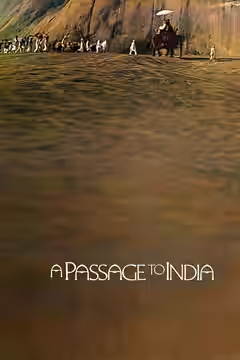
That pleasure was the whole method. He began in radio and theatre in Delhi in the early 1950s, trained in the United States and settled in Britain in 1965, and for a while Western cinema found him small parts. The Guru (1969) came early; Billy Fish in The Man Who Would Be King (1975), opposite Connery and Caine, was the role that made him a face. Then Satyajit Ray cast him as Mir Roshan Ali in Shatranj Ke Khilari (1977), and he had a second career in India to go with the first. The 1980s were the busy decade: Patel in Gandhi (1982), Hamidullah in A Passage to India (1984), The Jewel in the Crown on television, Laundrette, and more than a hundred Bollywood films, often as the figure that industry calls the naughty uncle. He was known for shooting several at once and keeping the detail straight in each.
The complaint is that British producers kept offering him the same man: the urbane Asian in a good suit, the colonial go-between, the charming operator. It is a fair charge against the casting and a poor one against him. His own view of the job was blunt: "It doesn't matter if it's a six-line part. If they offer it to you, take it - enrich it with your background, and everything - so much that people will never forget it." The films bear him out. He made four with Merchant and Ivory, and the directors who did best by him, Ray and Frears among them, were the ones who let the charm and the calculation sit in the same scene rather than choosing one.
He was a supporting actor by trade and, it seems, by temperament, so there is no single film to send a stranger to and say: that is him. Start with My Beautiful Laundrette, where we can vouch for every scene he is in, and then go to Ray. Nasser is a supporting part in a crowded film, and it is the one you remember.
Biography
Saeed Jaffrey was a British-Indian actor whose career spanned film, television, radio and stage over five decades. Born in Malerkotla, Punjab, British India, he studied at the University of Allahabad and the Catholic University of America before beginning his professional work in the early 1960s.
He appeared in numerous British and international productions, including The Man Who Would Be King (1975) as Billy Fish, The Chess Players (1977) as Mir Roshan Ali, Gandhi (1982) as Sardar Vallabhbhai Patel, A Passage to India (1984) as Hamidullah, and My Beautiful Laundrette (1985) as Nasser Ali. His television roles included parts in The Jewel in the Crown (1984) and Tandoori Nights (1985–1987). Jaffrey was appointed OBE in 1995 for services to drama.