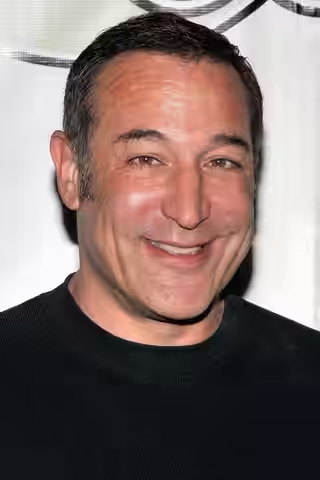
Sam Simon's fingerprints are on the writing staff rather than the page. He ran the early Simpsons writers and insisted the jokes come from people, and the results are among the best television we have reviewed. Which line was his, we cannot always say.
Fi1m perspective
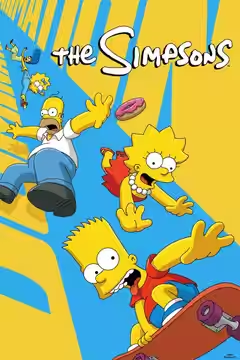
Somewhere in the first few years of The Simpsons (1989), a police chief, a family doctor and a nuclear plant assistant wander into Springfield and never leave. Chief Wiggum, Dr Hibbert and Waylon Smithers were Sam Simon's inventions, and they are the sort of characters a town needs rather than the sort a joke needs: people with jobs and habits who can be put into any episode and relied upon to behave like themselves. That was his approach. He argued for motivation before gags, and the balance our review of the series praises, merciless jokes with real tenderness for the fools making them, is the balance he set.
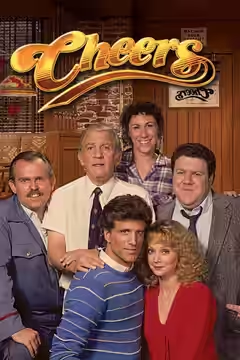
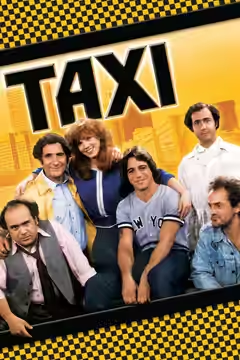
He had learnt it in live action. A spec script for Taxi (1978) got him a staff job and, by the final season in 1983, the running of the show; he then wrote and produced on the early seasons of Cheers (1982) before James L. Brooks, who had employed him on Taxi, brought him in to develop The Simpsons with Matt Groening. Simon ran the series for its first two seasons and supervised the first four, and left in 1993. We score Cheers and The Simpsons at 88 and Taxi at 86, and none of our reviews names him, which is the trouble with judging a sitcom writer. The work belongs to the whole writing staff.
Simon's method made that literal. On The Simpsons the whole staff rewrote every script, so a good line belongs to nobody and a good character belongs to everyone. It makes good television and it makes credit hard to settle, and the reported quarrels over control and credit in those early seasons look, from here, like the bill for it. We will say this for the method: watching Taxi, we laughed at the small troubles, Judd Hirsch and Marilu Henner losing arguments they cared about, and sat stony through the broader jokes, and that gap between a character's embarrassment and a punchline is the one Simon spent his career insisting on. We cannot tell you which of those scenes were his. We can tell you which side he was on.
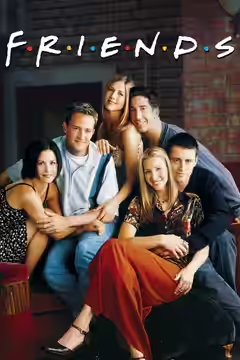
After 1993 he directed episodes of Friends (1994) and The Drew Carey Show and created The George Carlin Show (1994), then largely stepped away from television in the 2000s. Our Friends review finds the writing strains and does not mention him, which is fair; a director of single episodes on a series already running does not get to change much. His own account of The Simpsons was modest: he said he had hoped for thirteen episodes his friends would like. He got rather more than thirteen, most of them written by other people to a plan he drew up, and the plan held.
Biography
Sam Simon was an American television writer, producer and director. He studied at Stanford University, where he worked as a newspaper cartoonist, and after graduating became a storyboard artist and writer at Filmation Studios. He submitted a spec script for the sitcom Taxi (1978), which was produced, and later became the series' showrunner.
Simon wrote and produced for Cheers (1982) and other programmes before co-developing the animated series The Simpsons (1989) with Matt Groening and James L. Brooks. He served as executive producer and showrunner for the first two seasons and creative supervisor for the first four, and is credited with shaping much of the show's early tone and sensibility. He left the series in 1993 but retained an executive producer credit. He also directed episodes of series including Friends (1994) and The Drew Carey Show (1995).
In later years Simon became known as an animal rights activist and philanthropist.