Seth MacFarlane's defining habit is the cutaway: the joke that interrupts a scene instead of finishing it. It made Family Guy funny and has kept it from being more, and on the cinema screen it has served him less well with every film.
Fi1m perspective
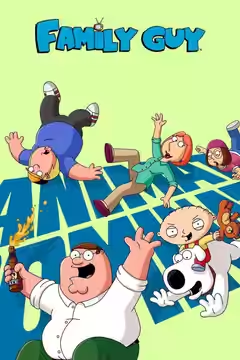
Stewie Griffin is one year old and speaks like a clipped English gentleman of about 1955, and the voice is Seth MacFarlane's. So is the wheezing bray of his father, the dry baritone of the dog and the leer of the neighbour. He can do four voices in one scene and make each a person. Then there is the cutaway. Family Guy starts a story, gets bored, cuts to something that happened to Peter once, or never, and cuts back. It has done this since 31 January 1999, and everything else he has made answers for the habit.
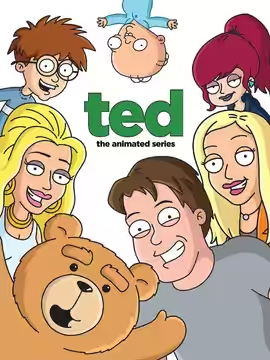
He came out of Hanna-Barbera, drawing on Johnny Bravo and Dexter's Laboratory, and Fox gave him Family Guy at 25. It was cancelled after three seasons and brought back in 2005 because the DVDs sold. American Dad arrived the same year, The Cleveland Show in 2009, and by about 2011 he had stepped back from the weekly writing to try films: Ted (2012), A Million Ways to Die in the West (2014), Ted 2 (2015). Since 2017 he has written, directed and starred in The Orville, a live-action space series.
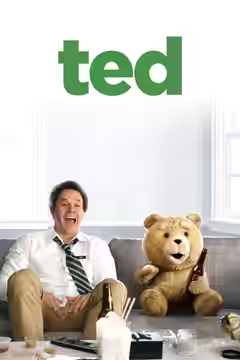
The films are where the habit shows. Ted has a premise you could put on a beer mat and about seventy good minutes, and the best are throwaways: a run of guesses at a woman's name that gets worse with every attempt. We laughed, and then felt slightly ashamed of ourselves, which is the effect MacFarlane wants and gets. But Jeff Freeman cuts to flashbacks and fantasy inserts the way the cartoons do, and on a cinema screen the cutting looks nervous. Michael Barrett lights every room the same. It does not look like a film because its maker was still making television.
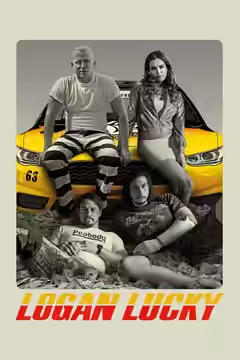
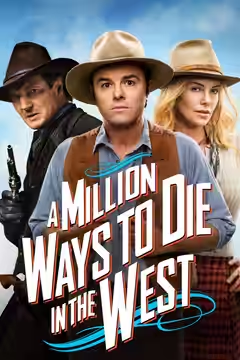
A Million Ways to Die in the West is worse. MacFarlane plays Albert himself, a modern whiner in a Western whose complaints arrive expecting us to agree with them. Writing again with Alec Sulkin and Wellesley Wild, he returns to flatulence jokes until we were bored, and Charlize Theron's ease only shows the strain in his. For hire he is no better. His Max Chilblain in Logan Lucky (2017), a British energy-drink millionaire with an accent from nowhere, belongs to a broader film, and Steven Soderbergh's gets worse every time he appears. He is funnier when we cannot see him.
Which is why the Brian and Stewie episodes matter. When Family Guy gives them an episode to themselves the cutaways thin out, a story turns up and the ending is earned rather than reached. They prove MacFarlane and his writers can hold a scene for longer than a minute. We have not reviewed The Orville, but a space opera played straight is a man testing how long he can stay in a room before cutting away. Most weeks on Family Guy, he chooses not to find out.
Biography
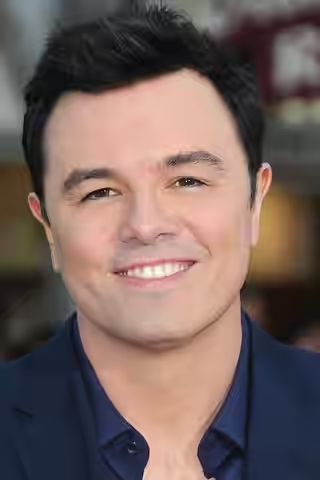
Seth MacFarlane is an American actor, animator, writer, producer and director. Born on 26 October 1973 in Kent, Connecticut, he graduated from the Rhode Island School of Design with a degree in animation.
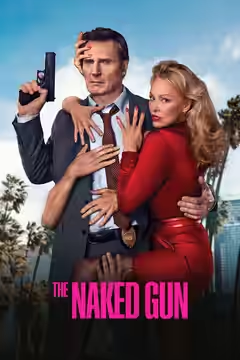
He created the animated series Family Guy (1999–), voicing characters including Peter Griffin, and has provided voices in films such as Ted (2012) and Ted 2 (2015). As an actor he appeared as Max Chilblain in Logan Lucky (2017) and voiced Johann Krauss in Hellboy II: The Golden Army (2008). He produced The Naked Gun (2025).
MacFarlane has also directed A Million Ways to Die in the West (2014) and co-created series including American Dad! (2005–).