Sharon Horgan writes women who say the cruellest thing available and then wait to see what it does. At its best, in Catastrophe, that makes a comedy about a couple that is quick, filthy and honest; the people round the edges are drawn thinner.
Fi1m perspective
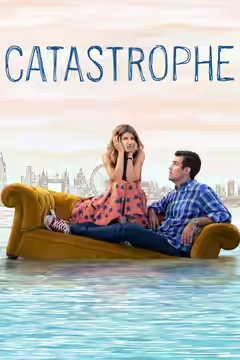
Sharon Morris rings a man she spent a week in bed with and tells him she is pregnant. That is the start of Catastrophe (2015), and the way Horgan plays it is the way she writes: no apology, no plea, a fact put on the table and then a pause to see what he does with it. She gives her women the sharper tongue and the shorter temper in any room, and then watches to see whether they get away with it. She has put the method plainly herself: "I think the best comedy is tragicomic."
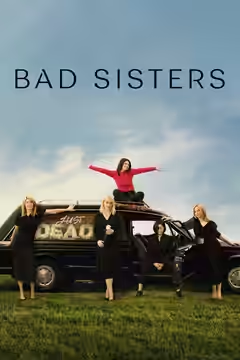
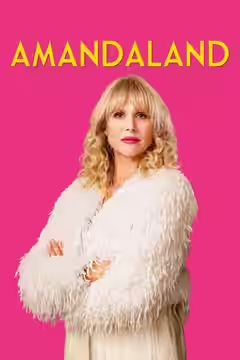
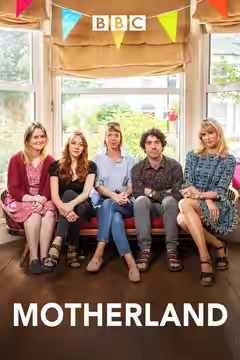
She began in the early 2000s acting and writing sketches, and the sketches were a way of getting noticed as an actor. The turn came with Pulling (2006), co-created and co-written with Dennis Kelly, in which she played Donna, a single woman making bad decisions in full knowledge. Catastrophe, written with Rob Delaney, took the same instinct into a marriage and ran for four series to 2019. Since then she has been behind the camera as often as in front of it: Divorce (2016), made in America with Sarah Jessica Parker in the lead; Motherland (2016), co-created, about middle-class parenting with the varnish off; Bad Sisters (2022), in which she acts again, as Eva Garvey, and adds a thriller plot to the family comedy; and Amandaland (2025), which she created and Lucy Punch carries.
What she does better than most is refuse to soften. Her mothers are not saintly and her wives are not wise, and she writes them as people who would rather be right than liked. In Catastrophe this works because Delaney is written with the same care: Rob apologises with his whole body and Sharon does not apologise at all, and each of them waits to hear what the other will say next. We laughed through the first series and were caught out by how much the later ones stung; the jokes stayed as quick as ever while the marriage got heavier underneath them, and nobody on screen announced the change. She has said that notes come back asking her to soften her women's edges. Nothing we have seen suggests she has taken them.
The weakness is always at the edges. In Catastrophe everyone outside the couple speaks in the couple's rhythm, so the world can feel like an echo of the marriage; Mark Bonnar's Chris is the one supporting part written with the leads' care, and Ashley Jensen's Fran and Daniel Lapaine's Dave are thinner. Amandaland has the same shape: Punch and Joanna Lumley are sharp, and the wider ensemble takes more effort to feel like a group. Horgan writes two people in a room superbly and has not yet shown the same interest in the third.
Start with Catastrophe, and watch the two of them in the kitchen. If that holds you, most of her work will. If you catch yourself wondering about the friends, you have found her limit early, and she may have too.
Biography
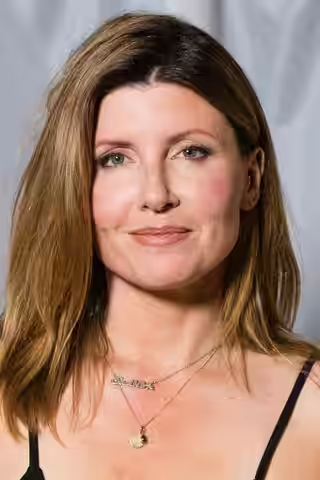
Sharon Horgan is an Irish actress, writer, director, producer and comedian. She was born on 13 July 1970 in Hackney, London, and holds Irish citizenship. She graduated from Brunel University with a degree in English and American Studies.
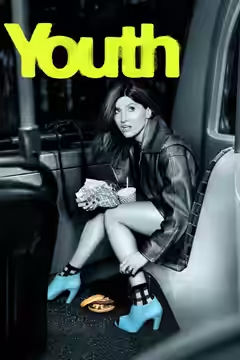
Horgan created and starred in the comedy series Pulling (2006–2009) and co-created, co-wrote and starred in Catastrophe (2015–2019). She created Bad Sisters (2022–2024), in which she also stars as Eva Garvey, and created the spin-off series Amandaland (2025). She created, wrote and stars in the series Youth (2026). She also created the HBO series Divorce (2016–2019).
Her work has earned multiple awards, including a BAFTA TV Award for Best Comedy Writer for Catastrophe (with Rob Delaney) in 2016 and a BAFTA for Best Drama Series for Bad Sisters.