Steven Conrad writes disappointed men with enough care to make their foolishness matter. We rate his awkward comedies most when the actors can soften the peculiar dialogue; the mysteries and repeated humiliations are less dependable.
Fi1m perspective
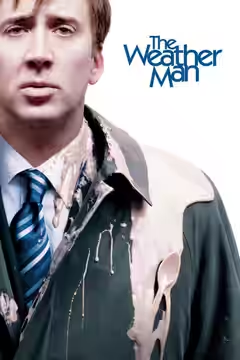
In The Weather Man (2005), Nicolas Cage wipes away food thrown by strangers and carries on. Conrad gives him a well-paid job reading the weather and a family he cannot understand. Gore Verbinski directs, and the father-and-son scenes with Cage and Michael Caine give the film more feeling than the repeated indignities. Conrad is interested in what happens when a man expects a better life without knowing how to behave in the one he has.
The move towards directing his own writing runs from The Promotion (2008), which he also edited, to the spy series Patriot (2015). But the peculiar talk and unhappy men are not the whole of his writing. In Wonder (2017), scripted with director Stephen Chbosky and Jack Thorne, he helps give Auggie a quick, dry humour. Julia Roberts's quiet school-gate scene is evidence that the writing can also leave an actor alone. The film is warm and funny, but its predictable story limits what it offers adults.
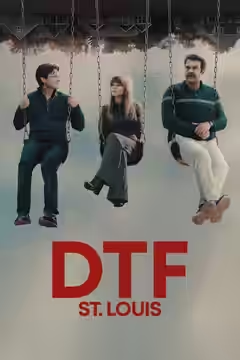
In DTF St. Louis (2026), he creates, writes and directs a suburban murder mystery about men exploring affairs through a dating app. Jason Bateman and David Harbour make their friendship convincing, while Linda Cardellini gives the central triangle comic force. We were more moved than we expected by Harbour's Floyd, because his wish for company feels painfully ordinary. Conrad's attention to that need makes the series worth the patience its investigation requires.
Cinematographer James Whitaker and production designer Laura Fox give sex and betrayal banal Midwestern surroundings, which makes both funnier. Conrad lets the setting explain some of the dissatisfaction rather than giving all the work to dialogue. The most persuasive emotional work still comes from the actors rather than Alex Wurman's music.
The writing is less reliable when it pushes for a reaction. In The Weather Man, the daughter's humiliation is repeated until it becomes a gag, while Hope Davis is left making a person out of an ex-wife written chiefly to be wanted back. In DTF St. Louis, coarse jokes and tenderness do not always sit comfortably together, and some of the strange dialogue sounds laboured. Start with the series for Harbour and Bateman, rather than for a pressing need to know who did it.
Biography
Steven Conrad is an American screenwriter, director and producer. Born in Fort Lauderdale, Florida in 1968, he briefly attended Florida State University before transferring to Northwestern University.
At the age of 19 he sold his first screenplay, Wrestling Ernest Hemingway (1993). His later screenplays include The Weather Man (2005), The Pursuit of Happyness (2006), The Secret Life of Walter Mitty (2013) and Wonder (2017). He wrote and directed the feature The Promotion (2008) and created the series Patriot (2015–2018) and Perpetual Grace, LTD (2019).
Conrad wrote and directed the 2026 HBO miniseries DTF St. Louis.