Sylvia Sidney spent the 1930s playing the poor girl things are done to, and made the part worth watching by refusing to ask for pity. Fifty years later, in Tim Burton's films, the same unsparing face turned out to be funny.
Fi1m perspective
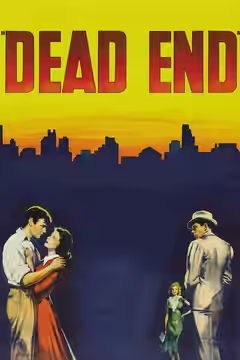
Watch Sylvia Sidney in Dead End (1937) while somebody else is talking. Lillian Hellman's script gives Joel McCrea the speeches about how slum streets make criminals, and gives Sidney's Drina, a shop girl on strike trying to keep her kid brother off the corner, rather less to say. It does not matter. Her face is worn and decent and quick to anger, and she puts more into one look than the script hands her in a page. That was the whole of her method, and for most of the 1930s it was what Hollywood paid her for.
She was on Broadway at sixteen in 1926 and in films by the end of that decade, and City Streets (1931) made her a star at Paramount. What followed was a long run of leads in social dramas and crime films: two for Fritz Lang, Fury (1936) opposite Spencer Tracy among them, one for Alfred Hitchcock, and several with George Raft as her screen partner. The parts were nearly all the same part. You Only Live Once (1937) and Dead End came out the same year and could have swapped heroines without much rewriting. The studios saw a girl who suffered well and kept casting her to suffer.
The complaint is fair, and it misses what she did with the type. She did not play the working girl as a victim; she played her as someone too busy to be one, and the anger was what made the decency mean anything. We spent McCrea's speeches in Dead End watching her instead, and the case that sounded like a pamphlet in his mouth was plainly true in her face; it was the one stretch of the film that moved us. Bogart walks off with that picture, and our review says so, but it is not her fault. She is top billed and the script left her a look at a time.
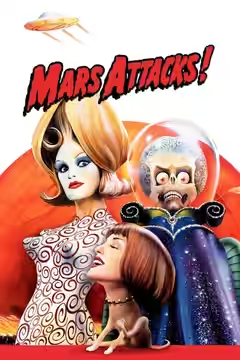
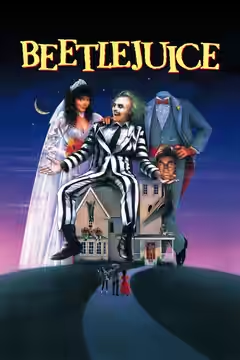
She went back to the stage in the 1950s and did not return to films until Summer Wishes, Winter Dreams (1973), a supporting part as a mother in a family drama. Then came Tim Burton. In Beetlejuice (1988) she is Juno, caseworker to the recently dead, the voice gone to gravel after a lifetime of cigarettes, the manner of a civil servant who has heard every excuse. She said of the script, "I turned it down so many times because I couldn't understand the script," and she plays it as though she understood it perfectly: dry, unsentimental, and never once winking at the audience. Burton wrote Grandma Norris in Mars Attacks (1996) for her, and it was her last film.
The two performances we would send a reader to are fifty-one years apart. Start with Drina, then Juno. The eyes are the same, the impatience is the same, and neither woman ever asks you to feel sorry for her.
Biography
Sylvia Sidney was an American actress whose career in stage, film and television spanned more than seventy years. Born Sophia Kosow in the Bronx, New York, she rose to prominence in the 1930s with numerous leading roles in Hollywood films.
She received an Academy Award nomination for Best Supporting Actress for her performance in Summer Wishes, Winter Dreams (1973). In later decades she appeared in films including Damien: Omen II (1978) and Mars Attacks! (1996), and on television in series such as Starsky & Hutch and The Love Boat.
Sidney is known to later audiences for her role as Juno in Tim Burton's Beetlejuice (1988), for which she won a Saturn Award for Best Supporting Actress.