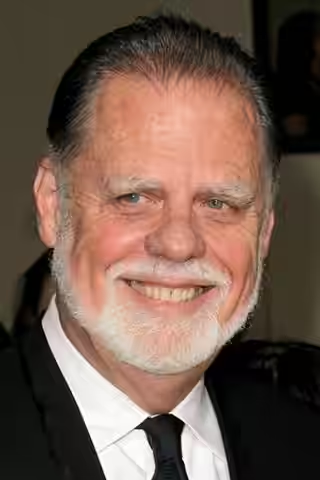
Taylor Hackford is at his best when he is standing back: from Ray Charles at a piano, from James Brown on a stage in Kinshasa. When he steps in to tell the story around the music, the films get longer and plainer.
Fi1m perspective
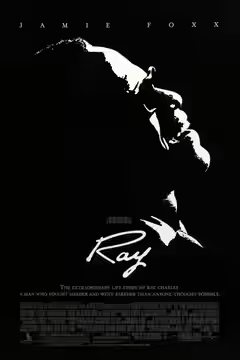
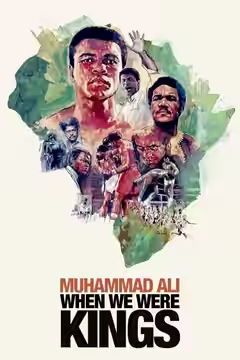
Watch what happens when Jamie Foxx sits down at a piano in Ray (2004). The scene around him has been busy with contracts and managers and women, and then a song starts and the camera settles. Hackford does not cut to the crowd, does not swoop, does not remind you he is there. The same instinct runs through When We Were Kings (1996), which he produced and helped to cut from Leon Gast's footage: James Brown drenched and shouting on a stadium stage in Kinshasa, and the film content to let him finish.
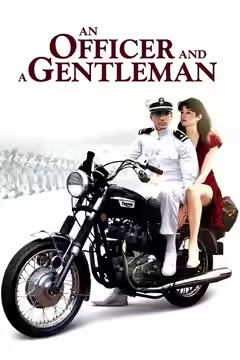
That instinct is where he comes from. Hackford started in public television in Los Angeles, at KCET, making documentaries and music programmes, and by 1987, when he made a documentary about Chuck Berry, he already knew how to stand back and let a musician be difficult. The features began with The Idolmaker (1980). An Officer and a Gentleman (1982) made his name, and some critics still file it under melodrama. Then came Blood In Blood Out (1993), Dolores Claiborne (1995) and The Devil's Advocate (1997), Ray in 2004 and Parker in 2013. We have not reviewed most of them, so we will not pretend to weigh them here; the two we have are enough to see the pattern.
He has said the director's job is to give a sense of music without drawing attention to itself, and on that count he delivers. He is good with actors too. Foxx is the reason Ray works, and Hackford builds the cast outward from him rather than crowding him. The trouble is everything between the songs. Ray tells the life the way biopics usually do, one contract, one hit and one relapse at a time, and at 152 minutes the relapses start to outnumber the hits. He is better when he is out of the way, and the films suggest he knows it, which does not stop him stepping in.
The moment of his we keep coming back to is not one he directed. In When We Were Kings, B.B. King sits down to play and the crowd goes quiet for him, and so did we, because the film had been an hour of Ali talking and this was the first time anyone on screen stopped. Hackford and the other editors cut the songs against the training so the whole picture moves at the speed of a set list, and that silence is the one pause in it. It is the best thing on his record, and it is a documentary he did not shoot.
"I’m a storyteller," he has said. "I’d rather have an audience get caught up in a story." We believe him. It is just that the parts of his films we remember are the parts where the story stops and someone plays.
Biography
Taylor Hackford is an American film director and producer. Born on 31 December 1944 in Santa Barbara, California, he began his career in public television at KCET in Los Angeles, where he produced and directed documentaries and music programmes. He won the Academy Award for Best Live Action Short Film for Teenage Father (1979).
Hackford's feature directorial credits include An Officer and a Gentleman (1982), Against All Odds (1984), White Nights (1985), Bound by Honor (1993), Dolores Claiborne (1995), The Devil's Advocate (1997), Proof of Life (2000) and Ray (2004). He served as producer and editor on the documentary When We Were Kings (1996), which won the Academy Award for Best Documentary Feature. He was president of the Directors Guild of America from 2009 to 2013.