A serial hero built like a statue and a Western heavy whose stare did most of the acting. Tyler was never a major studio's idea of a leading man, but in the right part he was hard to look away from.
Fi1m perspective
Put Tom Tyler in a cape and he does not smirk. That was the whole job in The Adventures of Captain Marvel (1941), the first time anyone tried to make a comic-book superhero into a film, and it is harder than it sounds: a man had to stand in front of a cheap set, be shot at, fly on wires, and behave as if all of this were serious. Tyler did. He was tall, heavily muscled, and he played the hero with an earnestness that never once winked at us, which is why the serial still works and most of its imitators do not.
He had come up the long way. He was an extra and a prop man before FBO gave him a series of silent Westerns from 1925, and he spent the 1930s on Poverty Row, at Syndicate and Monogram, at Reliable, at Victory, in pictures made in days for very little. The early 1940s were his best stretch: the Three Mesquiteers films at Republic alongside Bob Steele, then Captain Marvel, then The Phantom (1943), his last serial lead. After 1943 the starring parts stopped. He became a supporting player and then a bit player, often for John Ford, who used him six times, and he kept working until his death in 1954.
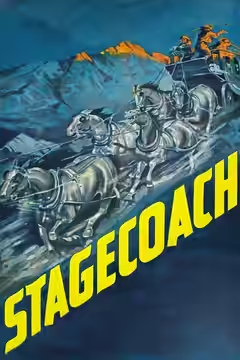
The curious thing is that the heavies outlast the heroes. As Luke Plummer in Stagecoach (1939) he barely speaks, and he does not need to; the stare does it, flat and unblinking, and we found him more frightening in those few minutes than any of his good guys are reassuring. Universal cast him as Kharis in The Mummy's Hand (1940) partly because he looked the part, and looking the part was his real gift. The trouble came when he had to talk. His delivery in the sound era was stiff and close to monotone, and the love scenes in the cheaper Westerns are painful, a big man reciting. He was better when he had nothing to say.
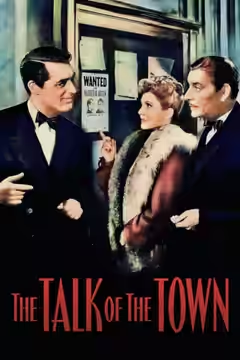
The A-pictures did not know what to do with him. We gave The Talk of the Town (1942) a 75, and Tyler is in it as Clyde Bracken, and our review does not mention him at all. That is the second half of his career in one sentence: present, useful, unnoticed. See Captain Marvel for the hero and Stagecoach for the villain, and be patient with the dialogue in between.
Biography
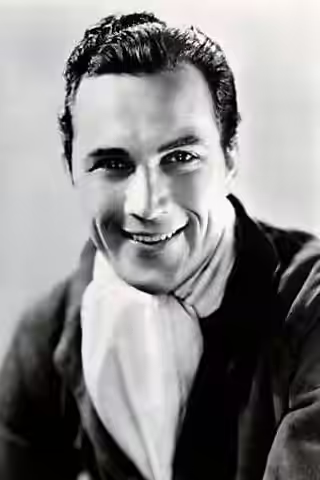
Tom Tyler (born Vincent Markowski) was an American actor who appeared in silent and sound films from the 1920s to the 1950s. He began his career as an extra and stuntman before starring in low-budget Westerns for FBO under his stage name.
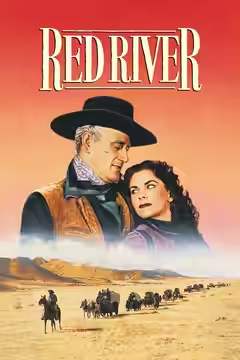
Tyler is known for lead roles in Western series and for portraying Captain Marvel in the 1941 Republic serial The Adventures of Captain Marvel and the Phantom in the 1943 serial The Phantom. He took supporting parts in larger productions, including Luke Plummer in John Ford's Stagecoach (1939), uncredited roles in Gone with the Wind (1939) and The Grapes of Wrath (1940), and further appearances in films such as The Westerner (1940), They Were Expendable (1945), Red River (1948) and She Wore a Yellow Ribbon (1949). He also worked in television Westerns in the early 1950s. Tyler was briefly married to actress Jeanne Martel.