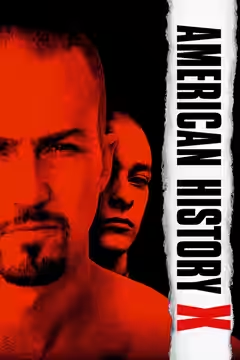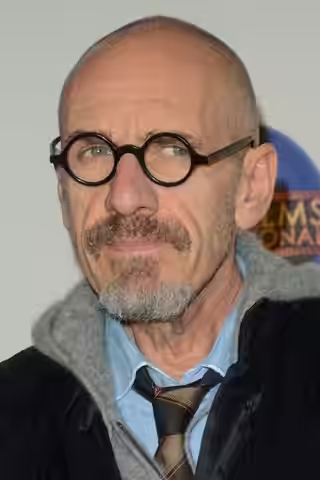
Tony Kaye can make a face hold our attention without a word of explanation. We rate that confidence, though American History X shows how readily his forceful direction can become overstatement.
Fi1m perspective
In the wordless passages of American History X (1998), a face or a group of bodies holds the screen without anyone explaining what we should think. Tony Kaye, directing and shooting his feature debut, is confident enough to let us look. We were unsettled by Edward Norton's Derek because his charisma makes the hatred harder to dismiss as somebody else's problem. Kaye gets a disturbing performance, but keeps photographing Derek as though Norton's presence needed further emphasis. The film is worth seeing, with reservations about how insistently it tells us what matters.
The trouble becomes clearer when people start explaining themselves. David McKenna's screenplay turns too many of them into speakers for a position, then hurries through changes of belief that need time to become convincing. Kaye's emphatic compositions cannot make those changes feel earned, and sometimes give the lecturing more weight than it deserves. We want to watch these people hesitate, contradict themselves and struggle with what they have learnt. Too often, the film is already steering them towards the next lesson.
Kaye began in British advertising and music videos in the 1980s, but spent years filming the black-and-white documentary Lake of Fire (2006). Its sustained, even-handed examination of abortion in the US suggests a patience that American History X could have used. Detachment (2011), starring Adrien Brody, returned him to narrative features through the American education system. The satirical The Trainer (2024) followed a further stretch focused on commercials and videos.
For a first encounter with Kaye, we would choose American History X, provided the attraction is Norton's disturbing performance rather than the promise of a convincing account of how beliefs change. We would also give its silent passages more attention than its speeches. Do not expect the screenplay to be as persuasive as the actor.
Biography
Tony Kaye is an English director, cinematographer, producer and screenwriter of films, music videos, advertisements and documentaries. Born on 8 July 1952 in London, he began his career in advertising and music videos before making his feature debut with American History X (1998), on which he also served as cinematographer.
Kaye directed the documentary Lake of Fire (2006), about the abortion debate in the United States, and the drama Detachment (2011), starring Adrien Brody. He is also known for music videos including 'Runaway Train' by Soul Asylum and 'God's Gonna Cut You Down' by Johnny Cash. Kaye disowned the released version of American History X.