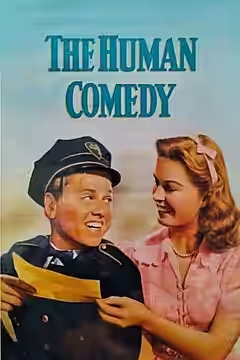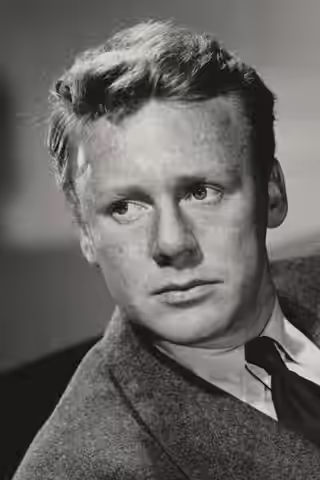
The red-haired soldier MGM put in front of wartime audiences again and again. Johnson was pleasant, earnest and easy to like, and the studio rarely asked him for more; the few times somebody did, he had more to give.
Fi1m perspective
Put Van Johnson in uniform and he looks like the boy who writes home every week. Red hair, freckles, a grin that arrives a beat before the line, and no sense that anything in the world means him harm. MGM saw this in 1942 and used it for twelve years. In The Human Comedy (1943) his Marcus Macauley sits in an army camp and tells a friend about the town he came from, in a scene written as a hymn to the place and played as one. We watched it wanting him to hesitate, to be embarrassed by his own sincerity for even a second, and he never is. That is partly Clarence Brown's direction and partly a young actor who had not yet been given a reason to doubt a line.
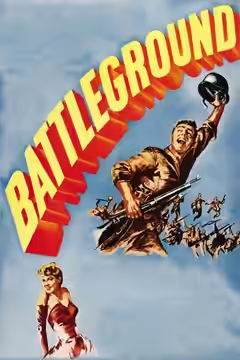
He had come up as a chorus dancer and understudy on Broadway in the 1930s, standing behind Gene Kelly among others, and passed briefly through Warner Bros. before MGM signed him. A Guy Named Joe (1943) made him a star, after a serious car accident during production that might have ended things instead. From then on he was the soldier, the sailor, the bomber pilot: Thirty Seconds Over Tokyo (1944), Two Girls and a Sailor (1944), later Battleground (1949). The bobby-soxers called him the Voiceless Sinatra, which tells you what he was for. He made four films each with June Allyson and Esther Williams, and Spencer Tracy, who made two with him, took his side. He would describe the studio later as a little kingdom where all anyone had to do was inhale, exhale and be charming.
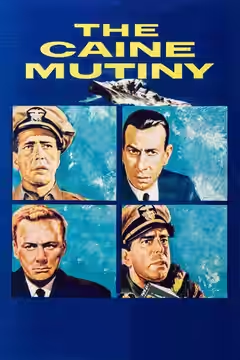
The case for him as an actor rather than a face rests on the dramatic parts, and critics have been steady about which ones: Thirty Seconds Over Tokyo, and after he left MGM, The Caine Mutiny (1954), where he insisted the scars from the accident stay visible on screen. What he could do, when a director let him, was show a decent man frightened, and he was better at the fear than the decency, because the decency cost him nothing. The complaint, then and since, is that the studio seldom let him, and he knew it. "How long can you go on being the boy next door?" he asked in later years.
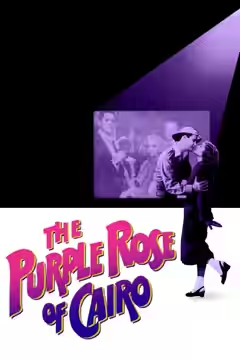
He left MGM in 1954, the year of Brigadoon with Kelly, and worked in films, on television and on stage for nearly four more decades. The one late part we have written about is Larry in The Purple Rose of Cairo (1985), a small role in a film whose supporting players we found thinly drawn, about a woman who escapes into the pictures, which is what he had been made for. See The Human Comedy and you will see exactly what a studio wanted in 1943. Whether that was all he had is a question MGM never got round to, and he never stopped asking it.
Biography
Van Johnson (1916–2008) was an American actor, singer and dancer. He began his career on Broadway in the 1930s before making his film debut in the early 1940s.
He became a major star at Metro-Goldwyn-Mayer during and after the Second World War, appearing in musicals and war films including Thirty Seconds Over Tokyo (1944), Battleground (1949), Brigadoon (1954) and The Caine Mutiny (1954). Later credits included guest roles in series such as Murder, She Wrote and Batman, and a supporting part as Larry in Woody Allen’s The Purple Rose of Cairo (1985).