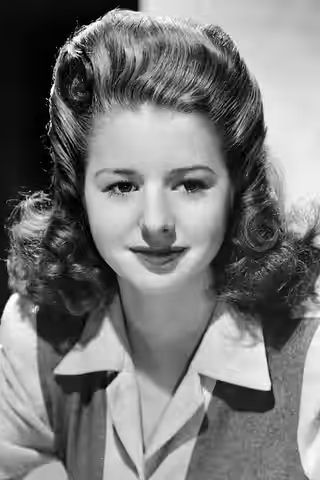
The knowing child of the MGM comedies: a younger sister who has heard everything the grown-ups said and repeats the worst of it. Hollywood used her for a decade and stopped at sixteen. On the evidence we have, too early.
Fi1m perspective
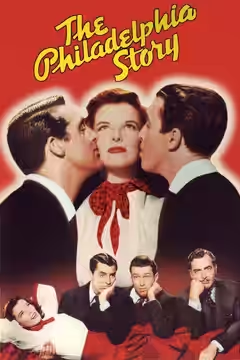
In The Philadelphia Story (1940) she is Dinah Lord, the younger sister in a house full of adults behaving badly, and she gets a song, 'Lydia the Tattooed Lady', which is not the sort of thing a well-brought-up child of Philadelphia society is meant to know. That was her trade. Through the late 1930s and into 1940 Virginia Weidler played the precocious younger sibling, the child at the edge of the frame who has listened to every word and has an opinion about most of them. Hepburn, Grant and Stewart carry that film, and we said so; the child is the one who keeps reminding you the household has a witness.
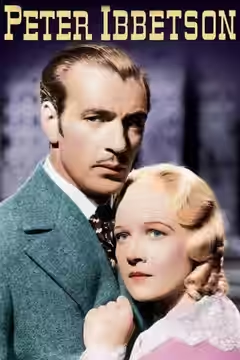
The career ran shorter than the reputation suggests. She began in films in 1931, had her first credited part in 1934, and spent her early years under contract at Paramount with frequent loan-outs to RKO; Peter Ibbetson (1935), in which she played Mimsey, comes from that period. In 1938 she moved to MGM and the parts grew and got funnier: Little Mary, Norma Shearer's daughter, in The Women (1939); Young Tom Edison (1940); four films with Mickey Rooney. Everything that matters happened in 1940, and by Best Foot Forward (1943) she was sixteen and finished.
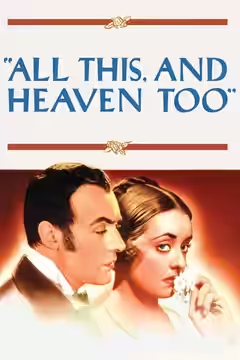
What she did well is easier to see in a drama than in a comedy, because there the knowingness has a cost. In All This, and Heaven Too (1940) she is Louise, the eldest daughter, old enough to understand what her mother is and young enough to be hurt by it every time. It is a 141-minute film with a good deal of waiting in it, and Louise is the reason we kept watching the family rather than the clock. We found ourselves looking at her when Bette Davis was speaking, and the reason is simple: she does not act being hurt, she fails to hide it, and a child failing to hide something is harder to watch than an adult performing it.
The comic child is a part with a short life, and Weidler's standing fell away as she grew into her teens; the later pictures were not well received, and Best Foot Forward was the last of them. We cannot judge those here. What the two films we have reviewed show is a performer who understood that a child in a grown-up picture is funniest, and saddest, when she does not ask to be looked at.
Start with The Philadelphia Story, where the company is best and the film is very good. Go on to All This, and Heaven Too only if you have the 141 minutes and the patience, and then watch Louise.
Biography
Virginia Weidler was an American child actress who appeared in Hollywood films from the early 1930s to 1943. Born Virginia Anna Adelheid Weidler on 21 March 1927 in Eagle Rock, Los Angeles, she made her screen debut in 1931 and received her first credited role in 1934. She worked under contract to Paramount before moving to Metro-Goldwyn-Mayer in 1938.
Weidler is known for her supporting roles in several notable productions, including The Women (1939) as Little Mary, All This, and Heaven Too (1940) as Louise, and The Philadelphia Story (1940) as Dinah Lord. Her final film was Best Foot Forward (1943). She retired from acting at the age of 16 after appearing in more than forty films.
In 1947 she married Lionel Krisel; the couple had two sons. Weidler gave no interviews after leaving the screen and died of a heart attack in Los Angeles on 1 July 1968.