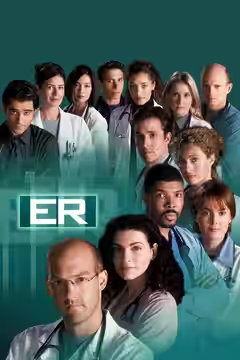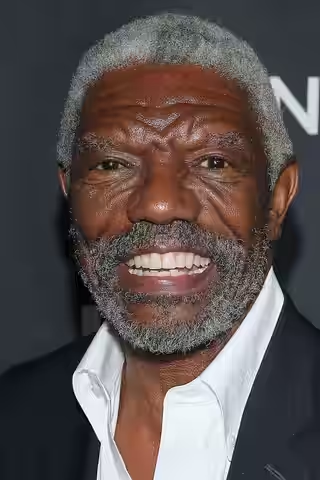
Vondie Curtis-Hall gives supporting professionals and authority figures a useful steadiness. We trust his acting more consistently than his directing, though the attention to character in Gridlock'd gives good reason to take his work behind the camera seriously.
Fi1m perspective
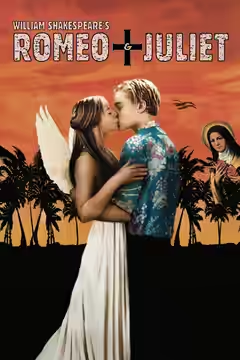
Vondie Curtis-Hall's Captain Prince brings a familiar kind of authority to the commotion of Baz Luhrmann's Romeo + Juliet (1996). Curtis-Hall is often cast as professionals and men in charge, and his grounded presence is useful when the film around him is so busy. We were moved by the romance, because Leonardo DiCaprio and Claire Danes make Shakespeare's words credible in the modern setting. Luhrmann's noisy interruptions and the editing's impatience can still make us wish the actors had been allowed more time. Curtis-Hall belongs comfortably in that ensemble without needing the film to become his.
His move into feature directing came with Gridlock'd (1997), which he also wrote and appeared in. Its attention to character suits a story about people negotiating the US drug treatment system, giving his interest in institutional obstacles something specific to examine. The later features are less persuasive: Glitter (2001) suffers from formulaic storytelling, while Waist Deep (2006) leans too readily on genre clichés. We would look for the director who attends to those people and their difficulties before following him into another action plot.
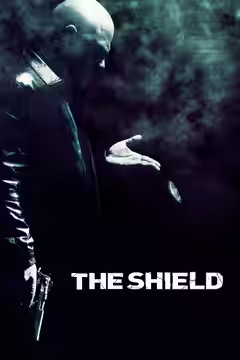
The Shield (2002) offers a stronger reason to follow his directing credits, though its strengths cannot sensibly be credited to any one episode director. Shawn Ryan's police drama gets much of its force from Michael Chiklis, then rewards the time spent with the wider ensemble. Its roughness can be too insistent, but the tension and sharp acting make the commitment worthwhile. Curtis-Hall's experience as a supporting actor seems well suited to a programme that gives us reasons to watch beyond its central performance, even if that alone cannot explain what works.
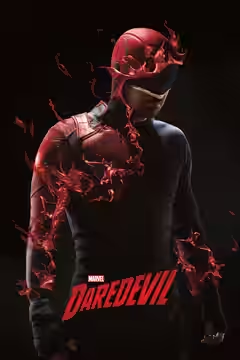
The acting offers a steadier course, taking in Dr. Dennis Hancock in Chicago Hope (1995) and Ben Urich in Daredevil (2015). These ensemble roles make a stronger case for following him than the uneven sequence of features he has directed. We value the grounded supporting presence, and would be reluctant to have it crowded out by the expectation that directing must be the more important occupation. Start with Gridlock'd if that is the side of his work still to be discovered.