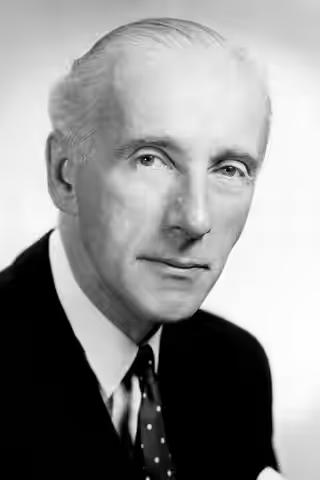
For half a century Wilfrid Hyde-White played the well-brushed Englishman who finds everyone else's fuss faintly amusing, and made courtesy and flattery sound like the same thing. The parts were small and nearly always the same part.
Fi1m perspective
The voice comes first: soft, plummy, unhurried, the voice of a man who has never needed to raise it. Then the hair, brushed flat and shining, and a manner that could be amused or disapproving and often managed both inside one sentence. Hyde-White played gentlemen, colonels, headmasters, men whose main job is to stand a little to one side of the plot and find it all rather interesting. His speciality was the smooth, well-timed compliment. He was oilier than almost anyone on the British screen and somehow never unpleasant about it, because the flattery always came with a look that let us in on the joke.
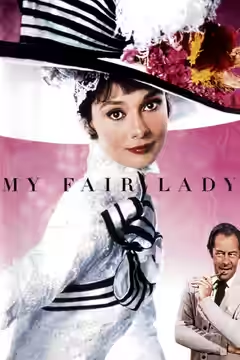
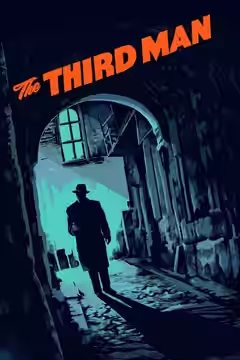
He had been on stage since 1922 and in films since 1934, but it was Carol Reed who made him a fixture, as Crabbin in The Third Man (1949). The 1950s were his decade of comedies and dramas, a headmaster in The Browning Version (1951) among them, and a long stage run in The Reluctant Debutante (1955). Hollywood arrived late, with Let's Make Love (1960). Then George Cukor cast him as Colonel Pickering in My Fair Lady (1964), and it became the part he is known for. He kept working, on stage and screen, into the 1980s.
Pickering is the part, and it shows what he did better than anything. Higgins does the shouting; Pickering watches, apologises for his friend and enjoys the whole experiment more than he admits. We thought the film ran half an hour too long, and by the third hour we were checking the clock, but he was gently funny throughout, and we were glad of it. The reason is timing. He never pushed a line. He let it arrive at the speed of conversation and had usually moved on by the time the laugh landed.
The limits were real. He was cast as the same man for fifty years, upper class or professorial, and when a part gave him nothing to be amused by he had little else to offer. The plummy murmur could drop below the point of hearing, and there are moments, even in My Fair Lady, where you lean forward to catch him. Reed and Anthony Asquith each directed him twice, and it is in that company, in British rooms full of people being careful with each other, that he is easiest to enjoy.
He liked to say, "I learned two things at RADA – I can't act and it doesn't matter." It was a joke, and it was half wrong. Put on My Fair Lady, wait for the third hour, and watch the man who is not singing. He is doing something, and he is doing it so lightly you may have to look twice.
Biography
Wilfrid Hyde-White was an English character actor of stage, film and television. Born on 12 May 1903 in Bourton-on-the-Water, Gloucestershire, he attended Marlborough College and trained at the Royal Academy of Dramatic Art. He made his stage debut in 1922 and his film debut in 1934.
He appeared in over 160 film and television roles. He played Crabbin in The Third Man (1949) and Colonel Hugh Pickering in My Fair Lady (1964). He received Tony Award nominations for his stage performances in The Reluctant Debutante (1957) and The Jockey Club Stakes (1973). He died on 6 May 1991.