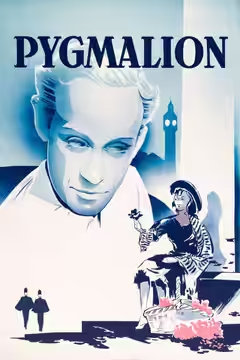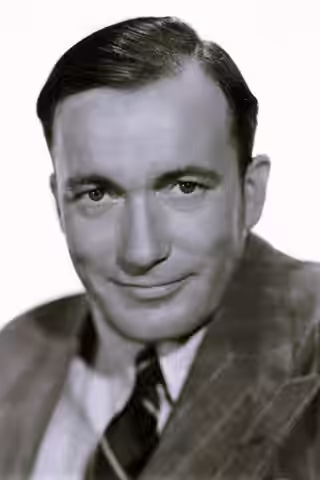
A long-faced Yorkshire character actor who took his time over every line and was best in small doses. His Alfred Doolittle in Pygmalion (1938) lasts two scenes and is as good as anything else in a very good film; nothing later gave him a part to match it.
Fi1m perspective
A dustman arrives at a professor's house to sell his daughter for five pounds and, offered ten, turns it down on principle. Wilfrid Lawson plays Alfred Doolittle in Pygmalion (1938) with a face like a wet Sunday and a delivery that pauses just long enough before each outrage for the listener to think he cannot possibly mean it. He does. He has two scenes and takes both, in a film cut by David Lean to move at twice the speed of the play and built around Wendy Hiller's Eliza. We laughed at him and then, a beat later, noticed we agreed with him, which is Shaw's trick; Lawson makes it work by never once playing the dustman as a fool. His contempt for middle-class morals sounds like plain sense because he says it plainly.
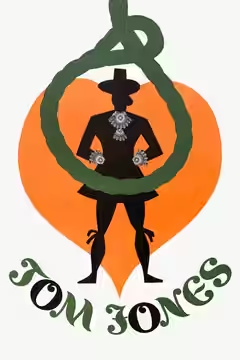
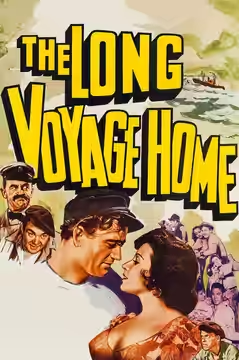
He had been on the stage since he was sixteen and in films since East Lynne on the Western Front (1931), in supporting parts until 1938, when The Terror and Pygmalion made him a lead. There followed Pastor Hall (1940), Tower of Terror (1941) and The Great Mr. Handel (1942), and a trip to Hollywood for John Ford's The Long Voyage Home (1940), where he plays the Captain of a tramp steamer. That is a fine film, but its virtues are Gregg Toland's lighting and the crew as a group; Lawson is one of the crowd, and the part gives him nothing to take. The 1950s were quieter, with smaller and often uncredited roles, Prince Bolkonsky in War and Peace (1956) among the larger of them. Then the 1960s brought him back: Black George in Tom Jones (1963), the decrepit butler in The Wrong Box (1966) and Alice in Wonderland the same year. He died in London in October 1966.
The pattern is clear enough. The parts people remember are the short ones, and the type is always some version of the same man: eccentric, abrasive, sometimes close to maniacal, a colourful older working man who has opinions and will share them. British films of the period had a standing need for such a man and Lawson was very often the one they called. His weapon was timing. He could hold a silence a second longer than seemed safe and then land the line, and in a two-minute scene that is a gift. Over ninety minutes the same habit risks becoming a mannerism, and it is not a coincidence that the leading roles are the ones nobody talks about now.
Start with Pygmalion, where Hiller is the reason to go and Lawson is the reason to stay for the interval talk. If the dustman makes you laugh, look for the name in the credits of anything British from the next thirty years; it is often there, usually near the bottom of the list, and usually attached to the face you remember.
Biography
Wilfrid Lawson, born Wilfrid Lawson Worsnop, was an English character actor of stage and screen. He was born on 14 January 1900 in Bradford, Yorkshire, and educated at Hanson Boys' Grammar School there. He made his stage debut in his late teens and appeared in productions in Britain and the United States.
Lawson made his film debut in East Lynne on the Western Front (1931). He played Alfred Doolittle in Pygmalion (1938) and the Captain in The Long Voyage Home (1940). Other film roles include Pastor Hall in Pastor Hall (1940), the title role in The Great Mr. Handel (1942), Prince Bolkonsky in War and Peace (1956), Black George in Tom Jones (1963), and Peacock in The Wrong Box (1966). He was married to Lillian (née Fenn) and was the uncle of actor Bernard Fox.