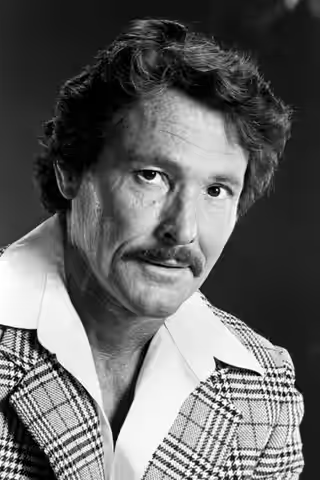
A bodybuilder's frame and a scholar's diction, spent for decades on bikers, lawmen and hired heavies. Smith was rarely given more than a scene or a fight, and he made the fight count, which is more than most of the films around him managed.
Fi1m perspective
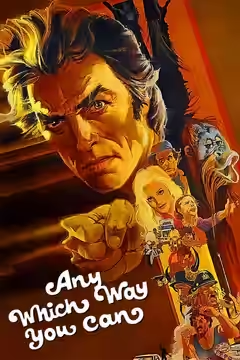
In Any Which Way You Can (1980) William Smith is hired to fight Clint Eastwood, and the film plainly expects us to dislike him. He declines. His Jack Wilson is a courteous, well-spoken professional who has read a book or two and would like to get this over with, and the menace is left to the men in good suits who arranged the match. It is the one surprising choice in a slow, comfortable sequel. The fight itself, when it arrives, is the only stretch where the film seems to know why it was made, and we sat up for it after an hour of not sitting up for much. Smith said afterwards that it has to be one of the longest two-man fights ever done on film without doubles, and watching two men that size go at it for that long, you believe him.
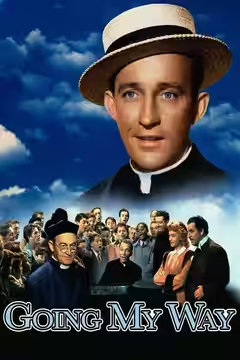
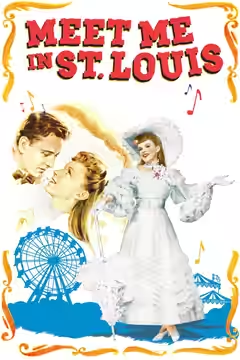
He had been on screen since childhood, uncredited in Gilda (1946) among others, and came back as an adult by way of an MGM contract and a master's degree in Russian studies, which is not the usual route to the biker film. Television took him first: two seasons as Texas Ranger Joe Riley in Laredo (1965–67), then a long run of lawmen and guest villains in Westerns and police series. From the late 1960s he was a lead in biker and exploitation pictures, and in 1976 he played Anthony Falconetti in Rich Man, Poor Man, the nemesis the miniseries kept returning to and the part that made his name.
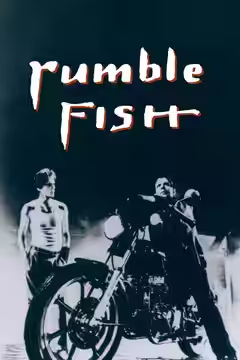
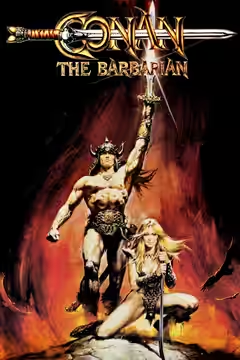
The 1980s gave him better company. John Milius used him twice: as Conan's father in Conan the Barbarian (1982), delivering the opening speech about steel in a voice built for it, and as Strelnikov in Red Dawn (1984), a Soviet commander played by a man with a Russian degree, which must have pleased somebody. Coppola used him twice as well, in The Outsiders and Rumble Fish, both 1983. Patterson the Cop in Rumble Fish is a small part; our review did not find room to mention him, which tells you its size.
What he could not do, or was not asked to, was anything else. He was cast for bulk and threat, and once a man has been Falconetti the parts arrive already written. After the mid-1980s the work was mostly low-budget and direct-to-video, and he kept at it to a cameo in Irresistible (2020). We will not pretend there is a lost dramatic actor in there. There is a heavy who could speak in sentences and take a punch without a double, and both are rarer than they sound.
Start with Jack Wilson, who is better than the film he is in. Then Rich Man, Poor Man, if you have the evenings, for the villain he is remembered as.
Biography
William Smith was an American actor and stunt performer whose career spanned nearly eight decades. Born on 24 March 1933 in Columbia, Missouri, he began acting as a child in the early 1940s and went on to appear in more than 300 film and television productions, frequently in imposing or villainous character roles.
He starred as Texas Ranger Joe Riley in the NBC western series Laredo (1965–67) and played the menacing Anthony Falconetti in the miniseries Rich Man, Poor Man (1976) and its sequel. Among his film credits are Conan the Barbarian (1982) as Conan's father, Rumble Fish (1983) as Patterson the Cop, The Outsiders (1983) as a store clerk, and Red Dawn (1984) as Strelnikov. He also appeared in Any Which Way You Can (1980) and numerous television series including Hawaii Five-O.
Smith died on 5 July 2021 in Woodland Hills, California, aged 88.