Yui Ishikawa's voice hardly rises, and she has built a career on it. As Mikasa Ackerman in Attack on Titan she carried a loud series' grief in a low, level register; the risk is that directors now ask for that register and little else.
Fi1m perspective
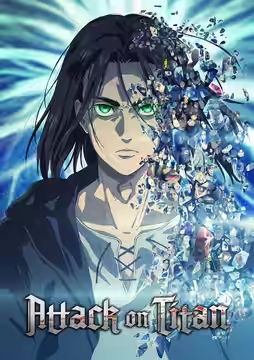
Listen to Mikasa Ackerman in Attack on Titan (2013) when everyone around her is shouting. Yuki Kaji plays Eren at full volume for long stretches, which is the part as written. Ishikawa does the opposite. Her Mikasa speaks low and flat and hardly raises her voice across 87 episodes, and that is where the series keeps its grief: not in the screaming but in the girl who has decided not to. It is a hard thing to hold for a decade and she holds it.
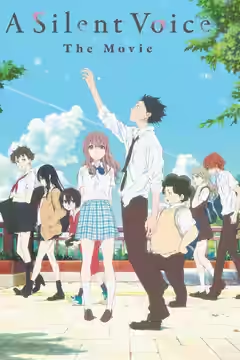
She began on stage as a child with the Himawari Theatre Group, which may account for the breath control, and moved into radio drama and anime in 2007, with a debut as Dhianeila in Heroic Age. Mikasa, six years later, made her name and then took up ten years of it; the series ran until 2023, with a compilation film, Attack on Titan: Crimson Bow and Arrow (2014), along the way. In between came Miyoko Sahara in Naoko Yamada's A Silent Voice: The Movie (2016), a supporting part in a film we liked a good deal, and 2B in the game NieR: Automata (2017), another composed figure who says less than she knows. Violet Evergarden (2018) gave her the lead as a former soldier learning how to feel, and by then the shape of the casting was plain.
What she does well is the thing under the calm. The reserved heroine is one of anime's stock parts and is usually played as a flat line; Ishikawa plays it as a held breath, so that when the voice moves half a step it lands as a scream would elsewhere. On Violet she has said she was told to 'become Zero', with 'no emotions in the first episode', and that instruction describes most of her best work: she starts at nothing and lets us find the feeling before the character does. We noticed, somewhere in the long middle of Attack on Titan, that when Kaji stopped shouting it was her we waited for, and that the lines we remembered afterwards were the ones she said almost under her breath.
The criticism is the obvious one, and it is fair. The timbre is calm and not especially varied, and the people who cast anime have noticed, so she is offered the same capable, guarded young woman again and again, in armour or in gloves. This is not laziness on her part; it is what she is sent. She has taken lighter parts, but they are not the ones anyone remembers her for, and a listener who came in through Mikasa and Violet could be forgiven for thinking she has one setting.
We would like to hear a director spend an hour proving that wrong. Until then, start with Attack on Titan and listen for the moments when everyone else is shouting and she is not.
Biography
Yui Ishikawa is a Japanese actress and voice actress. She began her career as a stage performer with the Himawari Theatre Company and has voiced radio dramas since 2007. She is represented by mitt management.
Ishikawa is known for voicing Mikasa Ackerman in the Attack on Titan series (2013–2023) and its films, Violet Evergarden in Violet Evergarden (2018) and related works, and Miyoko Sahara in A Silent Voice: The Movie (2016). Other roles include 2B in Nier: Automata (2017) and characters in Gundam Build Fighters and The Apothecary Diaries.
She won Best Supporting Actress at the 8th Seiyu Awards in 2014 and Best Lead Actress at the 15th Seiyu Awards in 2021.