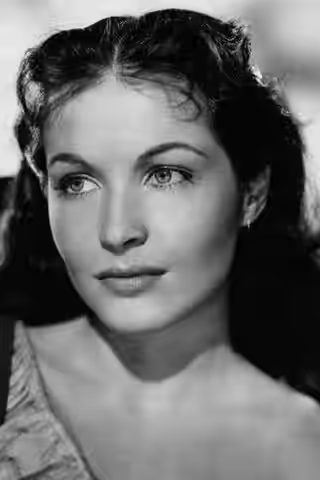
Yvonne Furneaux was the steady one, or the devoted one, standing next to somebody more famous who is coming apart. In La Dolce Vita and Repulsion that is harder work than it looks, and she is a large part of why both films feel like they happen to people.
Fi1m perspective
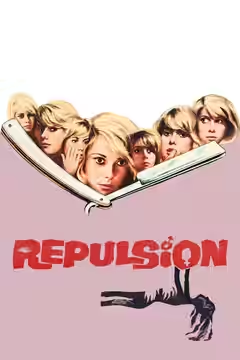
In Repulsion (1965) we hear Yvonne Furneaux before we properly take her in. She is Hélène, the older sister, and Catherine Deneuve's Carol lies awake listening to her and her married lover through the bedroom wall. Hélène has a life: a man, a temper, a trip abroad to go on. When she leaves, the flat starts to come apart, and Polanski's film only works if we believe the woman who has gone was the one who coped. Furneaux makes that easy, playing her brisk and warm and a little careless with her sister, the way people are with the relative who has always seemed fine.
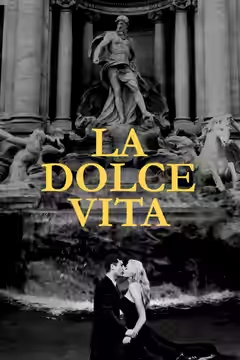
Five years earlier she had done the other half of the job. In La Dolce Vita (1960) she is Emma, Marcello Mastroianni's girlfriend, desperate and devoted where everyone else in the film is bored. We have said that she and Anouk Aimée give the human exchanges their weight and keep the film from becoming a catalogue of people we are meant to disapprove of. The long argument in the car is the scene people remember her for, and it is where the film stops being amusing. We found it hard to watch, because Furneaux plays Emma's love as something with no dignity left in it and no intention of giving up, and Fellini keeps the camera on her while she loses.
The career around those two films is odd. She was born in Roubaix to British parents and grew up in England, took an Oxford degree in modern languages, went through RADA and was working in British theatre and film from 1952. Italy took her seriously first. Antonioni cast her in Le Amiche (1955); Hammer gave her a double part as Isobel Banning and Princess Ananka in The Mummy (1959); Fellini followed, then Polanski, then Chabrol and Dino Risi, whose In the Name of the Italian People (1971) came near the end. Each of those directors used her once. Nobody built a run of films around her, and she moved between languages and between art films and genre pictures for twenty years, which left her well known in several countries and central in none.
Some of that was the roles. Early notices dwelt on her looks, and she was cast as sirens and haughty women more often than as anything else. Some of it, she thought, was the name. She said the French stage name, "combined with my rather continental appearance, has always worked against me in getting British roles." An English actress with a French name and a dark, glamorous face was easier to hire as the foreign woman than as the girl next door, and the two films we rate most are the two that gave her something to do inside that type.
She largely retired after the early 1970s, with a final screen appearance in 1984, and she died on 5 July 2024. Start with La Dolce Vita, where she has the most to play. Then watch Repulsion and notice how much of its first act depends on her walking out of it.
Biography
Yvonne Furneaux was a British-French actress. Born Elisabeth Yvonne Scatcherd on 11 May 1926 in Roubaix, France, to English parents, she studied modern languages at the University of Oxford and trained at the Royal Academy of Dramatic Art before beginning her career on the British stage.
She appeared in films from the early 1950s to the mid-1980s, working with directors including Peter Brook, Michelangelo Antonioni, Federico Fellini and Roman Polanski. Her roles include Momina De Stefani in Le Amiche (1955), Isobel Banning / Princess Ananka in The Mummy (1959), Emma in La Dolce Vita (1960), Hélène Ledoux in Repulsion (1965) and Lavinia Santenocito in In the Name of the Italian People (1971). She was married to cinematographer Jacques Natteau from 1962 until his death in 2007. Furneaux died on 5 July 2024 in North Hampton, New Hampshire.