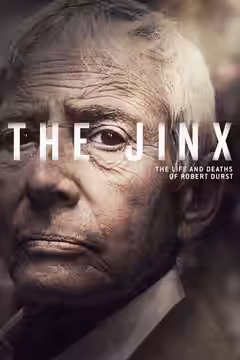
Zac Stuart-Pontier is an editor first, and his habit is to leave the shot running after the answer is finished. In The Jinx that habit turned one man's face into the whole programme, and we are not sure it was good for us.
Fi1m perspective
Robert Durst finishes explaining, in a flat and reasonable voice, what he did with a body in Galveston in 2001, and the cut does not come. He blinks. Behind him there is nothing but dark. Those seconds belong to Zac Stuart-Pontier, who created The Jinx (2015) with Andrew Jarecki and Marc Smerling and is one of its seven credited editors, and they are the reason the series is hard to stop watching. We were uncomfortable, and we did not look away, and afterwards we were a little ashamed of how much we had enjoyed a man incriminating himself for our evening's entertainment.
He came to it as a cutter, not a talker. After film school in New York he edited and co-produced Catfish (2010) for Ariel Schulman and Henry Joost, then cut Martha Marcy May Marlene (2011) for the directors around Borderline Films, and later Bleed for This (2016). That is the first phase: a reliable editor of other people's features, drama and documentary alike. The turn came with Durst. The Jinx was meant to be a film. In Stuart-Pontier's own account, "Serial was a big inspiration for The Jinx. There weren't a lot of serialized documentaries at the time, so for years we thought The Jinx was going to be a feature film. But, Serial came out while we were working on it and got us thinking about how we could break up the story." Six episodes later he had a form, and he has mostly stayed in it, co-creating and co-hosting the Crimetown podcast with Smerling from 2016 and returning to Durst for The Jinx Part Two (2024).
What he does well is patience, and the ordering of a great deal of material so that each episode ends with something the last one did not have. The interview footage in The Jinx is cut with restraint, and the series is remembered for its final minutes, which we will not describe except to say they are an editing achievement rather than a filming one. What he does less well, or what the series does around him, is trust that restraint. Our review found the slow-motion reenactments and the swelling score standing between the programme and something remarkable. How much of that is the editor's choice and how much the director's we cannot say from the outside; an editor rarely gets to refuse a reenactment. But the contrast is plain. Every time Durst is allowed to sit in silence the series is at its best, and every time the music tells us how to feel it is at its most ordinary.
He has found the shape of the serialised true-crime documentary, and the field has followed him into it. Whether he has anything to cut except crimes is the question we would like the next decade to answer.
Biography
Zac Stuart-Pontier is an American film editor, producer and podcast host. He was born on 12 September 1983 in Honesdale, Pennsylvania, and graduated from New York University's Tisch School of the Arts.
He edited the feature films Martha Marcy May Marlene (2011), Catfish (2010), Simon Killer (2012) and Bleed for This (2016). His television credits include editing the HBO series The Jinx (2015), for which he received two Primetime Emmy Awards. He also co-produced Catfish and served as writer, editor and co-executive producer on The Jinx.
Stuart-Pontier co-created and co-hosts the true crime podcast Crimetown with Marc Smerling, which launched in 2016. He has worked as a consulting or supervising editor on additional documentaries and features.