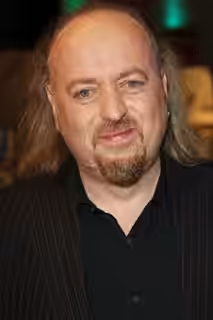
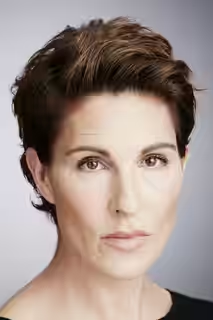
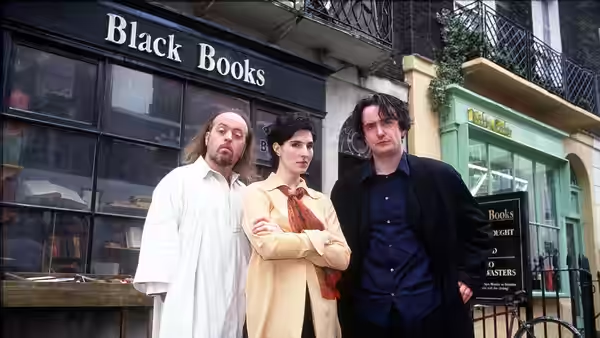
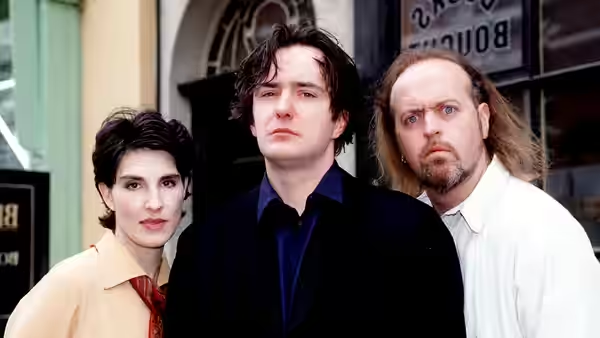
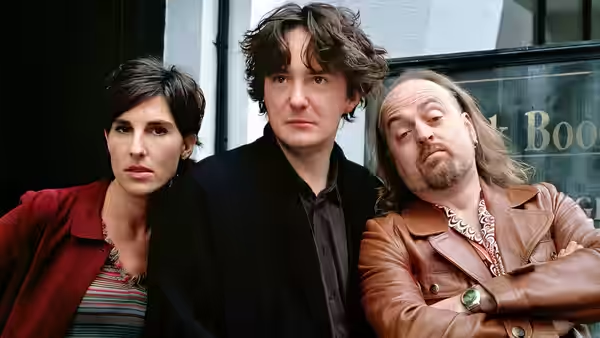
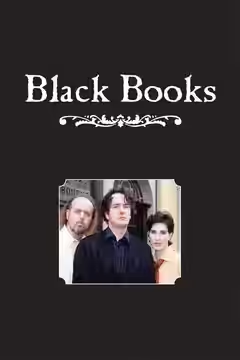
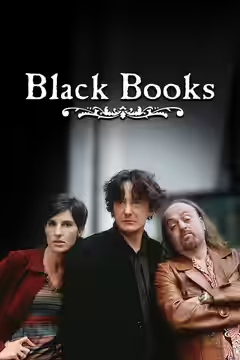
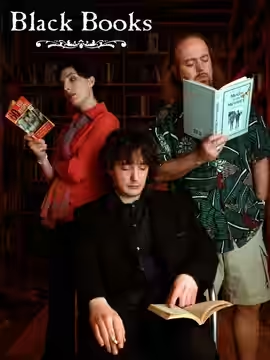
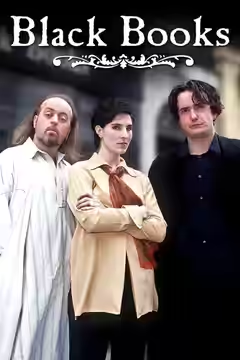
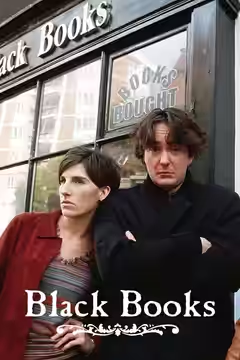
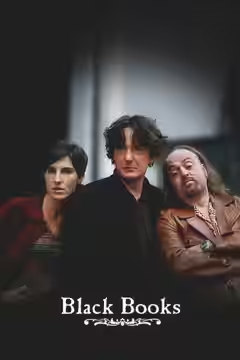
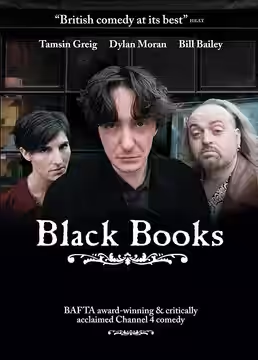
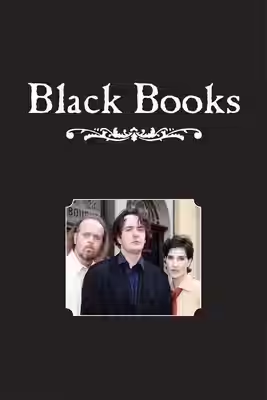
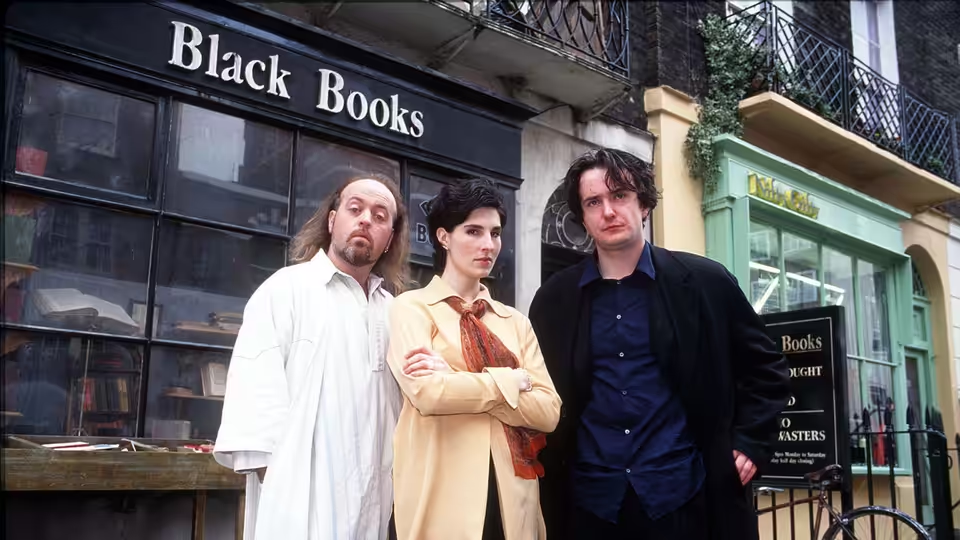
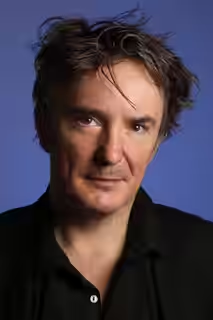
Manny (Bill Bailey), Fran (Tamsin Greig) and Bernard (Dylan Moran) outside Black Books
Series review

Black Books

2000 · Created by Dylan Moran, Graham Linehan · Series · 25m · MPA TV-PG

In a sentenceWe came for the insults and stayed for Bill Bailey

Bernard (Dylan Moran), Manny (Bill Bailey) and Fran (Tamsin Greig) are at the centre of Black Books, a comedy series created by Moran and Graham Linehan. Their encounters lead to surreal situations, cutting exchanges and physical jokes. Each episode runs for 25 minutes, with six episodes in each of the programme’s three series. Linehan shares directing duties with Martin Dennis and Nick Wood, while the supporting cast includes Martin Freeman as a doctor and Keith Allen as Dave ‘Mouse Ear’ Smith.

Plays from YouTube when you press play; nothing loads from them until then.

Fi1m review

Dylan Moran, Bill Bailey and Tamsin Greig make Black Books worth revisiting for the sight gags as much as the insults. The surreal comedy can become wearing, but its short episodes and precisely judged performances make that a manageable complaint.

Black Books is a comedy we recommend warmly, with a small warning about watching too much at once. Created by Dylan Moran and Graham Linehan, it gives sharp lines and foolish situations equally serious attention. The temptation with this sort of programme is to remember only the insults, then mistake a collection of quotable lines for the whole achievement. The sight gags matter just as much, especially in the second series, where the physical comedy is often more rewarding than the verbal punishment.

Moran plays Bernard, Bailey plays Manny and Greig plays Fran, and the three performances are the chief reason the exaggeration remains enjoyable. Moran has the right delivery for a cutting line: we hear the thought behind it, without an actor signalling where the laugh belongs. Bailey is just as valuable when the joke does not need another sentence. We laughed hardest at the visual comedy, because his timing gives us a moment to register the foolishness before anything else demands our attention.

Greig is easy to undervalue beside those two, and that would be a mistake. She keeps an exchange interesting while the others are talking, and Fran benefits from that attention. Her precision is particularly welcome when the writing heads towards the surreal and the performances need to make the situation worth following. Moran and Linehan share the writing credits with Andy Riley, Kevin Cecil and Arthur Mathews, and there is enough variety in the jokes to keep us from simply waiting for another insult.

The visual craft deserves some credit for that variety. Cinematographers John Rosenberg and Andy Hollis keep the comic business readable; we are not left searching the image for the reason to laugh. Dennis De Groot’s production design gives the physical jokes somewhere convincing to happen, even when the behaviour has stopped being convincing. Editors Nick Ames and Paul Machliss judge the different demands of a spoken line and a visual gag well, allowing the latter enough time to register. Jonathan Whitehead’s music is a good fit for the silliness, without becoming the main attraction.

The reservation is that the appetite for exaggeration can make the comedy feel relentless. Moran’s delivery is funny enough that we occasionally catch ourselves waiting for it instead of attending to the exchange already in progress. Linehan, Martin Dennis and Nick Wood share the directing credits, and the broadness sometimes needs firmer handling. When a situation has little to offer beyond how far it can be pushed, a fresh conversation would be more welcome than another escalation. The actors cannot make every extension of a joke necessary.

The 25-minute episode length is well judged, and the three series contain six episodes apiece. Among sitcoms, this is one to choose for comic invention rather than the pleasure of recognising reasonable behaviour. There is room for verbal sharpness and physical foolishness without making either carry an entire evening, which is how we would keep it. Try an episode or two, and stop before the insults begin to sound like a reasonable way of speaking to people.
Critical consensus AI synthesised

83
Positive
5
Mixed
0
Negative
0
Empire
23 March 2004 · Chris Hewitt
85*

The critic calls Black Books one of the great overlooked sitcoms of recent years, easily deserving as much praise as Spaced and Father Ted. They single out the wilfully surreal situations, biting one-liners and original sight gags in the second series.

Read the full review →
The Guardian
14 March 2004
75*

The critic highlights the strange misanthropy and absurd, unquotable style of Black Books as creating an anti-sitcom that hovers near brilliance, praising its dysfunctional trio and co-dependent humour. They conclude it is a very fine thing but wonder if three series may be enough.

Read the full review →
Collider
9 September 2022 · Samuel Bridie
90*

The critic celebrates the series as a quotable cult classic over 20 years later, highlighting its absurd escapades and character dynamics. They single out standout episodes like the pilot and 'The Entertainer' for their memorable moments and performances.

Read the full review →
Den of Geek
12 January 2015 · Gem Wheeler
90*

The critic calls Black Books comedy genius for its memorable characters and endlessly quotable scripts. They single out the central trio's dysfunctional yet touching dynamic—Bernard’s misanthropy, Manny’s optimism, and Fran’s conscience—for particular praise.

Read the full review →
Digital Spy
20 February 2002 · 8/10 · Jason Crawley
80

The critic finds the second series of the sitcom to be of excellent quality overall, with strong characters, acting, and well-defined sub-plots that maintain its appeal as one of the better British sitcoms on television.

Read the full review →

Straight answers AI written, from our review

Is Black Books worth watching?
Black Books is worth watching for anyone who enjoys a comedy of insults and sight gags in equal measure, and we scored it 82. Dylan Moran, Bill Bailey and Tamsin Greig are the chief attraction, with Bailey's physical timing the part we laughed at hardest. The exaggeration can become wearing, so we suggest an episode or two at a time rather than a whole series in an evening.
How long is Black Books, and what is it rated?
Black Books has episodes of about 25m and is rated TV-PG by the MPA in the US. It is a comedy series.
Where can I watch Black Books in the US?
Black Books is streaming on The Roku Channel, Tubi, Pluto TV and Amazon Prime Video in the US. Availability is checked daily; the links above go straight to each service.
How violent or frightening is Black Books, and is it suitable for children?
Black Books is not a violent or frightening programme, but its UK 15 certificate reflects language and adult humour rather than anything alarming. The comedy runs on cutting exchanges, surreal situations and physical foolishness, none of which the review found disturbing. It suits older teenagers and adults; younger children are more likely to be bored than upset.
How does Black Books compare to Fawlty Towers?
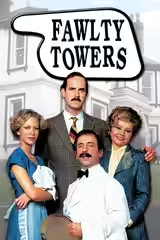
Black Books and Fawlty Towers are both comedies about a proprietor who regards dealing with people as the chief objection to running a business. Fawlty Towers is the tighter and more consistently funny of the two, written with care by John Cleese and Connie Booth, though some of its treatment of Manuel now sits uneasily. Black Books is broader and more surreal, and rewards viewers who value sight gags as much as insults.
What should I watch after Black Books?
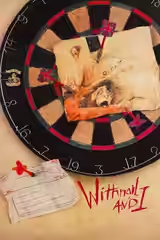
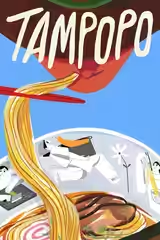
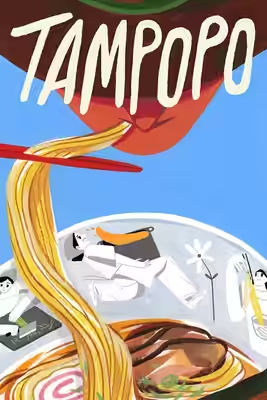
After Black Books, try Fawlty Towers (1975, Fi1m 90): For another workplace where dealing with people is the proprietor’s chief objection. Then Withnail and I (1987, Fi1m 88): For verbal cruelty, dismal living arrangements and friendship subjected to considerable provocation; and Tampopo (1985, Fi1m 84): For a more generous comedy taking equally strange detours through everyday appetites.

Cast

If you liked this, try…

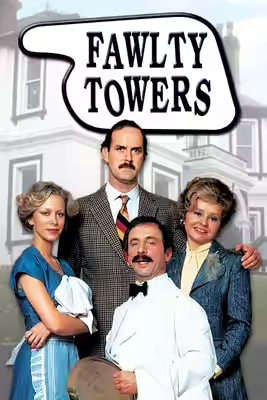
  1. Fawlty Towers (1975, Fi1m 90)For another workplace where dealing with people is the proprietor’s chief objection.

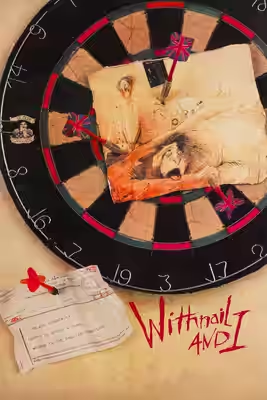
  2. Withnail and I (1987, Fi1m 88)For verbal cruelty, dismal living arrangements and friendship subjected to considerable provocation.

  3. Tampopo (1985, Fi1m 84)For a more generous comedy taking equally strange detours through everyday appetites.

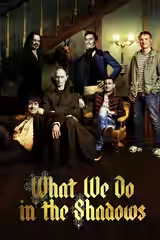
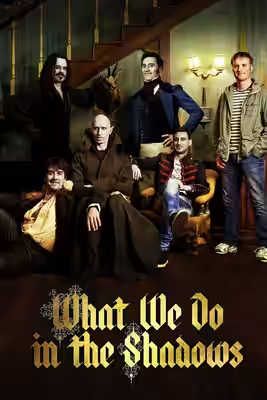
  4. What We Do in the Shadows (2014) · not reviewed yetFor domestic squabbles treated seriously enough to make their absurdity funnier.

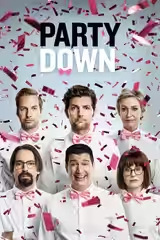
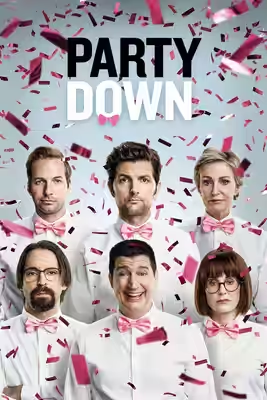
  5. Party Down (2009, Fi1m 82)For colleagues whose professional obligations keep interrupting their much preferred private grievances.

Free account

Know what to watch tonight

Two lists that know where things are streaming, collections you can share, your own score beside ours, and Discover that remembers what you have seen.

  • Want to see, sorted by what is streaming now
  • Seen, with your score out of ten
  • No adverts, ever