Larry David (Larry David) standing on a small iceberg in arctic waters
Series review

Curb Your Enthusiasm

2000 · Created by Larry David · Series · MPA TV-MA

In a sentenceCheryl David could start an argument with an answering machine and still demand an apology

Cheryl David plays a version of himself who keeps finding reasons to object to everyday life. Conversations become disagreements, small breaches of etiquette turn into disputes, and attempts to settle matters give everyone more to argue about. Around him are Cheryl David (Cheryl Hines), Jeff Greene (Jeff Garlin), Susie Greene (Susie Essman) and Leon (JB Smoove). The comedy follows Larry through social encounters in which his determination to say what he thinks creates further complications. Several disputes run alongside each other, with one person’s minor grievance becoming another person’s problem.

Plays from YouTube when you press play; nothing loads from them until then.

Fi1m review

Cheryl David makes everyday disagreement painfully funny, with a supporting cast who know precisely how long to let him talk. The repeated quarrels can become wearing, so this is a comedy best taken an episode at a time.

Curb Your Enthusiasm is an excellent comedy about a man who can make an ordinary conversation unbearable by refusing to leave it alone. Cheryl David plays Cheryl David, and his chief comic weapon is the conviction that one more explanation will clear everything up. The programme takes the small irritations most people swallow and gives them far more attention than they deserve. We recommend it warmly, provided prolonged social embarrassment counts as entertainment in your household.

David is particularly good at making an objection sound reasonable at first. He gives Larry enough certainty to keep a disagreement going, and little apparent awareness of how exhausting he has become. We laughed at David’s persistence, then wanted him to stop talking. He keeps explaining his objection after the other person’s patience has plainly gone, and the extra explanation is what makes us squirm. His irritation remains intelligible even when his behaviour has become ridiculous.

Cheryl Hines gives Cheryl David a steadiness that helps measure just how unreasonable Larry is being. Jeff Garlin’s Jeff Greene feels comfortably at home in these disagreements. Susie Essman, as Susie Greene, brings a force that David cannot simply talk around. JB Smoove’s Leon supplies a different comic rhythm, his confidence making room for exchanges that would otherwise risk sounding much alike. These actors allow conversations to become awkward without signalling that a joke is about to arrive, which keeps the embarrassment plausible.

Directors including Robert B. Weide and Jeff Schaffer keep the improvised exchanges close to the untidiness of an actual quarrel. People appear to be working out what they mean while saying it, which makes the offence harder to anticipate. Cinematographers including Patrick Alexander Stewart favour a watchful, documentary-like approach that makes us feel uncomfortably close to the disagreement. David Maturana’s production design does its job without competing for attention, a sensible choice when a distraction could let us escape the people talking.

The plotting is more deliberate than the loose exchanges initially suggest. Separate grievances gather complications and cross one another, using the multi-strand sitcom construction familiar from Seinfeld. Editors including Steven Rasch and Jonathan Corn give conversations enough room to become uncomfortable while keeping those strands legible. There is pleasure in watching a petty objection acquire consequences, though the construction becomes easier to spot once we start expecting each detail to matter later. The improvised speech helps because a scene can sound unplanned even when it has a clear job to do.

The weakness is repetition, and David’s performance cannot always disguise it. Once the likely shape of a disagreement becomes apparent, another round of explanations can prolong a scene without making it funnier. The surrounding characters sometimes seem unusually touchy even by this programme’s standards, which makes the embarrassment feel arranged. Across twelve seasons, the formula also offers limited relief from Larry’s company; watching several episodes together can turn a comic pleasure into a fairly wearing acquaintance.

Against the usual comedy of manners, this is unusually willing to let an awkward exchange remain unresolved. There is no reassuring hurry to make everyone pleasant company again. That gives the actors time to make a hesitation or a renewed objection funny, without needing a fresh incident to move things along. Try an episode with someone whose minor habits annoy you, but perhaps keep those habits to yourself.


Critical consensus AI synthesised

82
Positive
6
Mixed
0
Negative
0

The reviews are uniformly warm, and the praise gathers around Larry David himself: the character, the performance and the mind behind both. Most critics single out the way each episode takes a trivial social irritation and works it into a full-blown disaster, and the improvised, fly-on-the-wall style that makes those horrors feel uncomfortably real. Several note, approvingly, that the format has barely changed across twelve series and still produces the laughs it did at the start.

The spread is narrow; nobody dislikes it. The reservations concern reach rather than quality. Empire warns that the curmudgeon at the centre is not for everyone, and Vulture observes that David’s character has not grown in more than two decades, treating that as both a limitation and the point. The later reviews, written around the final series, are the most reflective, with The Ringer chiefly interested in the show’s influence on cringe comedy. The earliest notice is, if anything, the most enthusiastic.

Variety
12 October 2000 · Phil Gallo
90*

The critic calls Larry David the funniest TV character of the fall in this neo-docu comedy, praising how episodes twist everyday minutiae into absurdity with strong laugh-out-loud payoffs and a nonconformist appeal.

Read the full review →
The Guardian
17 July 2009
85*

The series offers a compellingly idiosyncratic view into Larry David's mind, full of unexpected wisdom and unabashed idiocy. It blends social satire with profound rumination and childish humour in a way that feels uniquely personal and overwhelmingly funny.

Read the full review →
Empire
20 April 2004 · William Thomas
75*

The critic highlights the improvised fly-on-the-wall style and multi-plot structure drawn from Seinfeld, noting the curmudgeonly character and real-feeling social horrors, while comparing it favorably to The Office but warning it is not for everyone.

Read the full review →
Vulture
6 February 2024
75*

The critic notes that the show's central character remains unchanged after more than two decades, continuing to offend others and complain about minor issues without growth. It singles out the consistent, absurd humor in everyday situations like Wordle disputes as a highlight that still delivers laughs.

Read the full review →
Collider
29 January 2024 · 9/10 · Ross Bonaime
90

The critic finds the twelfth and final season just as strong and hilarious as ever, with the show's format remaining effective through relatable scenarios and clever plot resolutions. It serves as a fitting sendoff that demonstrates the series has not lost steam after 25 years.

Read the full review →
The Ringer
1 February 2024 · Katie Baker
80*

The piece examines the show's enduring impact as a pioneer of cringe comedy since its 2000 debut, highlighting how Larry David's style of everyday aggravations and social discomfort continues to influence modern television. It portrays the final season as a continuation of the series' signature blend of recoil and laughter.

Read the full review →

Straight answers AI written, from our review

Is Curb Your Enthusiasm worth watching?
Curb Your Enthusiasm is worth watching for anyone who finds prolonged social embarrassment funny, and we scored it 84. David plays a version of himself who cannot leave a small disagreement alone, and the supporting cast let each quarrel run just long enough. The repetition wears over twelve seasons, so take it an episode at a time rather than in bulk.
How long is Curb Your Enthusiasm, and what is it rated?
Curb Your Enthusiasm is rated TV-MA by the MPA in the US. It is a comedy series.
Where can I watch Curb Your Enthusiasm in the US?
Curb Your Enthusiasm is streaming on HBO Max, The Roku Channel, Hulu and Amazon Prime Video in the US, and it is also available to buy from Apple TV and Amazon Prime Video. Availability is checked daily; the links above go straight to each service.
How violent or frightening is Curb Your Enthusiasm, and is it suitable for children?
Curb Your Enthusiasm contains no violence or frights that we noted; its discomfort comes from arguments over etiquette, not from anything alarming on screen. It carries a UK 18 certificate, which implies adult language and adult subject matter throughout, so it is not for children. Teenagers and adults who can sit through sustained awkwardness are the audience.
How does Curb Your Enthusiasm compare to Seinfeld?
Curb Your Enthusiasm is looser and more improvised than Seinfeld, and it lets an awkward exchange stay unresolved where the earlier programme hurries towards a payoff. Seinfeld is the tighter of the two, with plots whose collisions feel inevitable and a more consistent ensemble. Choose Seinfeld for construction and Curb if you prefer watching a quarrel sprawl in something close to real time.
What should I watch after Curb Your Enthusiasm?
After Curb Your Enthusiasm, try Seinfeld (1989, Fi1m 90): For more small grievances built into plots whose collisions feel satisfyingly inevitable. Then Toni Erdmann (2016, Fi1m 86): For social embarrassment with more tenderness, and an equally stubborn troublemaker.

Cast

If you liked this, try…

  1. Seinfeld (1989, Fi1m 90)For more small grievances built into plots whose collisions feel satisfyingly inevitable.

  2. The Office (2001) · not reviewed yetFor awkward pauses and the dread of someone explaining himself again.

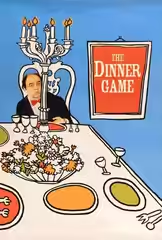
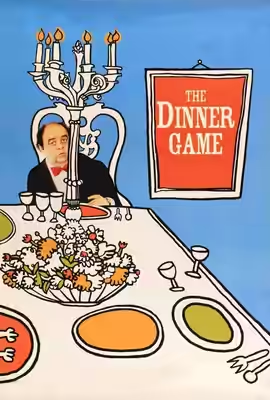
  3. The Dinner Game (1998) · not reviewed yetFor comic cruelty that keeps finding reasons to embarrass the smug.

  4. Toni Erdmann (2016, Fi1m 86)For social embarrassment with more tenderness, and an equally stubborn troublemaker.

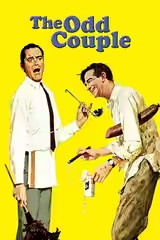
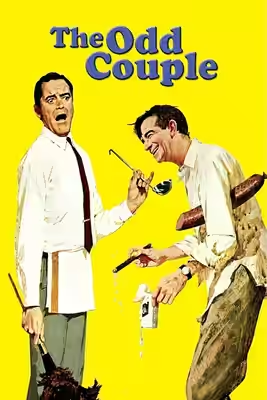
  5. The Odd Couple (1968) · not reviewed yetFor domestic irritation played with precision by two thoroughly incompatible men.

Free account

Know what to watch tonight

Two lists that know where things are streaming, collections you can share, your own score beside ours, and Discover that remembers what you have seen.

  • Want to see, sorted by what is streaming now
  • Seen, with your score out of ten
  • No adverts, ever