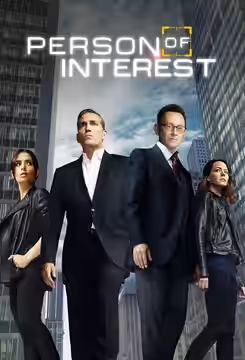
Iris Campbell (Wrenn Schmidt) seated at a desk in an office
Series review

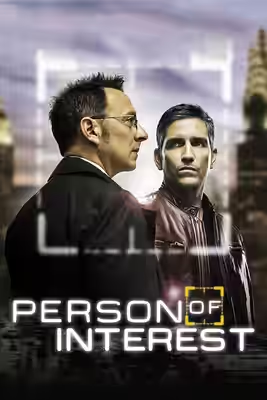
Person of Interest

2011 · Created by Jonathan Nolan · Series · MPA TV-14

In a sentenceThe CCTV cameras of New York turn out to be on the side of a limping billionaire and a man who whispers

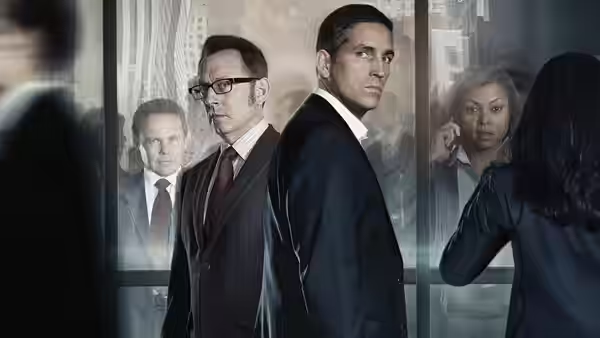
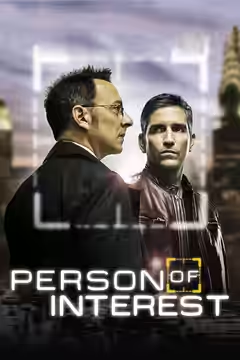
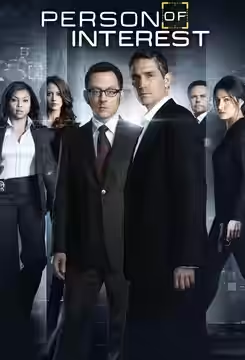
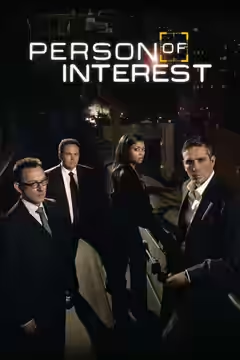
New York. John Reese (Jim Caviezel), a former intelligence officer, is living rough on the subway when a stranger bails him out after a fight. Harold Finch (Michael Emerson), a reclusive billionaire, built a machine for the government after 11 September 2001. It watches every camera and phone to predict terrorism, and it discards the ordinary murders. Finch has a back door that hands him one social security number at a time, victim or killer, he cannot tell which, and he wants Reese to step in before anything happens. Detective Joss Carter (Taraji P. Henson) is hunting the man in the suit, and Lionel Fusco (Kevin Chapman), a crooked officer, is about to be pressed into service.

Fi1m review

Jonathan Nolan’s surveillance thriller starts as a tidy case-of-the-week procedural and turns, over five seasons, into something stranger and better about a machine that watches everyone. Michael Emerson is the reason to stay; the formula is the reason some will not.

Jonathan Nolan, who co-wrote The Dark Knight with his brother, made a series for a network best known for tidy crime procedurals and hid inside it one of the more paranoid ideas on American television. A machine watches everyone. It was built to catch terrorists, and the murders and kidnappings it also predicts are thrown away as irrelevant. Two men decide to do something about the irrelevant ones, one a week. It is a better show than that sounds, and it takes its time getting there: five seasons and 103 episodes, from 22 September 2011 to 2016.

Michael Emerson is the reason to stay. Harold Finch walks with a hitch, holds his neck as if it might snap, wears a three-piece suit to sit at a computer and speaks to Reese in the tone of a man correcting a waiter. He is a billionaire atoning for something, and Emerson never shows us the size of the guilt, only its symptoms: the fussiness, the refusal to be touched, the flatness whenever his past comes up. It is funny, quietly, and sad without asking to be. When a later episode leaves him alone in the library talking to his own creation, we were moved more than we expected to be by a man and a monitor, and it was because Emerson had spent so many hours refusing to raise his voice.

Jim Caviezel is harder to love. He plays John Reese in a whisper and a dark suit, and for the first stretch he is a man with a gun and no interior. The reviews so far noticed the same thing and we do not disagree, though the blankness turns out to be a decision rather than a shortfall; Reese has concluded he is already dead, and the series slowly explains why. Taraji P. Henson’s Joss Carter, the detective who hunts the man in the suit and then finds she cannot arrest him in good conscience, carries the moral weight Caviezel withholds. Kevin Chapman’s Lionel Fusco, the crooked cop blackmailed into helping, carries the jokes, and Chapman plays him as a man permanently one bad decision from being shot or fired and unsure which he would prefer.

The look is the surveillance itself. Scenes are stitched together with footage from the Machine’s point of view, grainy angles from high corners with a box drawn round each face, white for the team, yellow for people it knows, red for the ones about to do harm. Ramin Djawadi scores it with clipped electronic pulses and something like a clock ticking underneath, and gives the Machine a theme of its own that turns up whenever the screen belongs to the Machine alone and no person is in shot. Juliet Polcsa and Gary Jones keep Reese in the same suit through car crashes and shoot-outs, and put Finch in pocket squares. Nolan directs some episodes himself; Chris Fisher and Richard J. Lewis are among the rotating directors who keep New York grey and wet.

The first season is where patience is needed. Twenty-three episodes is a great many, and the formula is rigid: number arrives, Reese follows, Finch types, Reese shoots someone in the knee, number goes home. Around the middle of that run we were bored, and then annoyed that a premise this good was being spent on a bodyguard job of the week. The show knows. It brings in Enrico Colantoni as Carl Elias, a soft-spoken man assembling a criminal empire from a back room, and Robert John Burke and Al Sapienza as police officers considerably dirtier than Fusco, and the weekly numbers begin to join up.

By the second season, when Sarah Shahi’s Sameen Shaw arrives with even fewer feelings than Reese, the series is about the Machine rather than the people it points at. What is it. Does it think. What does Finch owe a thing he built and then chained. The later seasons take a turn we will not describe; we will say that a network procedural about a helpful computer ends up asking harder questions about being watched than most films on the subject, and that the final run of thirteen episodes is the tightest the show ever managed.

Watch it at home, in a run rather than a week apart, and give it until Elias. If the whisper wears on you, remember that Reese is meant to be a man who has forgotten how to talk to people, and that the show, unlike its lead, never stops talking to you.


Critical consensus AI synthesised

69
Positive
5
Mixed
2
Negative
0

Most critics are cautiously positive. The praise clusters on the premise, a surveillance machine and post-9/11 paranoia running through a network procedural, and on Michael Emerson, whom several reviews single out as the more compelling half of the central pair. The involvement of Jonathan Nolan and J.J. Abrams is cited as a reason to hope. Critics who assess the series as a whole rather than the pilot are warmer, and the later seasons, once the case-of-the-week format gives way to a serialised conspiracy, are where the admiration sits.

The reservations cluster on the pilot: a mediocre first case, familiar CBS procedural habits, and a Jim Caviezel who reads as emotionally distant. The spread is narrow, running from mixed to warm with no outright dismissals. Paste is the coolest, finding the idea interesting but the execution generic; Den of Geek, writing years later, is the warmest, arguing the show grows into one of the smartest on television.

The Hollywood Reporter
21 September 2011 · Tim Goodman
75*

The critic is hopeful that the series, with its strong creative team, can deliver interesting procedurals with serialized elements exploring privacy and paranoia. Highlights the compelling leads and visual style.

Read the full review →
The AV Club
23 September 2011 · B- · Zack Handlen
70

The pilot offers a high-concept premise about a surveillance machine that is intriguing but undermined by flat execution and uncharismatic lead performance from Jim Caviezel. Michael Emerson stands out as the more compelling half of the central duo, hinting at potential if the series leans into its weirder elements.

Read the full review →
Variety
16 September 2011 · Brian Lowry
60*

The critic sees it as a shrewd but not terribly exciting CBS procedural recasting The Equalizer in a post-9/11 surveillance package. Praises Michael Emerson's performance but notes Jim Caviezel's character is emotionally distant.

Read the full review →
Den of Geek
29 June 2015 · Stefan Mohamed
80*

The critic argues that despite a shaky start with case-of-the-week episodes, the series improves dramatically and becomes one of the smartest shows on TV, particularly in exploring AI and surveillance themes. They single out the character development, inventive action, and subversion of network TV formulas for praise.

Read the full review →
/Film
22 July 2011 · festival review · Devindra Hardawar
80*

The pilot succeeds as a slick post-9/11 techno-thriller blending Batman-style vigilantism with surveillance themes, delivering strong action and promising premise.

Read the full review →
Collider
19 April 2022 · Arianne Binette
70*

The critic ranks the seasons from worst to best, highlighting season 3 as the peak for fully embracing its serialized conspiracy and sci-fi elements after strong foundational seasons, while noting season 5 felt rushed due to early cancellation. They praise the show's evolution and risks taken in later seasons.

Read the full review →

Straight answers AI written, from our review

Is Person of Interest worth watching?
Person of Interest is worth watching for anyone who can sit through a rigid first season to reach the stranger, better series underneath, and we scored it 78. Michael Emerson's fussy, guilt-ridden Harold Finch is the reason to stay; the case-of-the-week formula is the reason some will not. Watch it in a run, and give it until Carl Elias arrives.
How long is Person of Interest, and what is it rated?
Person of Interest is rated TV-14 by the MPA in the US. It is an action & adventure and crime series.
Where can I watch Person of Interest in the US?
Person of Interest is streaming on Peacock, Amazon Prime Video and The Roku Channel in the US, and it is also available to buy from Amazon Prime Video. Availability is checked daily; the links above go straight to each service.
How violent or frightening is Person of Interest, and is it suitable for children?
Person of Interest carries a UK 15 certificate, and it earns it with weekly shoot-outs, Reese's habit of shooting people in the knee, and a plot built on murders and kidnappings. It is not frightening so much as tense, and the violence is brisk rather than lingered over. Not for young children; older teenagers used to crime drama will cope.
How does Person of Interest compare to The Conversation?
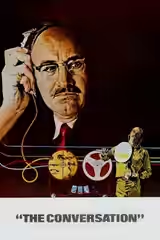
Person of Interest and The Conversation are both about people who watch and listen to strangers, but the older film is a tight, lonely character study and the series is a sprawling procedural that grows into a science-fiction argument about a machine. Coppola's film is the better-made and more painful of the two. The series is warmer, funnier and far longer, and asks its hardest questions only after a slow first year.
What should I watch after Person of Interest?
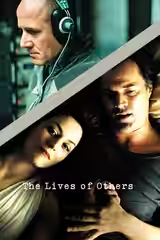
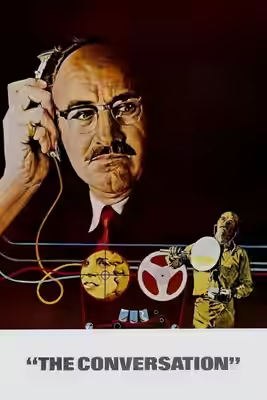
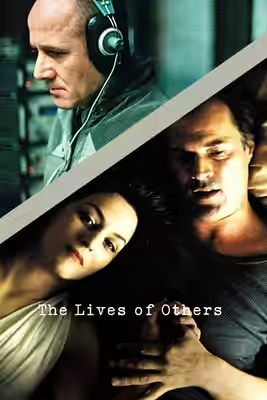
After Person of Interest, try The Conversation (1974, Fi1m 92): Gene Hackman listens to strangers for a living and it ruins him; the original surveillance film. Then The Lives of Others (2006, Fi1m 84): A Stasi officer in headphones learns to care about the couple he is bugging; and Mr. Robot (2015, Fi1m 84): Rami Malek’s hacker narrates to us because he cannot talk to anyone else.

Cast

Awards

NAACP Image Award for Outstanding Supporting Actress in a Drama Series, 2014

Won
NAACP Image Award for Outstanding Supporting Actress in a Drama Series

BET Award for Best Actor & Actress, 2012

Nominated
BET Award for Best Actor & Actress

Golden Screen Award, 2012

Nominated
Golden Screen Award

NAACP Image Award for Outstanding Actress in a Drama Series, 2012

Nominated
NAACP Image Award for Outstanding Actress in a Drama Series

If you liked this, try…

  1. The Conversation (1974, Fi1m 92)Gene Hackman listens to strangers for a living and it ruins him; the original surveillance film.

  2. The Lives of Others (2006, Fi1m 84)A Stasi officer in headphones learns to care about the couple he is bugging.

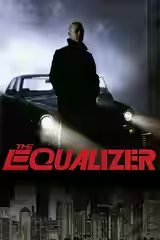
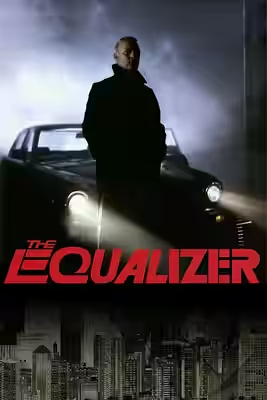
  3. The Equalizer (1985) · not reviewed yetEdward Woodward’s retired agent answers the advert; the show Nolan’s owes most to.

  4. Utopia (2013) · not reviewed yetDennis Kelly’s British conspiracy thriller, yellow and violent, with a far bleaker view of watching.

  5. Mr. Robot (2015, Fi1m 84)Rami Malek’s hacker narrates to us because he cannot talk to anyone else.

Free account

Know what to watch tonight

Two lists that know where things are streaming, collections you can share, your own score beside ours, and Discover that remembers what you have seen.

  • Want to see, sorted by what is streaming now
  • Seen, with your score out of ten
  • No adverts, ever