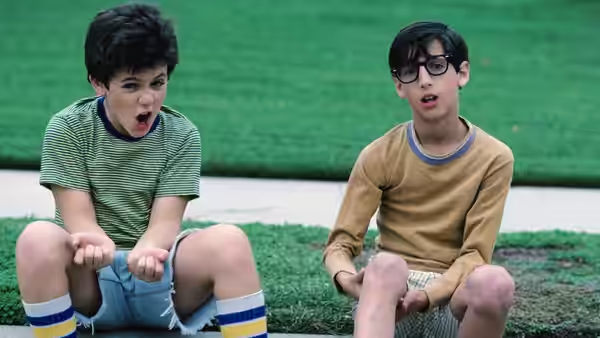
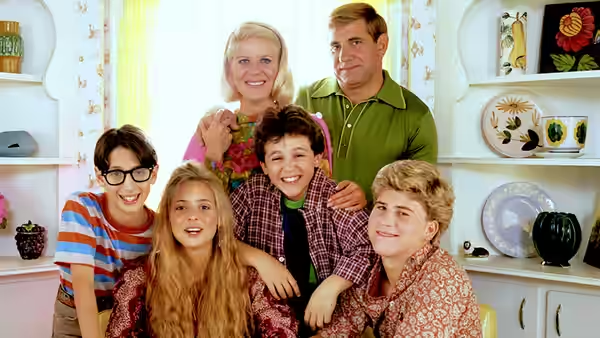
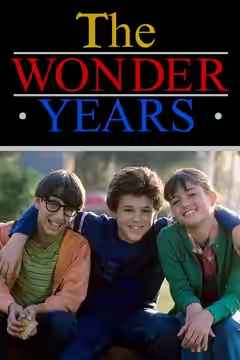
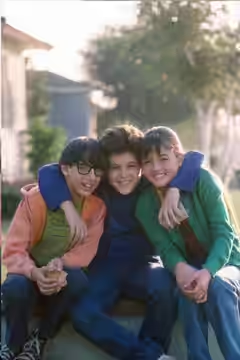
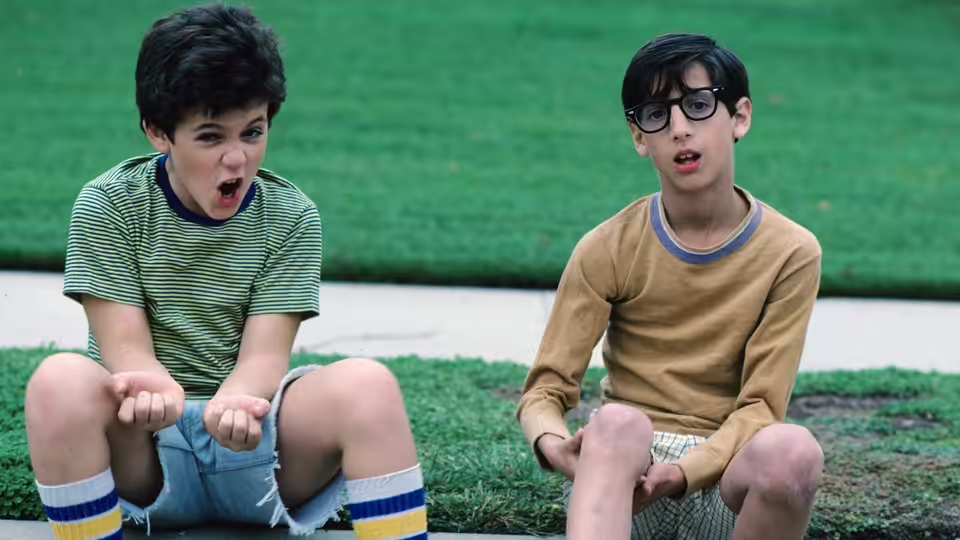
Kevin Arnold (Fred Savage) and Paul Pfeiffer (Josh Saviano) sit on the grass with mouths open
Series review

The Wonder Years

1988 · Created by Neal Marlens, Carol Black · Series · 24m · MPA TV-PG

In a sentenceGrowing up is awkward enough without your adult self arriving to explain it

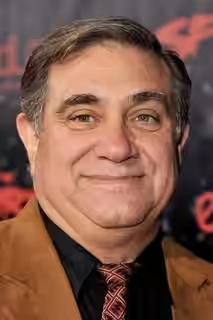
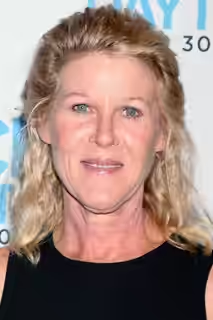
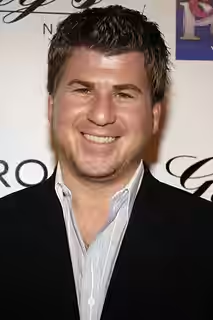
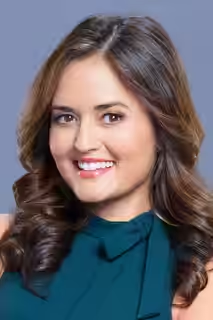
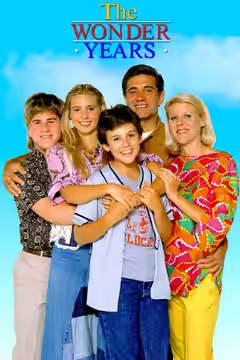
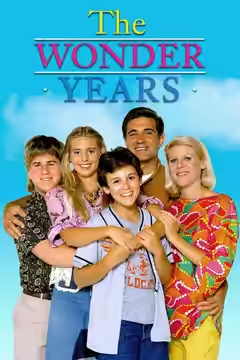
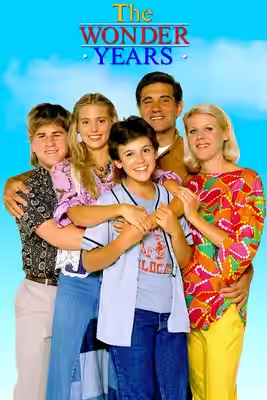
Kevin Arnold (Fred Savage) is growing up, and his adult self, voiced by Daniel Stern, is looking back. His feelings for Gwendolyn ‘Winnie’ Cooper (Danica McKellar) bring hopes and uncertainties he does not know how to handle. Around him are Paul Joshua Pfeiffer (Josh Saviano), John ‘Jack’ Arnold (Dan Lauria) and Norma Arnold (Alley Mills). Kevin wants to get closer to Winnie, but the relationship does not move in a straight line. The boy lives through each embarrassment while the older Kevin puts his experience into words.

Fi1m review

Fred Savage makes The Wonder Years funny and touching without making adolescence look easy. We recommend it warmly, with a reservation about Daniel Stern’s narration, which sometimes explains what the actors have already made clear.

The Wonder Years is a warmly recommended family comedy with one persistent nuisance: it sometimes explains a feeling after the actors have already made it clear. Creators Neal Marlens and Carol Black take adolescence seriously, including the parts an adult might prefer to dismiss as foolish. Kevin Arnold is allowed to be uncertain without becoming a joke the programme tells at his expense. That sympathy gives the series its strength, even when the narration insists on helping.

Fred Savage allows Kevin an awkwardness that a tidier comedy might hurry past. He makes uncertainty visible, and his performance remains interesting even when Kevin has little idea what he is feeling. We felt protective of the boy because Fred Savage makes that confusion so uncomfortable to watch. Daniel Stern’s adult Kevin sometimes seems to have missed how much the younger actor has already told us.

The romance with Gwendolyn ‘Winnie’ Cooper gives Danica McKellar the difficult job of holding our interest in someone Kevin cannot entirely understand. It would be easy for a remembered young romance to become nothing but a reward for the boy doing the remembering. The uncertainty between them is worth staying with, and neither performance needs the relationship settled to hold our attention. Dan Lauria’s John ‘Jack’ Arnold and Alley Mills’s Norma Arnold help the ensemble keep its weight beyond Kevin’s romantic concerns.

The cinematography credited to Newton Thomas Sigel and Mac Ahlberg serves the performances well, keeping the young actors worth watching even beneath the commentary. The pleasure is in watching people register a feeling before they can explain it. Edward L. Parsons’s production design helps Kevin’s surroundings feel inhabited rather than arranged solely for a lesson. That ordinary scale matters in a family comedy: we need to believe these people have somewhere to spend time when nobody is learning anything.

Larry L. Mills’s editing has a delicate job, accommodating the younger Kevin’s experience and the older Kevin’s commentary. At its best, the rhythm gives us time to understand a reaction before the voice supplies its explanation. W.G. Snuffy Walden’s music adds warmth, sometimes more than a scene needs when the narration is also encouraging us to feel wistful. In the 24-minute format, the moments that ask least insistently for our affection are often the ones that earn it.

Daniel Stern’s narration is the chief reservation, precisely because the adult viewpoint is such a useful idea. It allows the series to be kind about mistakes without pretending they did not matter, but it can also repeat what the performance has settled. The writing sometimes pushes a lesson too hard, leaving little for us to work out. Neal Marlens and Carol Black’s approach is more persuasive when we can recognise something foolish we once did without having its significance explained.

We prefer this to family comedies that hurry children towards the useful lesson. Its sympathy for feelings an adult might consider trivial is a good reason to watch it as an adult. Try an episode when you want something gentle that still remembers how much an ordinary embarrassment can hurt.

Critical consensus AI synthesised

3 of 6
Positive
3
Mixed
0
Negative
0
The AV Club
29 January 2015 · Libby Hill
85*

The piece positions the series as a trailblazing single-camera dramedy that prioritized emotional realism over laughs and influenced later prestige comedies. Fred Savage's nuanced lead performance and the empathetic pilot episode are singled out for praise.

Read the full review →
Vulture
8 August 2012
80*

The critic finds the series holds up well overall despite some repetitive narration and ham-fisted moments, praising its emotional core and universality. Fred Savage's performance as Kevin is singled out as particularly incredible and relatable.

Read the full review →
Den of Geek
13 February 2014 · Carley Tauchert
85*

The review celebrates the show's honest portrayal of adolescence and strong ensemble as it finally arrives on DVD. Fred Savage's everyman Kevin and the will-they-won't-they romance with Winnie Cooper are highlighted as key strengths.

Read the full review →

Straight answers AI written, from our review

Is The Wonder Years worth watching?
The Wonder Years is worth watching for anyone who wants a gentle family comedy that takes adolescence seriously, and we scored it 82. Fred Savage makes Kevin Arnold's confusion uncomfortable to watch in the best sense, and the ensemble around him has real weight. Our one reservation is Daniel Stern's narration, which sometimes explains what the actors have already made clear.
How long is The Wonder Years, and what is it rated?
The Wonder Years has episodes of about 24m and is rated TV-PG by the MPA in the US. It is a comedy and drama series.
Where can I watch The Wonder Years in the US?
The Wonder Years is streaming on Hulu and Disney+ in the US. Availability is checked daily; the links above go straight to each service.
How does The Wonder Years compare to Freaks and Geeks?
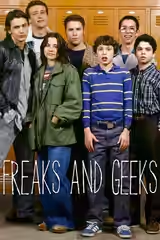
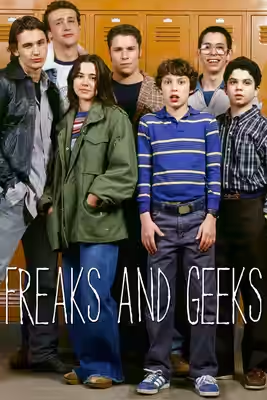
The Wonder Years is the gentler and more sentimental of the two, while Freaks and Geeks is funnier and more uncomfortable, with a patient pace that occasionally drags. Both let young people be embarrassed without making them punchlines. Choose the earlier series for warmth in a short 24-minute format, and the later one if you prefer school life shown with fewer explanations and sharper edges.
What should I watch after The Wonder Years?
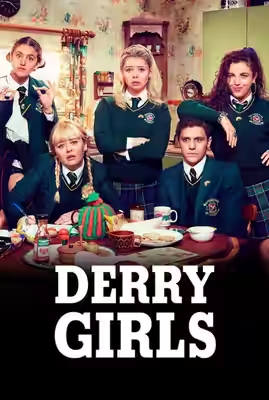
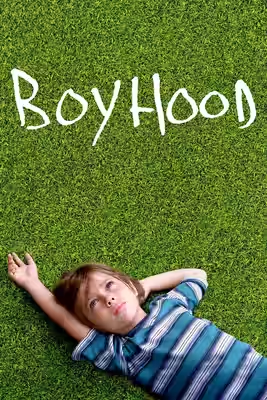
After The Wonder Years, try Freaks and Geeks (1999, Fi1m 88): For adolescent embarrassment played by people who never feel like punchlines. Then Derry Girls (2018, Fi1m 83): For friendship and family friction, with sharper elbows and louder laughs; and Boyhood (2014, Fi1m 88): For the small changes in family life that become enormous in hindsight.

Cast

If you liked this, try…

  1. Freaks and Geeks (1999, Fi1m 88)For adolescent embarrassment played by people who never feel like punchlines.

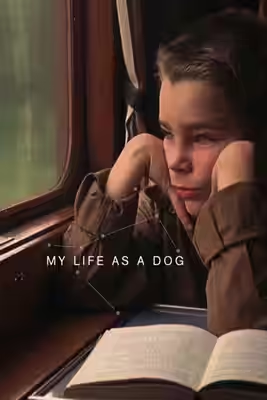
  2. My Life as a Dog (1985) · not reviewed yetAnother child’s difficult growing up, with humour that allows room for hurt.
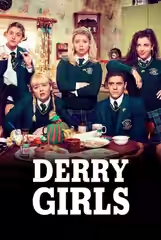
  3. Derry Girls (2018, Fi1m 83)For friendship and family friction, with sharper elbows and louder laughs.

  4. Boyhood (2014, Fi1m 88)For the small changes in family life that become enormous in hindsight.

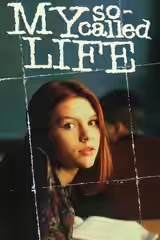
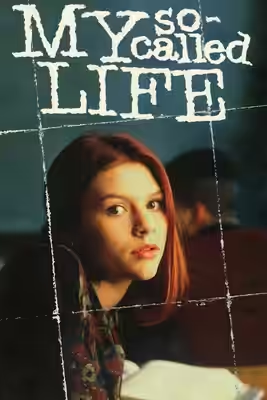
  5. My So-Called Life (1994, Fi1m 87)For teenage feelings taken seriously without making the teenagers unbearably noble.

Free account

Know what to watch tonight

Two lists that know where things are streaming, collections you can share, your own score beside ours, and Discover that remembers what you have seen.

  • Want to see, sorted by what is streaming now
  • Seen, with your score out of ten
  • No adverts, ever