Jane Anderson writes long marriages and the women who make them uncomfortable, and she trusts a face to carry what a speech would spoil. Olive Kitteridge is the best of it; the rest of her screen work is thinner than the talent deserves.
Fi1m perspective
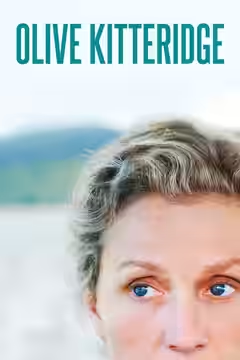
Henry Kitteridge stands alone in his pharmacy after a customer has gone, holding a look he would never let his wife see. Jane Anderson gives him no line. The teleplay leaves the moment to Richard Jenkins and to Lisa Cholodenko's camera, and that is the Anderson habit in one scene: she writes the silence and lets the actor say it. Olive, who has never softened a sentence to spare anyone, gets the words; Henry, who softens all of his, gets the silence.
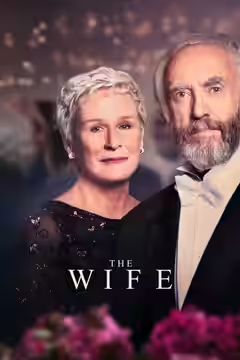
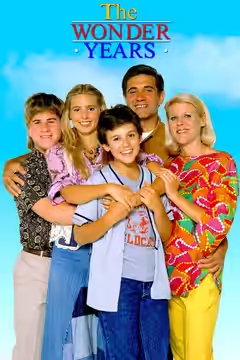
She came to writing from acting, in the late 1970s and early 1980s, and then spent years in sitcoms, including The Facts of Life and The Wonder Years, with a short-lived series of her own, Raising Miranda (1988), along the way. The plays came next, starting with The Baby Dance (1989), and with them the television films she wrote and often directed herself, among them Normal (2003), from her own stage piece. There is one episode of Mad Men (2008), 'The Gold Violin', and one feature she directed alone, The Prize Winner of Defiance, Ohio (2005), about a 1950s housewife. Then Olive Kitteridge (2014), and The Wife (2017), a screenplay about marriage and authorship for Glenn Close.
The subject barely moves across forty years: a difficult woman, a marriage, a household with expectations pressing on it. Anderson has said that these women are more exciting to write than heroic leads who have been written to death, and Olive Kitteridge is the proof. It takes a marriage in which neither party would say the word love out loud and makes that the whole story, and with Jeffrey M. Werner's editing jumping years at a time it asks us to read the gap from a face rather than a caption. We were moved more than we expected by a man weighing out pills, and the writing earned that by declining to explain him.
The weakness shows once the marriage has settled into its shape. The second half of Olive Kitteridge drifts, and the grown son's strand is thin: the script shows us the causes of his grievance without the accumulation, so the scenes play as summary. Anderson is at her best when two people share a kitchen and at her least sure when she has to cover a lifetime in a handful of scenes.
On Mad Men and The Wonder Years she is one name among many in the writers' room, and neither series needs her to explain it. Her own directing has stayed mostly on television, with that single solo feature, and it is hard not to wish she had been given more. Start with Olive Kitteridge, over two evenings, and watch what she does not write.
Biography
Jane Anderson is an American playwright, screenwriter, filmmaker and actress. She wrote for the AMC series Mad Men (2007), contributing to the second season.
She wrote and directed the feature film The Prize Winner of Defiance, Ohio (2005) and the screenplay for It Could Happen to You (1994). Anderson received a Primetime Emmy Award for her teleplay for the miniseries Olive Kitteridge (2014). Other credits include episodes of The Wonder Years (1988) and The Facts of Life (1979), the screenplay for The Wife (2017), and the teleplay and direction for Normal (2003). She began her career as an actress in New York before moving to Los Angeles in the early 1980s to write for film and television.