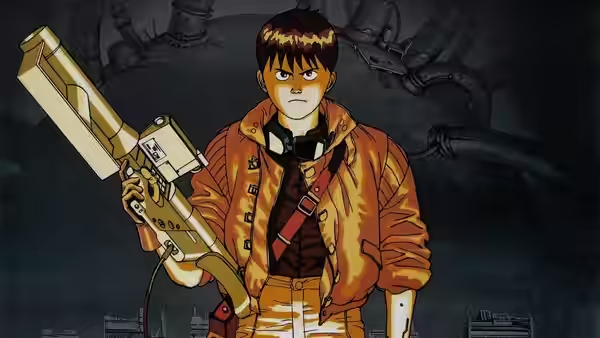
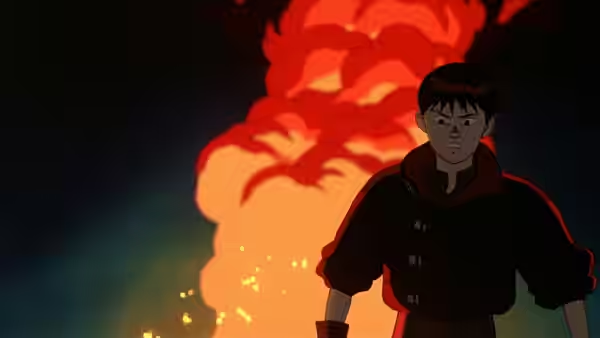
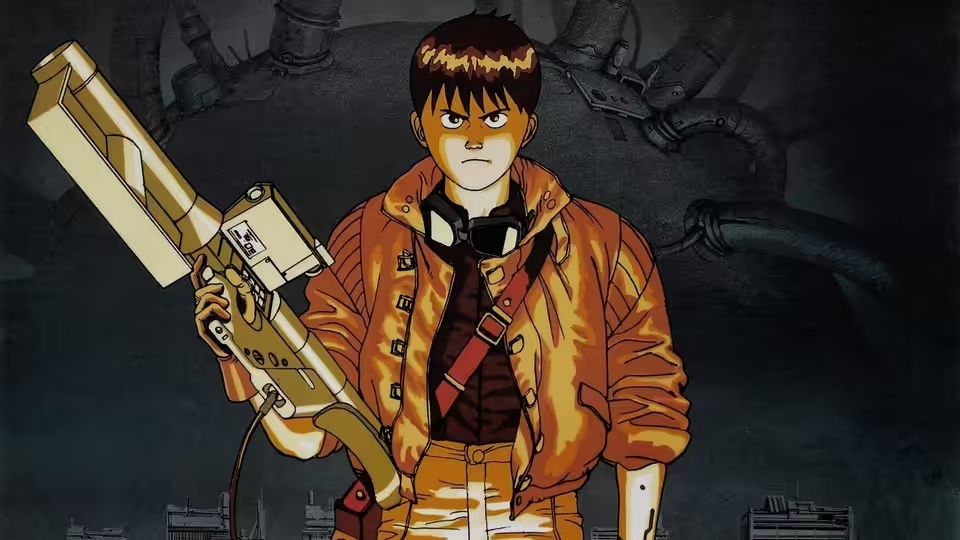
Kaneda gripping a large futuristic weapon in a dark industrial area
Film review

Akira

1988 · Directed by Katsuhiro Otomo · 2h 04m · MPA NR

In a sentenceWe would happily pause the apocalypse for a better look at the buildings

Shotaro Kaneda (voiced by Mitsuo Iwata) and Tetsuo Shima (Nozomu Sasaki) are caught up in the violence of Neo-Tokyo, where rebellion and struggles over power put their friendship under pressure. Their story unfolds alongside those of Kei (Mami Koyama), Colonel Shikishima (Taro Ishida) and Doctor Ônishi (Mizuho Suzuki). Katsuhiro Otomo directs and co-writes this animated science-fiction film, set in a city shaped by destruction and threatened by more. Motorcycle action runs alongside a conflict over scientific knowledge and its uses, as the personal struggle between Kaneda and Tetsuo becomes entangled with the city’s troubles.

Plays from YouTube when you press play; nothing loads from them until then.

Fi1m review

Katsuhiro Otomo’s Akira makes a violent future frighteningly tangible through its hand-drawn city and hurtling action. We recommend it for that conviction, with a warning: the crowded story gives several characters too little room.

Akira is worth an evening for its furious action and the care lavished on its city, even when the story becomes difficult to untangle. Director Katsuhiro Otomo wants the changing friendship at its centre to matter amid rebellion, violence and struggles over scientific power. That is a lot to fit together, and the connections are sometimes hurried. The excitement survives those problems, though several supporting characters could have used some of the attention given to the scenery.

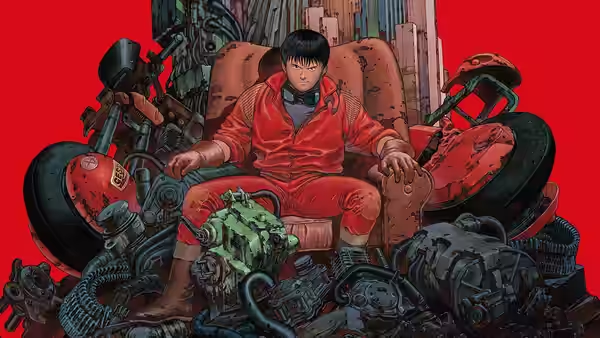
The hand-drawn city is the main reason to stay with it. Katsuji Misawa’s cinematography keeps the elaborate artwork and strong colours clear enough for us to look around as well as follow the action. The density of the cityscapes makes Neo-Tokyo feel as though it has uses beyond providing somewhere for the plot to happen. We can enjoy the production design without waiting for the next eruption of violence. The buildings deserve a closer look.

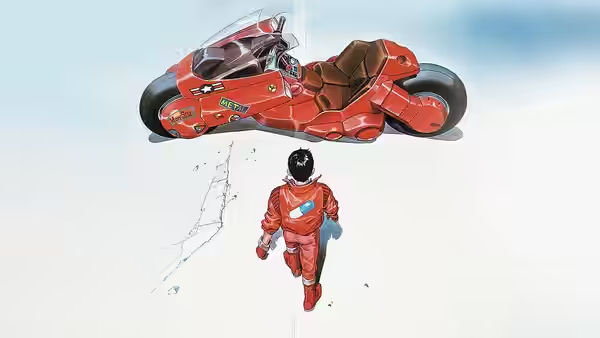
We were exhilarated by the motorcycle sequence: the densely drawn streets remain readable at speed. Takeshi Seyama’s editing gives the action a direction we can follow, letting us enjoy the movement without continually working out where to look. The drawings carry the excitement, and the cutting knows how to help them. There is some stiffness in the animation of human movement elsewhere, a small but visible limitation in a film that sets such exacting standards for itself.

Kaneda and Tetsuo, voiced by Mitsuo Iwata and Nozomu Sasaki, give the violence a necessary personal interest. Their changing friendship is something we can hold on to when the wider story starts demanding too much explanation. Otomo and fellow screenwriter Izo Hashimoto do not give everyone the same chance to matter, and the growing crowd of characters makes the storytelling feel rushed. Kei, voiced by Mami Koyama, belongs to a supporting cast we would gladly have spent longer getting to know.

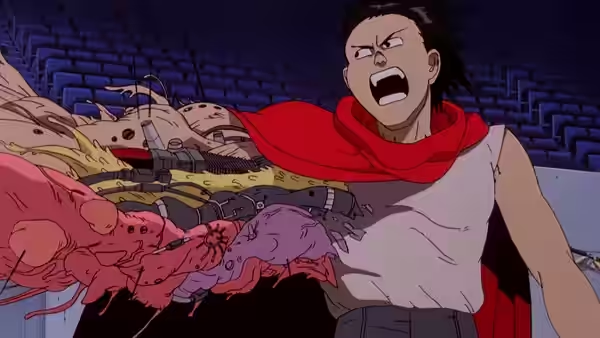
Shoji Yamashiro’s music helps keep the violence unsettling. It gives the action weight, and we never felt invited simply to cheer the damage. That matters in a film concerned with scientific knowledge used without enough thought for its consequences: the excitement needs something to stop it becoming an endorsement. The sound supplies much of that unease, even when the images are at their most seductive.

At 124 minutes, there is room here for more patient storytelling, and we would have traded a little spectacle for it. In science fiction, an imagined place needs to convince us that people could live there before asking us to fear for them. Akira does that through the sheer care of its urban detail, and its anxiety about destruction survives the muddled passages. Choose a large screen if possible; there is too much to look at to spend the evening squinting.

Critical consensus AI synthesised

82
Positive
15
Mixed
0
Negative
1

Most critics are agreed: fifteen of sixteen reviews are positive, and the praise clusters almost entirely on the animation. The hand-drawn artwork, the detail in each frame of Neo-Tokyo, the colour and the scale of the destruction are named again and again, along with the sound and score. Several reviews treat the film as a turning point for animation and a model for much that followed. The themes are noted too: nuclear anxiety, distrust of government, a lost generation.

The reservations are about the story. Even admiring reviews call the plot crowded, rushed or overcomplicated, with too many characters and supporting players who matter less than the spectacle; the English dub and some stiffness in human movement also get a mention. The one dissent comes from the Los Angeles Times, which finds the film a jumble of clichés and thinks viewers without knowledge of the source comics will be lost. Otherwise the spread is narrow, running from warm to rapturous.

Empire
1 January 2000 · Kim Newman
90*

The critic describes Otomo's film as an ingenious cyber-punk epic beginning and ending with devastation, obsessed with power, rebellion and a changing friendship. It singles out the scintillating hand-drawn animated visuals as unmatched, declaring the film vitally important to cinema.

Read the full review →
Evening Standard
10 April 2012
90*

The critic hails Katsuhiro Otomo's 1988 anime as his finest achievement, a brilliantly drawn extravaganza now restored in high definition. It singles out the film's aesthetic passion, visual flair and underlying philosophy amid its anarchic violence as what elevates it among the greatest animated features.

Read the full review →
The New York Times
19 October 1990 · Janet Maslin
90*

The critic calls 'Akira' a phenomenal work of animation with the hallmarks of an instant cult classic. She singles out the intricate, detailed artwork and vibrant color palette for praise.

Read the full review →
The Times
17 April 2026 · ★★★★☆ · Kevin Maher
90*

The astonishing 1988 animation is essential viewing that you cannot write the story of popular culture without. Its hand-drawn artistry is impeccable and the visuals, cityscapes and action have endured as ideologically bleak, incessantly violent and astonishing.

Read the full review →
Variety
31 December 1987 · festival review · Variety Staff
90*

The review describes the film as a lavish animation extravaganza and a remarkable technical achievement in design and sound. It notes a minor drawback in the slight stiffness of human movement animation.

Read the full review →
Screen Daily
18 December 2015
85*

The piece celebrates Akira as one of the most vivid and technically accomplished animation films ever made. It singles out the unprecedented use of 160,000 cels for fluid detail and the innovative pre-scoring of dialogue, crediting it with elevating animation for a sophisticated global audience and inspiring later filmmakers.

Read the full review →

Straight answers AI written, from our review

Is Akira worth watching?
Akira is worth watching for anyone who can take a violent, crowded science-fiction story in exchange for a hand-drawn city of rare care, and we scored it 83. The motorcycle action is exhilarating and Neo-Tokyo feels lived in, but the story hurries its connections and several supporting characters are left with too little room. Choose the largest screen you can.
How long is Akira, and what is it rated?
Akira runs 2h 04m and is rated NR by the MPA in the US. It is an animation and science fiction film.
Where can I watch Akira in the US?
Akira is streaming on The Roku Channel in the US. Availability is checked daily; the links above go straight to each service.
How violent or frightening is Akira, and is it suitable for children?
Akira carries a UK 12 certificate and is a violent film, with rebellion, street fighting and destruction running throughout its 124 minutes. Shoji Yamashiro’s music keeps that violence unsettling rather than cheerful, which is to its credit but makes it heavier going than most animation. We would not suggest it for younger children; older children and teenagers used to action films should manage.
How does Akira compare to Metropolis?
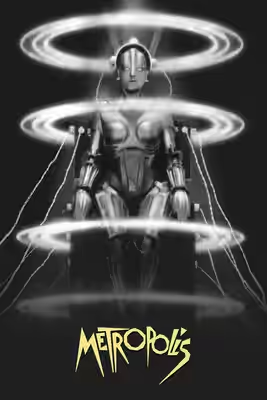
Akira and Metropolis are both visions of a divided future city whose buildings show who holds the power, and both are worth seeing for their scale and visual precision. Otomo’s film is louder and more violent, and its story is the more crowded; Lang’s is the more coherent but offers a cure for class conflict we found much too easy. Take Akira for action, Metropolis for grandeur.
What should I watch after Akira?
After Akira, try Metropolis (1927, Fi1m 87): Another divided future city whose buildings tell us who holds the power. Then Fantastic Planet (1973, Fi1m 80): Strange animation makes domination and rebellion unsettling to watch, even without familiar human faces; and Ghost in the Shell (1995, Fi1m 83): A more contemplative cyberpunk city, with questions about who owns a body.

Cast

Awards

Annecy Cristal for a Feature Film, 1989

Nominated
Annecy Cristal for a Feature Film

If you liked this, try…

  1. Metropolis (1927, Fi1m 87)Another divided future city whose buildings tell us who holds the power.

  2. Fantastic Planet (1973, Fi1m 80)Strange animation makes domination and rebellion unsettling to watch, even without familiar human faces.

  3. Scanners (1981) · not reviewed yetScientific meddling and dangerous minds, with bodily damage that remains difficult to forget.

  4. Ghost in the Shell (1995, Fi1m 83)A more contemplative cyberpunk city, with questions about who owns a body.

  5. Children of Men (2006, Fi1m 85)A collapsing society made convincing through street detail and carefully organised chaos.

Free account

Know what to watch tonight

Two lists that know where things are streaming, collections you can share, your own score beside ours, and Discover that remembers what you have seen.

  • Want to see, sorted by what is streaming now
  • Seen, with your score out of ten
  • No adverts, ever