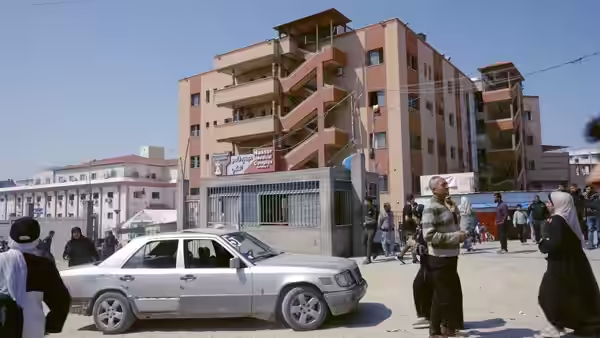
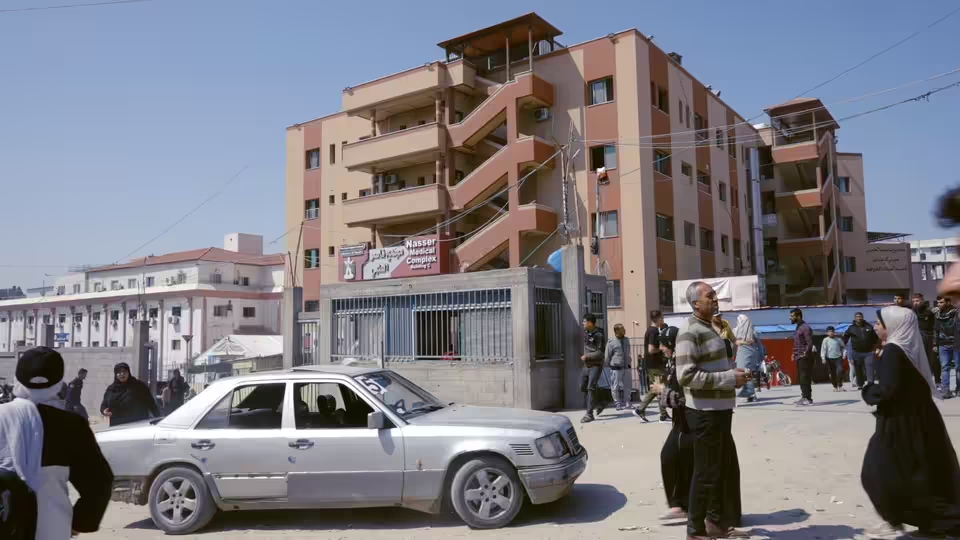
People gathered around a silver sedan on a dusty street near apartment buildings
Film review

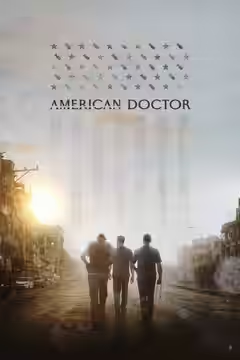
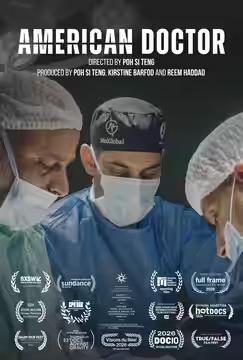
American Doctor

2026 · Directed by Poh Si Teng · 1h 31m

In a sentenceThree doctors who can save a child in Khan Younis and cannot get four clear minutes on cable news

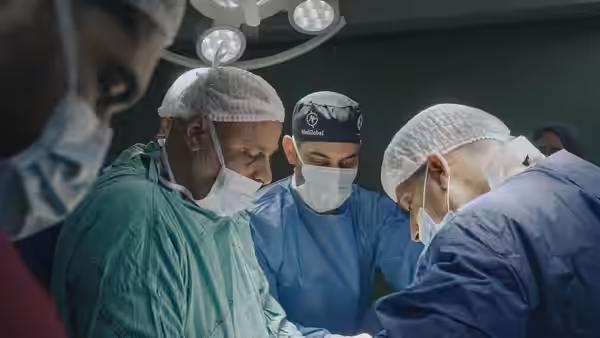
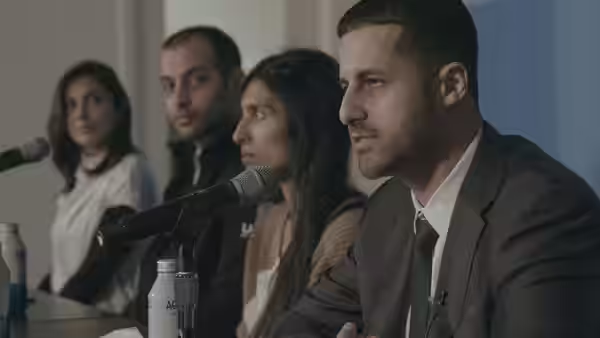
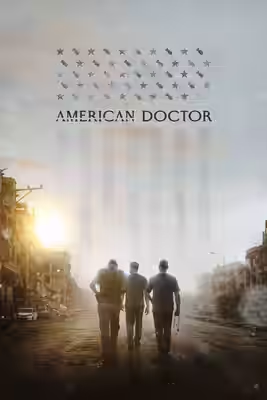
Three American doctors, Thaer Ahmad, Mark Perlmutter and Feroze Sidhwa, leave their practices in the United States and fly to Gaza to volunteer in its hospitals. Between them they are a Palestinian American, a Jew and a Zoroastrian, and the film is interested in how differently they are listened to. In the wards of Khan Younis they treat the wounded, many of them children, with whatever supplies remain, and early on they argue among themselves about whether the footage of what they see should be shown at all. Back in America they take their accounts to television studios, including an appearance opposite Dana Bash on CNN, and to Hasan Piker, trying to get a hearing. Poh Si Teng directs, writes and produces.

Fi1m review

Poh Si Teng follows three American doctors into a Gaza hospital and does not look away; the wards are as hard to sit through as anything we have seen. The scenes at home, in front of cameras and microphones, are less sure of what they are for.

Poh Si Teng’s first feature runs 91 minutes and most of it takes place in hospitals in Gaza, where three American doctors have gone to volunteer. Thaer Ahmad, Mark Perlmutter and Feroze Sidhwa are, between them, a Palestinian American, a Jew and a Zoroastrian, and the film is interested in that arithmetic, because it turns out to matter who is doing the telling. It is a good film, in stretches a remarkable one. It is at its best when the doctors are working and at its weakest when they are explaining the work to people who have invited them on air.

The film states its terms early. In one of the first scenes the doctors argue about whether footage of the wounded should be shown at all, and Teng comes down on one side of that argument and stays there. Ibrahim Al-Otla and Chris Renteria’s cameras go into the operating theatres and do not leave when a child is carried in. We were horrified, and we want to be plain about why. It was not the blood, which any war film has. It was the ordinary competence of the people standing over it, asking for instruments by name and being told there were none, and carrying on anyway. Nobody on screen behaves as if a camera were present, and we believed that.

Sidhwa is the one we kept watching. He speaks quietly, he does not perform his tiredness, and when he describes what he has seen he describes it as a clinician would, in the order it happened, with the injuries named. Ahmad and Perlmutter are given less screen time in the wards and more in America, and the film is honest that the three men do not agree on how to be useful once they are home. The film knows that who is speaking, and from which background, will be read a particular way, and it lets that happen without underlining it.

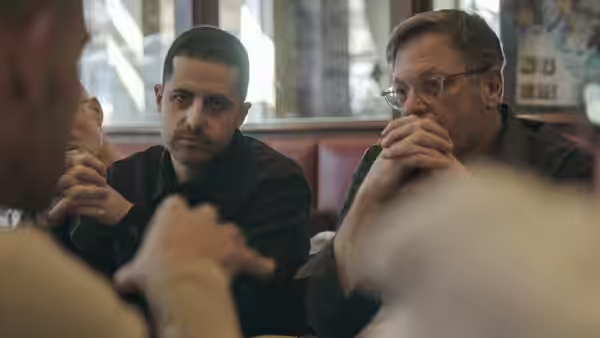
The American half is the problem. Here the doctors sit under studio lights, wait for their segment, and are handled. Dana Bash appears in archive footage from CNN, and Hasan Piker turns up to give one of them a longer run than television will. The point, that a doctor who has held a dying child gets four minutes and a set of follow-up questions about balance, is a fair one and the film makes it. Then it makes it again. The wards need no argument; the studios are all argument, and they are the part of the film that dates.

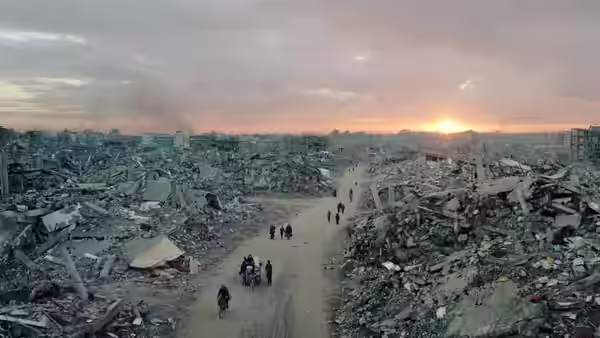
Ema Ryan Yamazaki and Christopher White cut between continents, and the seams show. The intertitles do not always agree with each other about when we are, and twice we lost track of whether we were watching the ceasefire of 2025 or the months before it. Suad Bushnaq and Suvo Sur’s score is used sparingly, and the film is better for it; the sound of a ward, with its generators and its shouting, needs no help. Teng closes on a montage of ruined buildings that we did not need. We had seen the ruin already, in the faces of the men leaving it.

There are no inspiring moments in the usual sense, and we counted that as a virtue. Nobody is saved by a speech. The doctors go home thinner and angrier and not obviously heard, and the film does not pretend otherwise. Set against the run of medical documentaries that want you to feel better about doctors, this one wants you to feel worse about everything else.

See it in a cinema, where you cannot pause it, because you will want to. The hospital scenes are the reason it exists and they are not easy to sit through; that is the point of them, and it is a point well made. Bring someone to walk home with.

Critical consensus AI synthesised

80
Positive
9
Mixed
0
Negative
0

Every one of the nine reviews is positive. The praise centres on Poh Si Teng’s refusal to look away: critics single out the hospital scenes in Gaza, the graphic footage of the injured and dead, and an early argument among the doctors over whether such images should be shown at all, which Variety takes as setting the film’s moral purpose. The three American physicians, of different faiths and backgrounds, are widely found to be strong subjects, and their differing approaches to advocacy once home give the film its shape.

The reservations are small and scattered. Screen Daily finds the timeline muddled by inconsistent intertitles and a structure that hops between continents. The Hollywood Reporter thinks the closing montage of destruction unnecessary. The New York Times finds the American footage less immediate than the hospital work. The spread is narrow; the most enthusiastic notices come from the later release rather than the festival run.

IndieWire
14 August 2026 · David Ehrlich
90*

The critic calls the film bracing and essential, commending how it spotlights the doctors' remarkable capabilities and serves as an effective call to action amid the ongoing crisis in Gaza.

Read the full review →
The AV Club
11 August 2026 · Jacob Oller
90*

The critic describes the documentary as one of the year's most powerful, highlighting its graphic footage and the doctors' diverse backgrounds as they strive to document and combat denial of atrocities in Gaza hospitals. It worries that even this may not be enough to prompt change.

Read the full review →
Screen Daily
24 January 2026 · festival review
80*

The review describes Poh Si Teng’s debut as an unflinching, verité-driven documentary that delivers an emotional gut-punch portrait of US medics volunteering in Gaza hospitals amid conflict. It singles out the film’s refusal to look away from graphic scenes of injury and death, including children, while noting some timeline confusion from inconsistent intertitles and continent-hopping structure.

Read the full review →
Variety
26 January 2026 · festival review · Murtada Elfadl
80*

Premiering at Sundance, the film follows three American doctors of different backgrounds volunteering in Gaza, capturing their operating room work, media appearances, and differing approaches to advocacy while questioning whose voices matter. The critic commends the visceral testimony on targeted hospitals and the moral purpose set by an early argument over showing graphic images.

Read the full review →
Los Angeles Times
21 August 2026 · Tim Grierson
70*

The documentary follows three U.S. physicians (one Palestinian American, one Jewish, one Zoroastrian) treating war casualties in Gaza and advocating in the U.S., balancing character study with the grim realities of the conflict. The critic notes the lack of inspirational moments, the personal costs to the doctors, and praises the focus on Sidhwa as the most striking figure with moral authority.

Read the full review →
The Hollywood Reporter
23 January 2026 · festival review · Jordan Mintzer
70*

The critic praises the film's primary focus on the humanitarian efforts and courage of three American physicians volunteering in Gaza, emphasizing the unflinching portrayal of their medical work and dire conditions over overt politics. A minor complaint is an unnecessary final montage of destruction.

Read the full review →

Straight answers AI written, from our review

Is American Doctor worth watching?
American Doctor is worth watching, and we scored it 80, for anyone who can sit through 91 minutes that mostly take place in a Gaza hospital and do not look away. The scenes in the wards are as hard as anything we have seen and are the reason the film exists; the American half, in television studios, makes its fair point about being handled and then makes it again.
How long is American Doctor, and what is it rated?
American Doctor runs 1h 31m. It is a documentary film.
Where can I watch American Doctor in the US?
American Doctor is not on any streaming or rental service in the US at the moment. Availability is checked daily.
How does American Doctor compare to For Sama?
American Doctor and For Sama both take you inside a besieged hospital and refuse to cut away, but For Sama is the harder and more intimate film, shot from within the siege by a mother addressing her daughter. American Doctor is told through outsiders who go home, and it loses its footing once they are in front of cameras. Watch the Aleppo film first.

Cast

If you liked this, try…

  1. For Sama (2019, Fi1m 88)A young mother films a besieged hospital in Aleppo; harder and more intimate than any report.

  2. The Cave (2019) · not reviewed yetAn underground Syrian hospital run by a woman doctor, shot with the same refusal to look away.

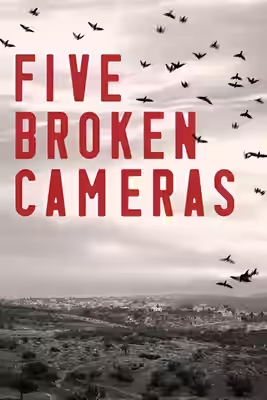
  3. 5 Broken Cameras (2011) · not reviewed yetA Palestinian farmer’s cameras, destroyed one by one, record a village over five years.

  4. Hospital (1970) · not reviewed yetFrederick Wiseman in a New York emergency room; the ancestor of every verité ward film.

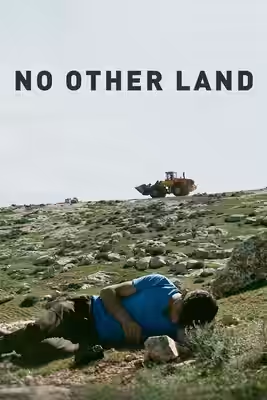
  5. No Other Land (2024) · not reviewed yetA Palestinian and an Israeli film the demolition of a West Bank community together.

Free account

Know what to watch tonight

Two lists that know where things are streaming, collections you can share, your own score beside ours, and Discover that remembers what you have seen.

  • Want to see, sorted by what is streaming now
  • Seen, with your score out of ten
  • No adverts, ever