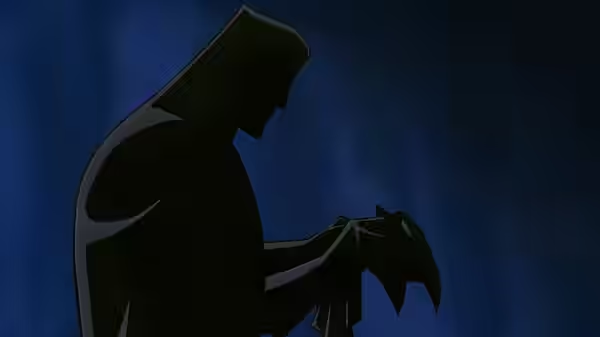
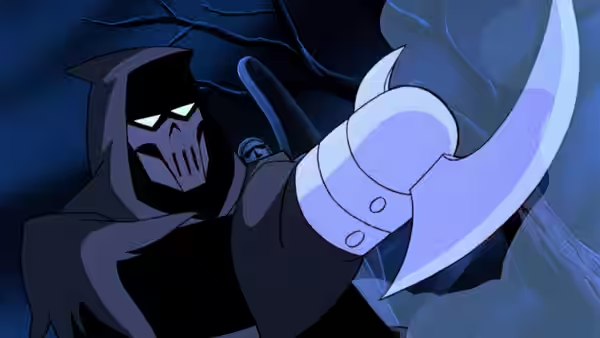
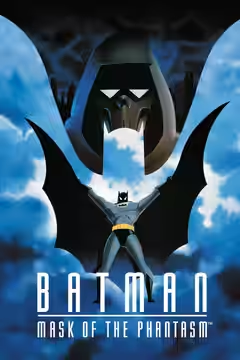
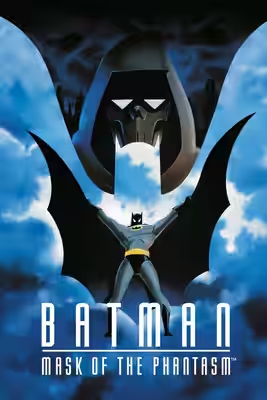
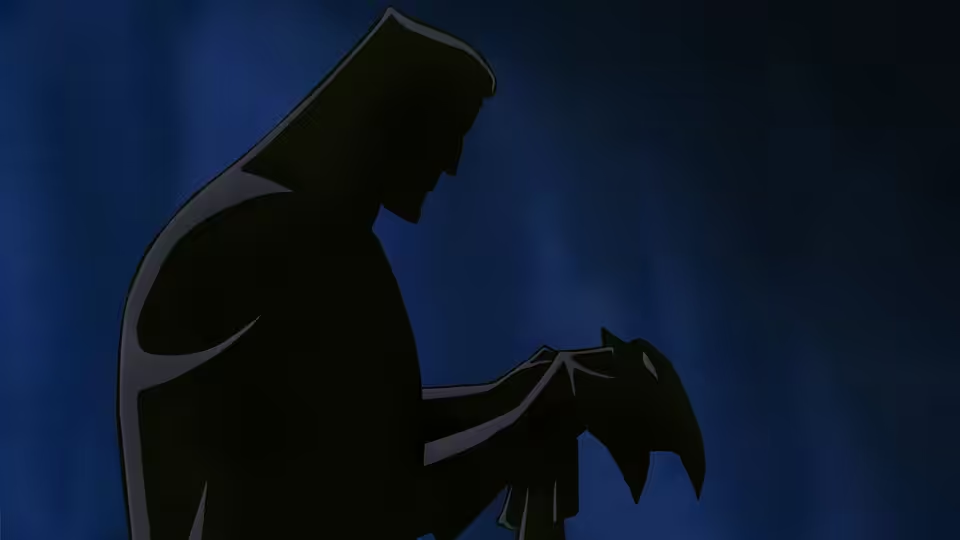
A hooded figure in silhouette holds a clawed gauntlet
Film review

Batman: Mask of the Phantasm

1993 · Directed by Bruce Timm, Eric Radomski · 1h 16m · MPA PG

In a sentenceGotham in charcoal and gold, a girl who got away, and a Batman voiced by a man who never needed the suit

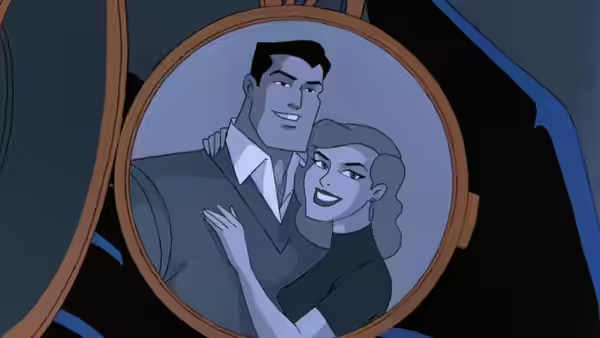
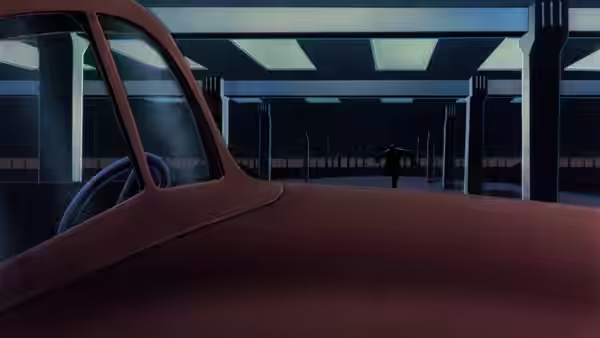
Gotham City. A cloaked, skull-faced figure murders the gangster Chuckie Sol (Dick Miller) in a multi-storey car park, and by morning Councilman Arthur Reeves (Hart Bochner) is on television blaming Batman (Kevin Conroy). The same week Andrea Beaumont (Dana Delany), the woman Bruce Wayne nearly married, comes home. The film cuts between present and past: a young Bruce meeting Andrea at his parents’ grave, building his first mask, asking whether he must keep the promise he made as a boy. A second mobster, Buzz Bronski (John P. Ryan), dies among the headstones, and the ageing boss Salvatore Valestra (Abe Vigoda) works out he is next. Batman must clear his name and find what links the killer to Andrea and her father, Carl (Stacy Keach).

Plays from YouTube when you press play; nothing loads from them until then.

Fi1m review

Spun off from the animated television programme and over in 76 minutes, this is the Batman film most interested in Bruce Wayne. A small, sad detective story, handsomely drawn if sometimes stiffly moved, and the one we would hand to anyone tired of the character.

The cape and the car are here, and so is the Joker, but Batman: Mask of the Phantasm is about a man who once had a chance to be ordinary and turned it down. Eric Radomski and Bruce Timm, directing a feature spun off from their television programme, keep it to 76 minutes and a PG certificate, and inside that space fit a proper mystery, a love story and a case for why Bruce Wayne does what he does. It is, in places, a cartoon that moves like one, and we will come to that.

The set-up is a whodunit. A grey-cloaked killer is working through Gotham’s old mobsters, and because it wears a cape, the city decides it must be Batman. Councilman Arthur Reeves (Hart Bochner) leads the chorus. At the same time Andrea Beaumont (Dana Delany) comes home, and the script, by Paul Dini, Alan Burnett, Michael Reaves and Martin Pasko from Burnett’s story, starts cutting back to the year Bruce met her at his parents’ grave and nearly gave the whole thing up. Al Breitenbach’s editing makes those jumps feel like memory rather than exposition: a sound or a face in the present, then the past, then back.

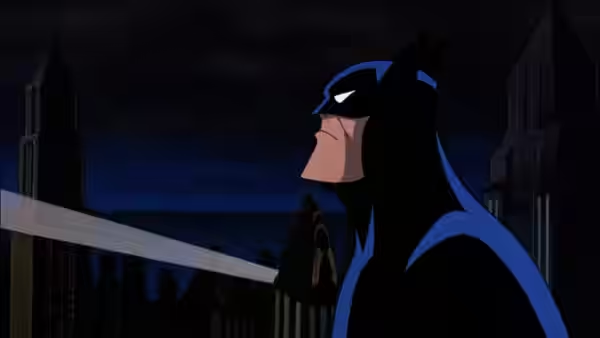
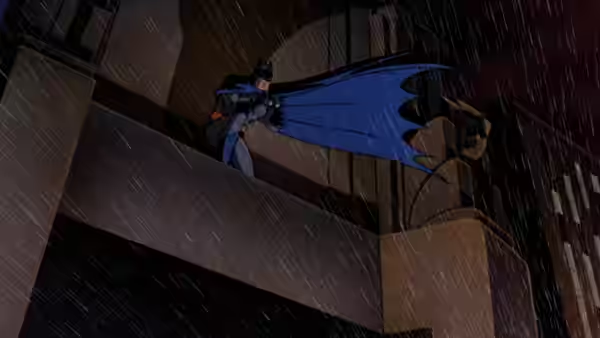
The town is the best thing in it. Gotham here is black paper and gold light, towers with stepped crowns, a police blimp hanging over the rooftops like a moon. The finale takes place in the ruins of a World’s Fair, a scale model of a city of tomorrow with tiny monorails still running through it, and Batman moving through a miniature future that never happened is a picture we have carried around for years. The character animation cannot always keep up with the backgrounds. Walks are stiff, faces hold their shape a beat too long, and the fights are sometimes one cut and a puff of smoke. The cemetery sequence, with the Phantasm coming and going in fog, is the exception, and it is frightening.

Kevin Conroy is the reason the film has a centre. His Bruce Wayne and his Batman are two different voices, one warm and slightly hesitant, one dropped a register and flat, and the film’s argument is in the gap between them. Delany gives Andrea a quickness; she is the only person in the film funnier than Bruce. Mark Hamill’s Joker arrives late, and we will not say how or why, only that he is the loudest thing in a quiet film.

The scene that got us is small. A young Bruce, happy for the first time since childhood, stands at his parents’ headstone in the rain and asks them to let him off. He has met someone. He did not expect to. Conroy’s voice thins to almost nothing on the word “happy”, and Shirley Walker, whose score elsewhere is brass and a chanting choir, drops to a single piano line under it. We were moved more than we had any right to expect from a film with a bat-shaped car in it, and we were moved because nobody on screen raised their voice.

The brevity costs something. The romance has to be established, threatened and lost in a handful of flashbacks, and there are moments when we are told the two of them are in love rather than watched falling. Reeves is a plot device in a good suit. And the last act, once the Joker takes charge of it, becomes a chase-and-explosion finale, well staged and slightly beneath the film that leads up to it.

Most critics have placed it near the top of the character’s outings, and we agree. A couple of reviewers in 1993 complained that the animation was television-grade and the story too dark for children; they were half right about the first and wrong about the second. Set against the live-action Gotham films of the same years, this one has a tighter plot and a clearer idea of what its hero has lost.

Watch it with a child old enough to sit through a murder in a car park and to ask why the man in the cape looks so sad. Have an answer ready.
Critical consensus AI synthesised

81
Positive
9
Mixed
0
Negative
1

Most critics like this a great deal, and the praise gathers in the same place: the film treats Bruce Wayne’s grief and his failed romance with Andrea Beaumont as the story, and keeps the costumed business in service of it. Several reviewers rank it above the live-action Batman films of its time for plotting and sincerity. Kevin Conroy and Mark Hamill’s voice work is singled out repeatedly, as are the art-deco Gotham backgrounds and Shirley Walker’s mournful score. The brisk 76-minute running time is counted as a virtue.

The spread is wide at the bottom, though the dissent is old. The Los Angeles Times, writing on release, finds the animation stiff and the voice acting campy, too dull for adults and too violent for small children. Variety, positive overall, agrees the animation is clunky and thinks the film suits adults better than its intended young audience. The later reviews, from 2011 onwards, contain almost no reservations at all.

The AV Club
18 April 2011 · A · Oliver Sava
95

The critic praises the film as the ultimate expression of the series creators' vision, highlighting its sweeping romantic tragedy, psychological depth, strong voice performances (especially Mark Hamill's Joker), and how it expands on Bruce Wayne's mythology through flashbacks and emotional conflict.

Read the full review →
Little White Lies
18 September 2016 · Greg Evans
90*

The critic calls it the most accurate and nuanced Batman portrayal on screen, praising its focus on loss, grief and Bruce Wayne's inner conflict over spectacle. Kevin Conroy's voice performance is singled out as arguably the best in the role.

Read the full review →
RogerEbert.com
7 November 2018 · Matt Sigur
90*

The film is the best live-action or animated Batman movie of its era because it takes the character seriously and focuses on his emotional life and origin. It excels through tight storytelling, noir flashbacks, and animation that enables dynamic action sequences impossible in live-action.

Read the full review →
Slant Magazine
22 September 2023 · Jake Cole
90*

The critic calls the film a beloved crystallization of Batman: The Animated Series, praising its retro-future aesthetic, hard-boiled detective roots, and focus on Bruce Wayne's romance with Andrea Beaumont as a tragic, emotionally resonant story that has aged well.

Read the full review →
Empire
1 January 2000
85*

This spin-off from the Batman animated series is the best cartoon feature of 1993. It is better-plotted than Tim Burton’s live-action films, shares their semi-tragic characterisation of the conflicted superhero, and celebrates the art-deco gothic of Gotham.

Read the full review →
Variety
27 December 1993 · Leonard Klady
70*

The baroque animated thriller is a sophisticated throwback more appealing to adults than its youthful target audience, with strong voices and pulp storytelling but clunky animation that limits its theatrical appeal. It offers a fun, fatal romp with a high-pitched drama and earnest characters.

Read the full review →

Straight answers AI written, from our review

Is Batman: Mask of the Phantasm worth watching?
Batman: Mask of the Phantasm is worth watching for anyone tired of the character, and we scored it 82. In 76 minutes it fits a whodunit, a love story and the clearest account of why Bruce Wayne does what he does, with Kevin Conroy's two voices giving it a centre. The character animation is stiff in places and the finale is louder than the film that leads up to it.
How long is Batman: Mask of the Phantasm, and what is it rated?
Batman: Mask of the Phantasm runs 1h 16m and is rated PG by the MPA in the US. It is an animation and crime film.
Where can I watch Batman: Mask of the Phantasm in the US?
Batman: Mask of the Phantasm is streaming on HBO Max, Hulu and The Roku Channel in the US. Availability is checked daily; the links above go straight to each service.
How violent or frightening is Batman: Mask of the Phantasm, and is it suitable for children?
Batman: Mask of the Phantasm carries a PG certificate and opens with a gangster murdered in a car park, so it suits children old enough to sit through that and ask why the man in the cape looks so sad. The Phantasm's cemetery sequence, coming and going in fog, is frightening. Complaints in 1993 that it was too dark for children were, in our view, wrong.
How does Batman: Mask of the Phantasm compare to Out of the Past?
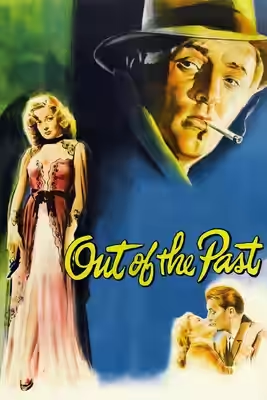
Batman: Mask of the Phantasm and Out of the Past share a shape: a man tries to bury who he was, and the woman comes back anyway. Tourneur's film is the richer and more grown-up of the two, with Mitchum and Greer making bad judgement painfully understandable, though its plotting takes more effort to follow. The animated film is tighter, shorter and the one to hand to a family.
What should I watch after Batman: Mask of the Phantasm?
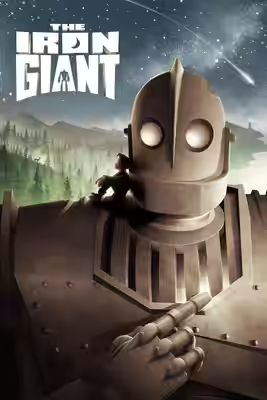
After Batman: Mask of the Phantasm, try Out of the Past (1947, Fi1m 89): A man tries to bury who he was; the woman comes back anyway. Then The Iron Giant (1999, Fi1m 88): Another hand-drawn American film that trusts children with grief and restraint; and Ghost in the Shell (1995, Fi1m 83): Animation as noir: rain, a city at night, and a hero unsure what she is.

Cast

Awards

Annie Award for Best Animated Feature, 1994

Nominated
Annie Award for Best Animated Feature

If you liked this, try…

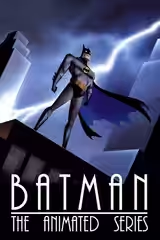
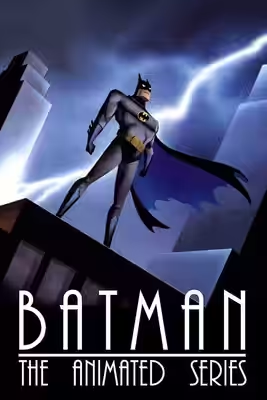
  1. Batman: The Animated Series (1992) · not reviewed yetThe programme this came from, with the same voices and the same painted dark.

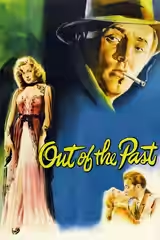
  2. Out of the Past (1947, Fi1m 89)A man tries to bury who he was; the woman comes back anyway.

  3. The Iron Giant (1999, Fi1m 88)Another hand-drawn American film that trusts children with grief and restraint.

  4. Ghost in the Shell (1995, Fi1m 83)Animation as noir: rain, a city at night, and a hero unsure what she is.

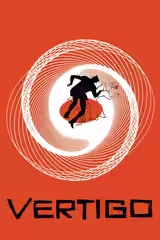
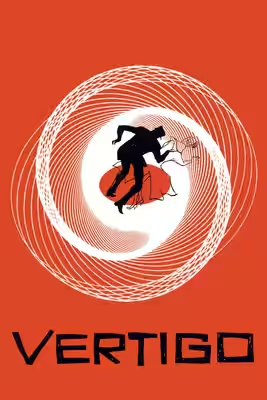
  5. Vertigo (1958, Fi1m 92)Obsession, a lost woman and a man who cannot let a promise go.

Free account

Know what to watch tonight

Two lists that know where things are streaming, collections you can share, your own score beside ours, and Discover that remembers what you have seen.

  • Want to see, sorted by what is streaming now
  • Seen, with your score out of ten
  • No adverts, ever