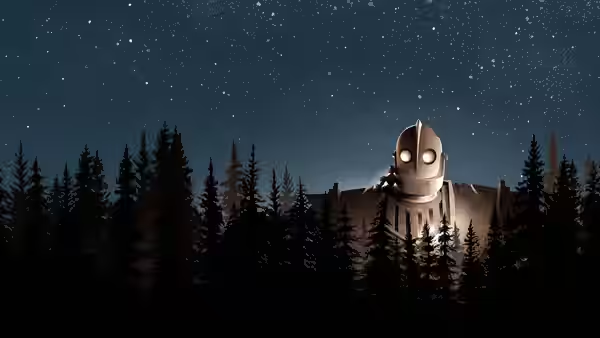
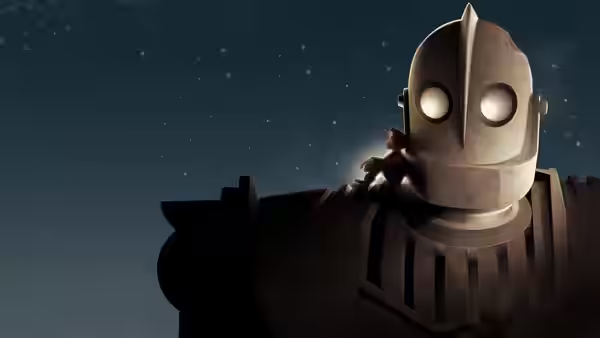
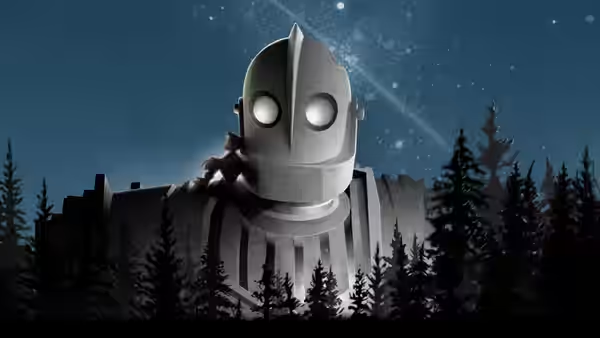
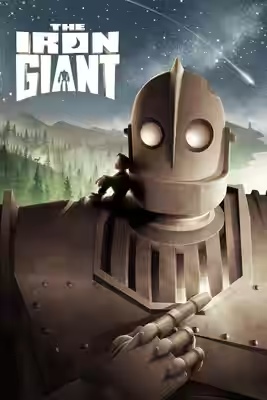
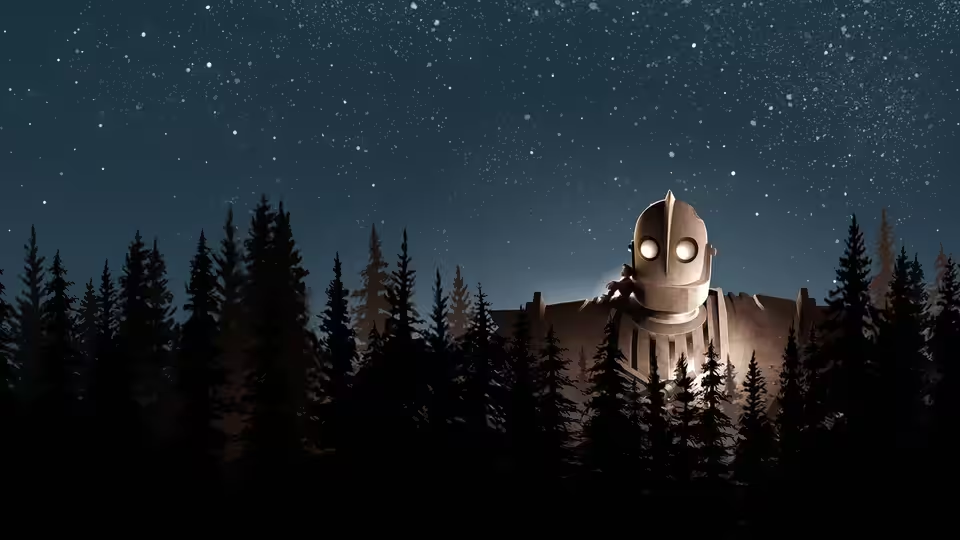
The Iron Giant standing behind trees under a starry night sky
Film review

The Iron Giant

1999 · Directed by Brad Bird · 1h 26m · MPA PG

In a sentenceA giant robot learns to be decent while the adults make it look difficult

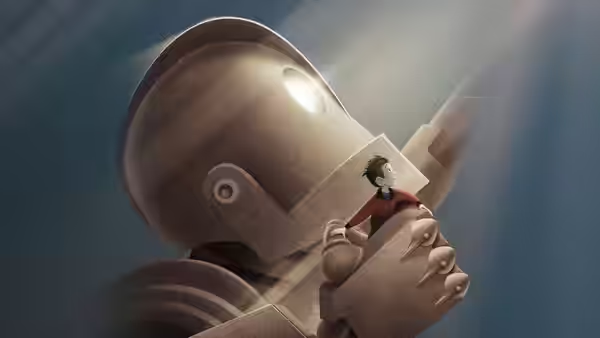
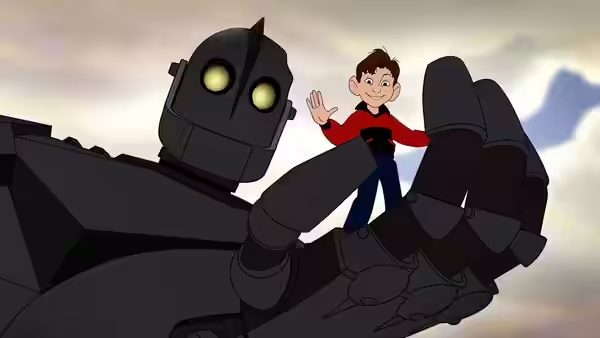
In 1950s America, a boy called Hogarth Hughes befriends a giant robot from space. Their friendship develops amid Cold War fears, with the unfamiliar visitor drawing attention in a society quick to see a threat. The Giant has to learn what sort of creature he wants to be, while the people around him face a choice between understanding him and using force. Eli Marienthal voices Hogarth and Vin Diesel voices the Giant, with Jennifer Aniston as Annie Hughes, Harry Connick Jr. as Dean McCoppin and Christopher McDonald as Kent Mansley.

Plays from YouTube when you press play; nothing loads from them until then.

Fi1m review

Brad Bird makes a boy’s friendship with a robot funny, tender and worth worrying about. The adults are sometimes too neatly drawn, but the film takes its young audience seriously and earns its feelings.

Brad Bird’s The Iron Giant is a funny, moving family film that takes its objections to violence seriously. It gives us a boy and a robot to care about before asking us to consider what people do when they are frightened. That order matters, because a story about nuclear anxiety could easily become a lecture with drawings. Bird keeps the friendship interesting enough that the lesson rarely needs announcing. We recommend it warmly, with a reservation about how neatly some of the adults illustrate the problem.

Eli Marienthal voices Hogarth Hughes with an eagerness that makes the unlikely friendship easy to believe. Vin Diesel gives the Giant a voice with weight and uncertainty, letting a powerful creature sound as though he still needs help. We were moved by the trust between them. The size difference makes the boy’s willingness to befriend him particularly affecting, while Marienthal keeps Hogarth from sounding saintly. Their exchanges are funny enough that we enjoy their company before worrying about what might happen to them.

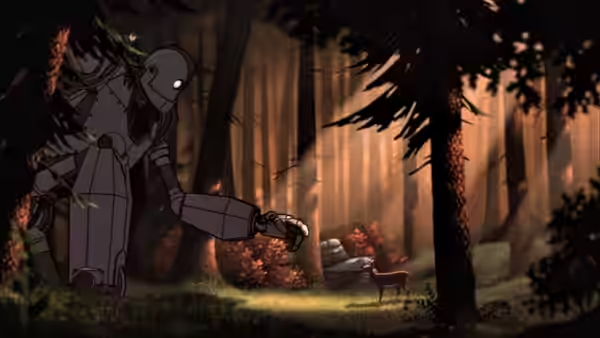
Mark Whiting’s production design borrows from 1950s comic art and science fiction, giving the fear of an outsider a setting that makes sense. The Giant is the computer-generated element among the hand-drawn characters, and his different construction helps him look foreign without making him seem to belong in another film. Steven Wilzbach’s cinematography makes the contrast in scale clear without letting size become the only interesting thing in the picture. The robot has enough personality to hold our attention without being put to destructive use.

At 86 minutes, there is little time spent waiting for the next useful scene. Darren T. Holmes’s editing gives the action pace and still leaves room for the boy and the Giant to become companions. The humour helps too, allowing the film to return to serious matters without a conspicuous change of tone. Michael Kamen’s music is less restrained than we would sometimes like. The central voices have already earned our affection, and the score need not work quite so hard to confirm it.

The weaker passages involve the adults, whose fear can seem too conveniently arranged for the film to correct it. Tim McCanlies’s screenplay gives us more reason to understand the Giant’s uncertainty than the suspicion he encounters. That makes the warnings about conformity easier to agree with, but it also makes some of the opposition feel thin. A little more curiosity about those frightened people would help, though pursuing it might cost the film some of its welcome speed.

Within the familiar story of a child and an unlikely friend, Bird finds a question worth asking: does being capable of harm oblige someone to cause it? The Giant’s reluctance to be a weapon gives the science fiction a purpose beyond providing something large to chase. We like the film’s refusal to treat pacifism as a nice idea that sensible people must eventually abandon. It lets that belief complicate the adventure. The question matters because the Giant has become someone we care about.

The U certificate is no promise that every small child will find this easy. Weapons and frightened adults can be disturbing subjects, and the humour does not make them harmless. We would leave time afterwards for whatever questions the film brings up, rather than treating it as a convenient way to fill 86 minutes. Choose it for a family evening when nobody has to rush off as soon as it finishes.

Critical consensus AI synthesised

84
Positive
7
Mixed
0
Negative
0

The consensus is warmly positive, with praise clustering around the friendship between the boy and the robot, the retro animation and the film’s pacifism. Most critics find the humour and sentiment well judged, with enough narrative confidence to carry serious ideas without turning the story into a lecture. The 1950s setting also earns attention: Cold War fears and atomic paranoia give the adventure substance, while the giant’s gentle character keeps it accessible to children.

The reviews differ more in emphasis than in judgement, and there is no substantial negative dissent in the supplied responses. Some concentrate on the action, visual wit and emotional force; others foreground the challenge to conformity and reliance on weapons. The New York Times offers a modest qualification, suggesting that the messages about nonconformity and the dangers of weapons may resonate more with adults.

The Guardian
17 December 1999 · Peter Bradshaw
90*

The critic calls it the best animation of the year and the best family movie for Christmas, describing it as a little gem with tremendous sweetness and narrative confidence, like an apocalyptic ET or pre-teen Terminator 2.

Read the full review →
Empire
1 January 2000 · Kim Newman
85*

A delightful surprise and refreshing animated feature with an unfashionable commitment to pacifism. The critic singles out the sophisticated 1950s depiction, including atomic paranoia and the giant's fully realised character as a lovable old-fashioned robot who does not want to be a weapon.

Read the full review →
Radio Times
★★★★ · Alan Jones
80

The critic hails it as a first-class achievement in cartoon virtuosity that borrows from 1950s comic art and sci-fi to stunning effect. They single out its blend of political allegory for adults with dazzling visuals and excitement for children.

Read the full review →
Slant Magazine
20 December 2010 · Joseph Jon Lanthier
80*

The critic describes the film as an Americana fairy tale with emotional intelligence, praising its subtle moral themes, visual wit, and the giant's struggle for agency against its destructive programming.

Read the full review →
The AV Club
2 April 2009 · Scott Tobias
80*

The critic highlights the film's singular, personal vision as a cult favorite that rejects typical animated formulas, praising its retro style, earnest take on 1950s America, and the bond between the boy and the pacifist robot.

Read the full review →
Total Film
17 December 1999
80*

A touching and hilarious film that delivers laughs, tears and food for thought in a picture aimed at kids. The critic singles out the effective mix of knowing humour, well-paced action, retro animation (with the giant as the only CG element) and a dramatic finale.

Read the full review →

Straight answers AI written, from our review

Is The Iron Giant worth watching?
The Iron Giant is worth watching for families and anyone who likes a story that takes its objections to violence seriously, and we scored it 88. Brad Bird makes the friendship between a boy and a robot funny and moving before asking what frightened people do. The adults are drawn too neatly at times, but the feeling is earned.
How long is The Iron Giant, and what is it rated?
The Iron Giant runs 1h 26m and is rated PG by the MPA in the US. It is an animation and drama film.
Where can I watch The Iron Giant in the US?
The Iron Giant is streaming on The Roku Channel and Amazon Prime Video in the US, and it is also available to rent from Amazon Prime Video from $5.99. It leaves The Roku Channel on 1 October. Availability is checked daily; the links above go straight to each service.
How does The Iron Giant compare to E.T. the Extra-Terrestrial?
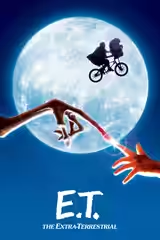
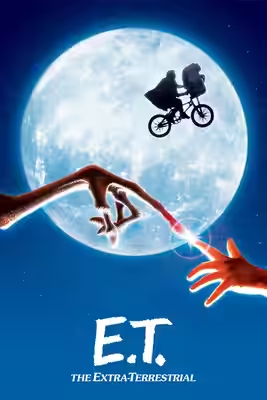
The Iron Giant and E.T. the Extra-Terrestrial tell much the same story: a lonely boy befriends a strange visitor and the frightened adults around him have something to learn. Spielberg's film is the warmer and more purely sentimental of the two, while Bird's has a sharper question about whether being able to cause harm obliges anyone to do so. Both have music that works harder than it needs to.
What should I watch after The Iron Giant?
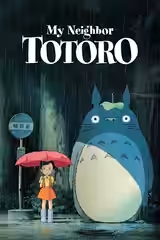
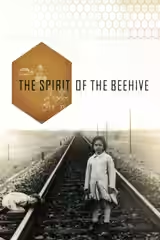
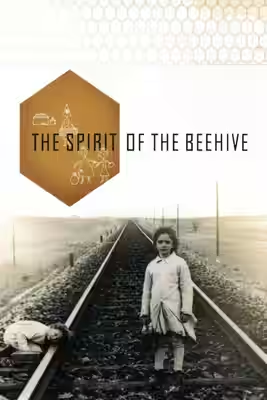
After The Iron Giant, try E.T. the Extra-Terrestrial (1982, Fi1m 91): Another lonely child finds an unusual friend and gives frightened adults something to consider. Then My Neighbour Totoro (1988, Fi1m 89): Children meet strange creatures in an animation that allows wonder without demanding constant peril; and The Spirit of the Beehive (1973, Fi1m 87): A child’s response to a screen monster becomes a troubling study of adult silences.

Cast

Awards

BAFTA Film Awards, 2000

Won
BAFTA's Children & Young People Award - Feature Film

Annie Award for Best Animated Feature, 1999

Won
Annie Award for Best Animated Feature

If you liked this, try…

  1. E.T. the Extra-Terrestrial (1982, Fi1m 91)Another lonely child finds an unusual friend and gives frightened adults something to consider.

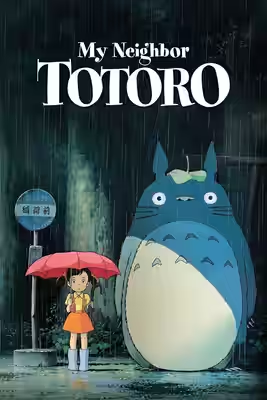
  2. My Neighbour Totoro (1988, Fi1m 89)Children meet strange creatures in an animation that allows wonder without demanding constant peril.

  3. The Spirit of the Beehive (1973, Fi1m 87)A child’s response to a screen monster becomes a troubling study of adult silences.

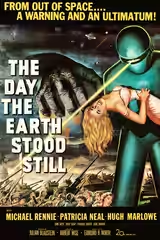
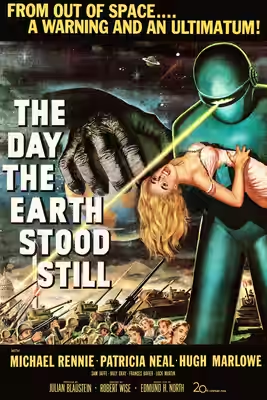
  4. The Day the Earth Stood Still (1951, Fi1m 82)A visitor from space finds humanity’s attachment to weapons rather difficult to overlook.

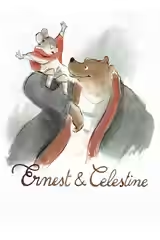
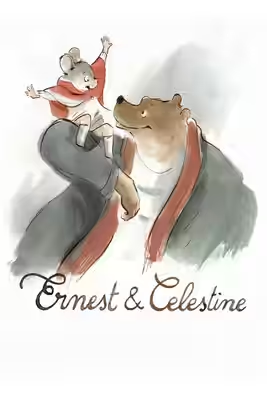
  5. Ernest & Celestine (2012, Fi1m 84)An unlikely friendship tests a society’s prejudices without losing its appetite for mischief.

Free account

Know what to watch tonight

Two lists that know where things are streaming, collections you can share, your own score beside ours, and Discover that remembers what you have seen.

  • Want to see, sorted by what is streaming now
  • Seen, with your score out of ten
  • No adverts, ever