Lena Khan’s college dance comedy is quick, funny and well led by Maitreyi Ramakrishnan and Priyanka Kedia. It also chops its own numbers to pieces and forgives its young men far too easily. Worth an evening if a dance-off sounds like one.
Lena Khan’s Best of the Best is a college comedy built around a Bollywood dance team and the two young women who run it. There will be rehearsals, a rival, a falling-out and a final in which everything is settled by who dances best. Prashanth Venkataramanujam and Hasan Minhaj’s script does not fight that shape and is right not to. What they have made is quick, funny and likeable, with two faults that stop it being better: it cuts its dances into confetti, and it forgives its young men far more readily than its young women. It runs 112 minutes and we were glad of nearly all of them.
The speed is the first pleasure. Khan does not let a scene sit a beat longer than it needs to; people talk over one another and leave rooms mid-sentence, and the film has moved on before a joke has finished landing, which is the right tempo for a campus where everyone is exhausted and nobody will admit it. The jokes come in clusters, and a few of the better ones are thrown away on the way out of a door.
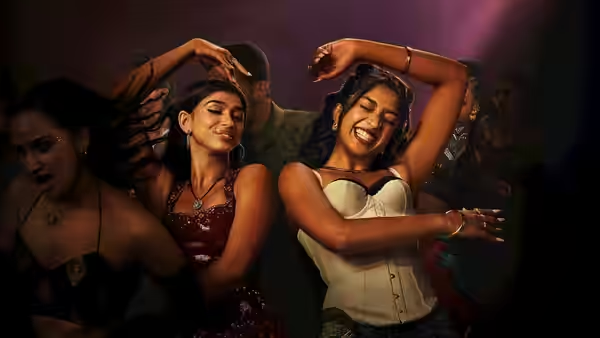
Ramakrishnan plays Maya as a girl who has decided how the year will go and is startled every time the year disagrees. She talks fast and her face runs a half-second ahead of her lines, so we usually know what she thinks before she has finished saying something else. Kedia’s Anjali is the quieter part, a friend who has spent years agreeing and has begun to wonder why. The film is best when the two of them are alone in a rehearsal room with no music playing, working out who is in charge. When they fall out, the script gives both of them a case, and nobody is quite in the right.
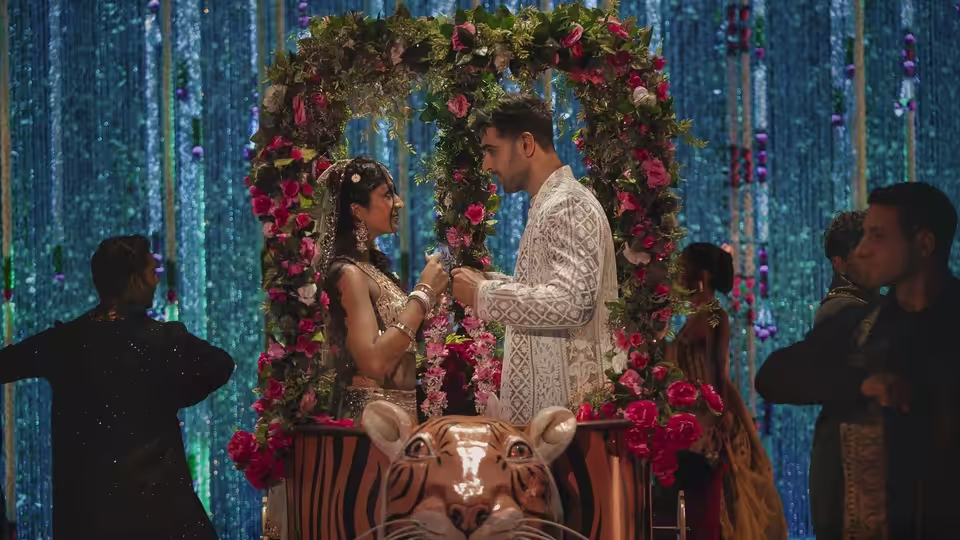
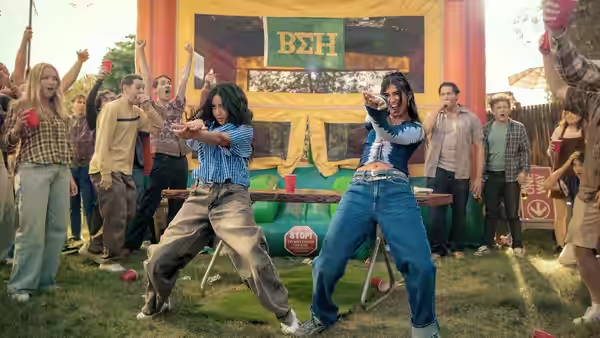
Then there are the dances, which are the reason anyone is here. The choreography is inventive and the dancers can plainly do it. The film keeps not letting us watch. A number begins, the line of the team forms, and then the cutting starts: a face, a hand, a spin from the side, the crowd, back to the face, so that eight counts of movement arrive as five shots of it. We kept wanting to reach in and hold the camera still. Filmed dance depends on letting a body finish what it started, and this film does not trust its own dancers to do that.
The final sequence is the exception, and it is the reason the film sends people home happy. It is held longer, staged for the whole team rather than the two leads, and built so that the story’s quarrel is settled in the steps rather than in a speech afterwards. We were grinning at it in a way we had not planned to be. It is a properly good number, and it makes the earlier chopping harder to forgive, because it proves everyone involved knew how to do it.
The other fault is in the writing. The young men around Maya and Anjali behave badly in the ordinary ways, and are back in everyone’s good books by the next scene. The two women fall out over less and are made to work far longer to earn their way back. We felt a small sourness about that and it did not go away. A film this interested in what two friends owe each other might have asked the same of its boys.
Minhaj gives himself a supporting turn and plays it with the ease of a man who wrote his own lines. Lilly Singh, Chaneil Kular and Ankur Rathee fill out a cast that is likeable throughout and occasionally underused.
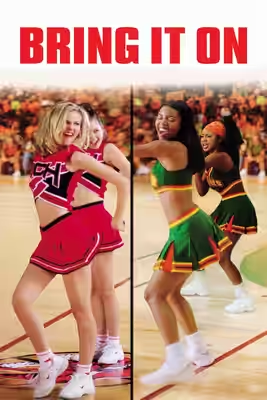
Against Bring It On (2000) and the first Step Up (2006), this sits comfortably: quicker than either, and let down by the same thing that lets nearly all of them down, a script more interested in its plot than in its dancing. See it with company, on a screen big enough for the final number to fill. You will hum something on the way home and you will not be able to say what.