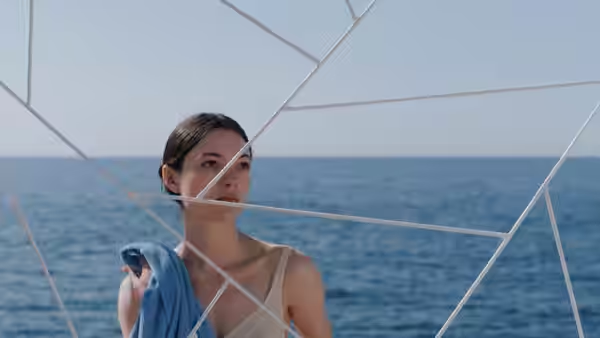
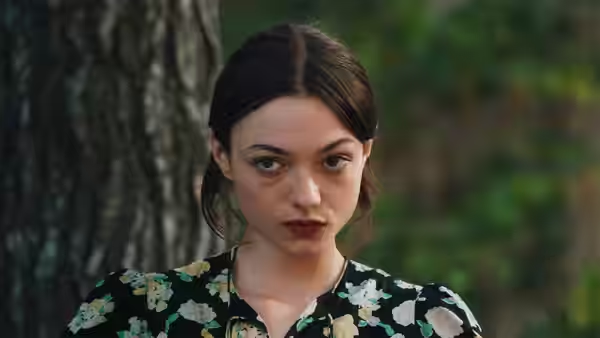
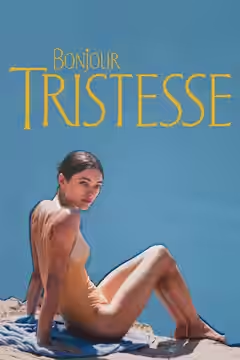
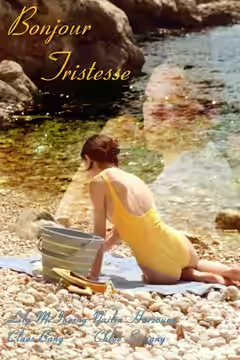
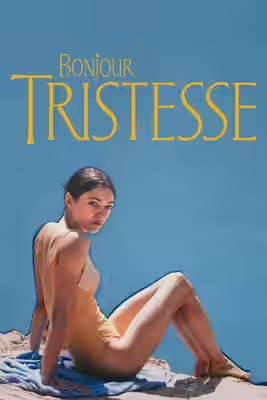
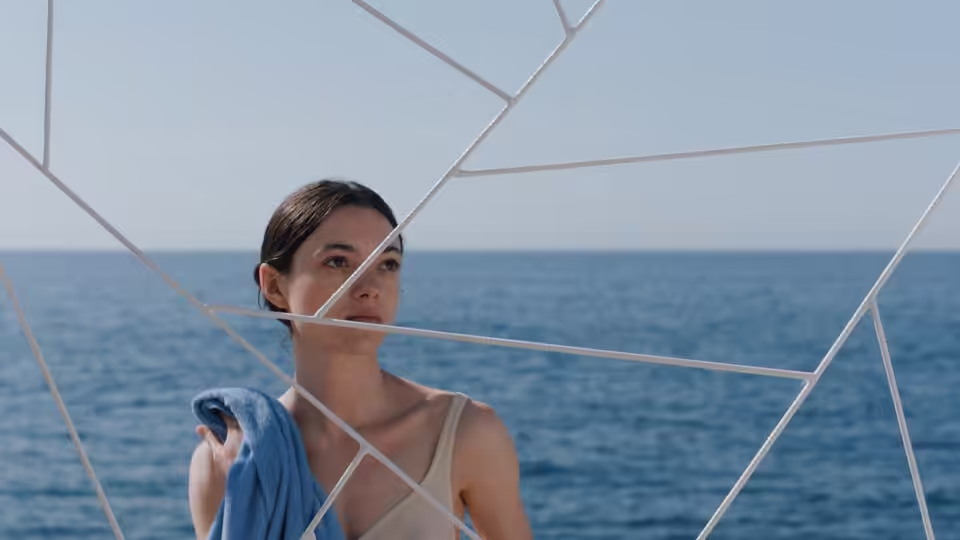
Cécile (Lily McInerny) holding blue cloth by the sea behind white structure
Film review

Bonjour Tristesse

2025 · Directed by Durga Chew-Bose · 1h 51m · MPA NR

In a sentenceA summer of terrace lunches in which a teenager decides, slowly, to ruin someone

Summer, a villa above the sea on the French coast. Cécile (Lily McInerny) is on holiday with her father Raymond (Claes Bang), a widower who keeps his life light, and his girlfriend Elsa (Nailia Harzoune), who sunburns, laughs and knows she will not last. Cécile swims, reads and starts something with Cyril (Aliocha Schneider), a boy with a boat moored nearby. Then Anne (Chloë Sevigny) arrives: a friend of Cécile’s late mother, a fashion designer, composed and exacting where the household is not. Raymond begins to pay her a different kind of attention. Anne begins to take an interest in how Cécile spends her days and her evenings, and Cécile discovers she does not care for being improved.

Plays from YouTube when you press play; nothing loads from them until then.

Fi1m review

Durga Chew-Bose’s first film moves Françoise Sagan’s summer to the present day and slows it to a drift. It is a pleasure to sit in, and Chloë Sevigny is quietly excellent, but the jealousy that drives the story never properly arrives.

Durga Chew-Bose’s first film as director takes Françoise Sagan’s 1954 novel, a book written by a teenager and about one, and moves it to the present day, keeping the villa, the sea and the family and losing little of the plot. What it adds is time. This is an unhurried film, 111 minutes of terrace lunches, swims and long looks, and for a good hour that is a pleasure. What it does not manage is the meanness at the centre of the story. Cécile is supposed to be jealous enough to break something, and here she mostly seems mildly put out.

The setup is Sagan’s. Cécile (Lily McInerny) is spending the summer at a house above the water with her father Raymond (Claes Bang), a widower who treats his whole life as a holiday, and Elsa (Nailia Harzoune), his current girlfriend, who is young and cheerful and knows she is temporary. There is a boy with a boat, Cyril (Aliocha Schneider). Then Anne (Chloë Sevigny) arrives, an old friend of Cécile’s dead mother, and the house rearranges itself around her.

Sevigny is the reason to watch. She plays Anne with small, exact gestures, saying less than everyone else, correcting Cécile’s posture and reading matter without raising her voice, and lets us see, once or twice, how tired she is of being the sensible one in every room. It is a performance about self-control, and it costs her something. We felt more for her than the film seems to expect us to. When she smiles at Raymond across a table we understood the appeal of the arrangement better than Cécile ever does.

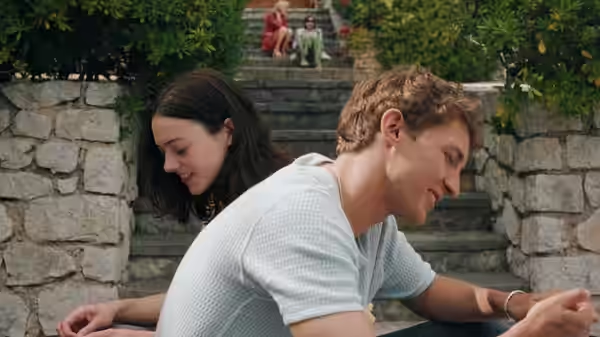
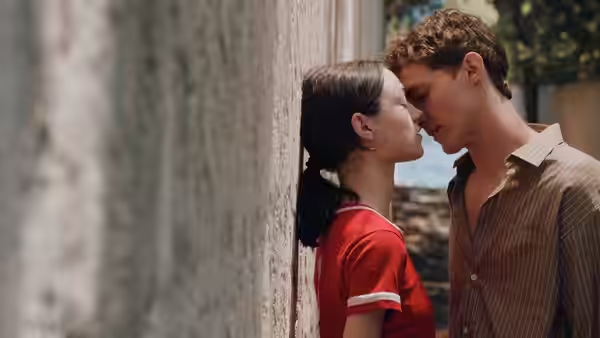
Maximilian Pittner shoots in warm daylight and stays close: skin, wet hair, cut fruit, the pattern of a dress against a chair. Whole scenes are built out of these details, and the film is at its best when it trusts them. François-Renaud Labarthe’s villa is pale stone, shutters and old furniture, a house someone’s grandparents bought, lit only by what comes through the windows. Miyako Bellizzi puts Anne in dark, structured clothes among people in crumpled linen and swimsuits, so she looks like a visitor from a tidier film, which is the point. Lesley Barber’s score is piano and strings, used sparingly. Amélie Labrèche keeps the shots long and lets people finish looking at each other before she cuts.

The trouble is Cécile. McInerny is watchful and likeable and never dangerous. Sagan’s girl is clever, spoilt and frightened of losing the only life she knows, and the plot needs that fear to turn sour. Chew-Bose’s script gives her observations rather than wants; she notices things beautifully and then goes for a swim. Bang plays Raymond as charm without weight, which is right for the man but leaves a gap where the pull between him and Anne should be. We never believed he would change for her, and so we never believed Cécile had anything to fear. Harzoune, as Elsa, is warmer and sharper than the role usually gets, and the film is livelier whenever she is on the terrace.

Here is what we felt. We were content for a long time, in the way one is content on the second day of a holiday, and somewhere around the seventy-minute mark we noticed that contentment was all we felt. The second half takes a turn we will not describe. When it came it arrived quietly, and we were sorry, and we were not shaken, and we think Sagan meant us to be shaken.

Otto Preminger filmed the book in 1958 with Jean Seberg, and whatever that version got wrong, it understood that this is a story about a girl doing something unforgivable and knowing it. Chew-Bose has made a film about a girl watching, and watching is what she directs best. As a first feature it is confident about light, rooms, clothes and faces, and shy of cruelty.

Watch it on a warm afternoon with the windows open. It asks little of you, gives an hour of real pleasure and a fine, sad Sevigny, and stops short of the sting in its title.

Critical consensus AI synthesised

57
Positive
3
Mixed
1
Negative
2
The New York Times
1 May 2025 · Critic’s Pick · Natalia Winkelman
90*

The critic finds the film a beguiling first feature that makes a convincing case for remaking the story by showing keen awareness of how to direct a gaze. It captures the mythopoetic wonder of an adolescent summer through elegant images and mood, with the effect described as trancelike.

Read the full review →
IndieWire
30 April 2025 · Kate Erbland
70*

The critic praises Chew-Bose’s sharp feature debut for bringing unexpected life to the tale of teenage ennui through its cold lushness, hazy memory-like quality, and patient storytelling that builds to satisfying emotional payoff.

Read the full review →
Vulture
5 May 2025
60*

The critic calls the film lovely but unconvincing, praising its splendid visuals and sun-dappled elegance along with Sevigny’s standout vulnerable performance while faulting the coy storytelling and weak character psychology.

Read the full review →
The Hollywood Reporter
5 September 2024 · festival review · Caryn James
30*

The critic finds the adaptation pretty to look at but emotionally hollow, with sparkling visuals and fluid movement undermined by flat emotional trajectory, stiff performances, and insufficient psychological depth.

Read the full review →
Slant Magazine
27 April 2025 · ★/4 · Alexander Mooney
25

The critic highlights Chew-Bose’s striking directorial debut for its intellectual flourishes, rigorous tactile aesthetic, and ability to lend a timeless story a modern tenor through sensual details and an original epilogue.

Read the full review →
Deadline
5 September 2024 · festival review · Pete Hammond
70*

The critic calls it a gorgeous-looking, lilting tale that feels true to Sagan’s novel and explores the complexities of female relationships through a woman director’s lens. He praises the stunning cinematography and lyrical score while noting some weaknesses in the central romantic attraction and character dynamics.

Read the full review →

Straight answers AI written, from our review

Is Bonjour Tristesse worth watching?
Bonjour Tristesse is worth watching for anyone who wants a slow, sunlit summer drama and a fine, sad performance from Chloë Sevigny, and we scored it 62. It is a pleasure to sit in for an hour, but the jealousy that drives the story never properly arrives, so it suits the patient more than anyone after a sting.
How long is Bonjour Tristesse, and what is it rated?
Bonjour Tristesse runs 1h 51m and is rated NR by the MPA in the US. It is a romance and drama film.
Where can I watch Bonjour Tristesse in the US?
Bonjour Tristesse is streaming on Starz, The Roku Channel, Hulu and Amazon Prime Video in the US, and it is also available to rent from Amazon Prime Video from $3.99. It leaves The Roku Channel on 1 October. Availability is checked daily; the links above go straight to each service.
Is Bonjour Tristesse based on a true story or a book?
Bonjour Tristesse is based on Françoise Sagan's 1954 novel of the same name, not on a true story. Durga Chew-Bose moves the book to the present day and keeps the villa, the sea, the family and most of the plot, though she softens its meanness. You need not know the novel to follow it, but readers who do may miss the cruelty Sagan intended.

Cast

If you liked this, try…

  1. Bonjour Tristesse (1958) · not reviewed yetPreminger’s version, with Jean Seberg, colder and crueller and closer to the book.

  2. La Piscine (1969) · not reviewed yetDelon, Schneider and a villa pool; the same sun, with real menace under it.

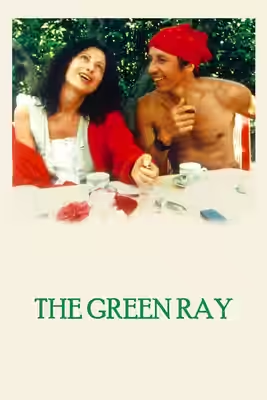
  3. Le Rayon Vert (1986) · not reviewed yetRohmer’s summer of restless waiting, in which small talk carries everything.

  4. A Bigger Splash (2015) · not reviewed yetGuadagnino’s holiday quartet on an island, where the new arrival is the problem.

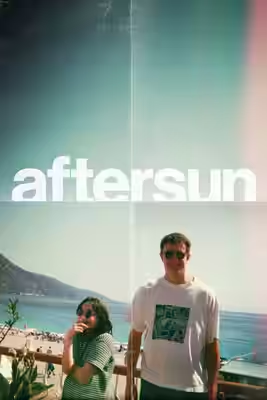
  5. Aftersun (2022, Fi1m 85)A father and daughter on holiday, remembered later; quiet, exact and properly upsetting.

Free account

Know what to watch tonight

Two lists that know where things are streaming, collections you can share, your own score beside ours, and Discover that remembers what you have seen.

  • Want to see, sorted by what is streaming now
  • Seen, with your score out of ten
  • No adverts, ever