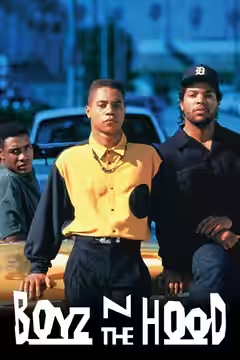
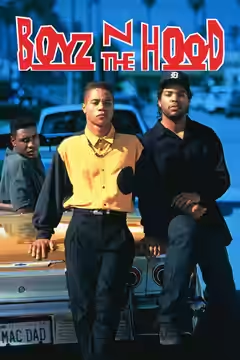
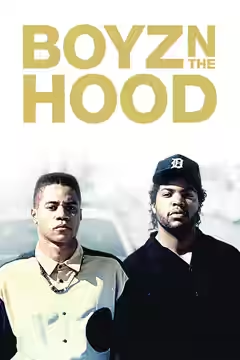
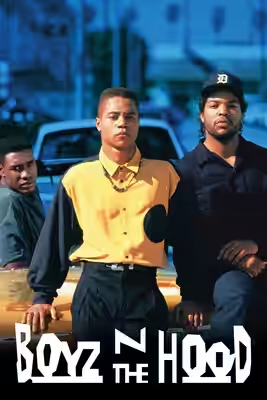
John Singleton’s drama gives its young men time to become people we care about, with especially strong work from Laurence Fishburne and Ice Cube. Some speeches over-explain, and the women deserve fuller lives, but the feeling is earned.
Boyz n the Hood is a forceful, humane drama, with a weakness for explaining things its actors have already made clear. Writer-director John Singleton follows young black men and their families in South Central Los Angeles, treating everyday life as worthy of sustained attention. The threat of violence matters because these people matter. We recommend it, though there are moments when a conversation starts to sound like a lesson.
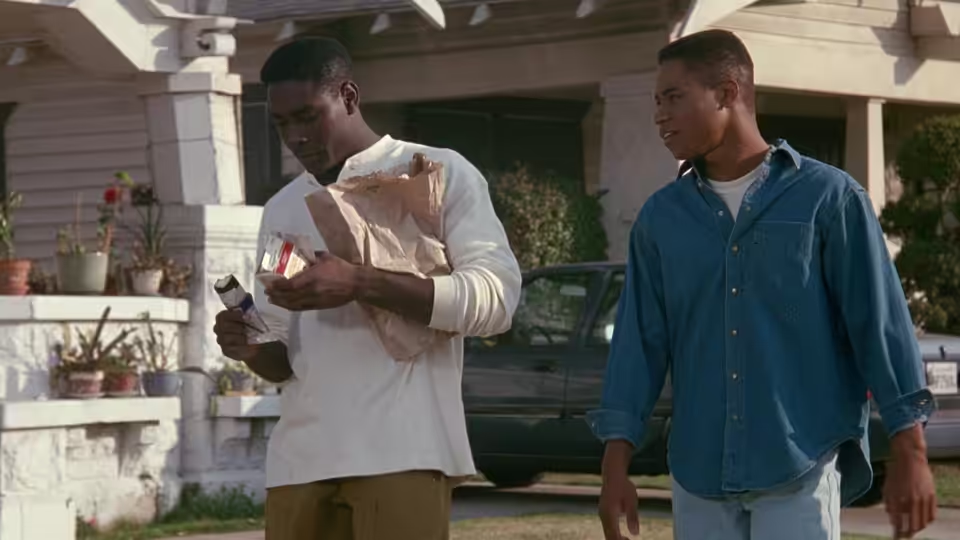
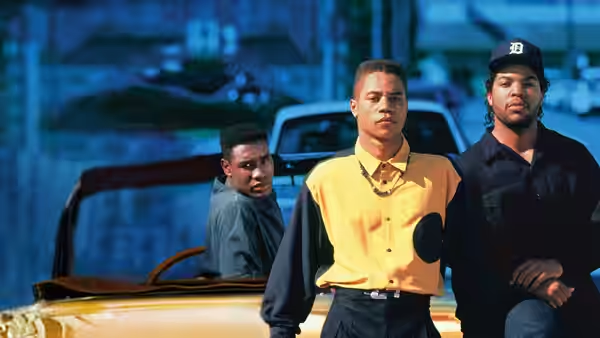
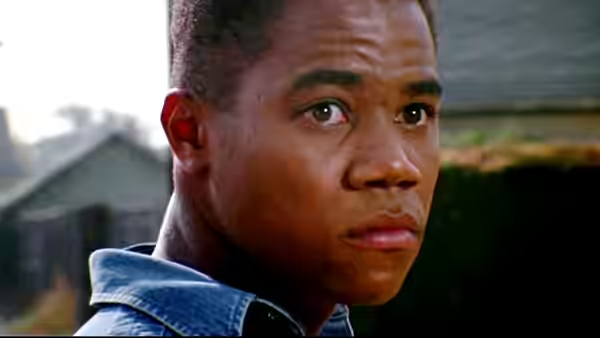
Cuba Gooding Jr.’s Tré Styles and Laurence Fishburne’s Furious Styles give the film its strongest relationship. Singleton takes the bond between father and son seriously without assuming that seriousness requires constant conflict. Fishburne makes advice worth listening to, giving Furious authority without making that authority the whole performance. Gooding is a responsive partner, and the exchanges feel sufficiently personal to survive the weight of what Singleton wants them to convey. We care about how these two get on.
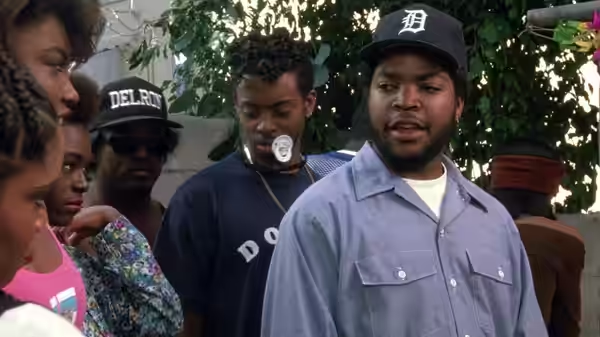
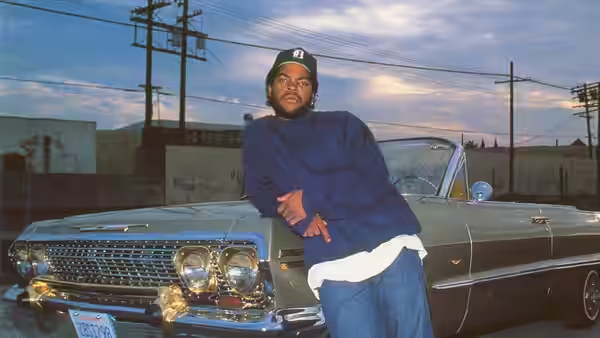
Ice Cube’s Doughboy is just as important to the film’s credibility. His restrained performance makes room for thought without advertising every change of feeling, and his nonchalance never seems like a request for our admiration. Singleton does not confuse a young man’s defences with the whole of his personality. That patience helps the film avoid the familiar crime-drama habit of making danger the only interesting thing about a neighbourhood.
The speech about gentrification shows both the strength and the limitation of Singleton’s writing. We felt angry listening to Furious, because Fishburne makes the discussion of the neighbourhood’s future feel immediate and personal. The conviction is persuasive; the sense that a character has been asked to deliver an explanation is harder to ignore. We would not lose the speech, but we wish Singleton trusted the less explicit exchanges quite as much.
Charles Mills’s cinematography serves the performances well, keeping our attention on people rather than inviting us to admire the image separately. Bruce Cannon’s editing is similarly assured: the time spent getting to know the characters feels necessary, and the changes in emotional pressure are easy to follow. Stanley Clarke’s score is less reliable, sometimes urging a response that the actors have already earned. Music that insists on the importance of a moment can make us more conscious of being directed towards a feeling.
The women are less fully imagined, and this matters in a film so concerned with families. Angela Bassett brings conviction to Reva Styles, but the writing does not offer its women the same freedom to be complicated that it gives its young men. Nia Long’s Brandi belongs to that imbalance too. Concentrating on fathers and sons is a legitimate choice; letting that choice narrow the people around them is a weakness.
Still, Singleton’s lack of cynicism is welcome in a crime drama. He allows humour and dignity without pretending that either will protect anyone, and he is interested in the effects of violence on families rather than its usefulness as entertainment. The occasional heavy emphasis does not undo the care with which the central performances have been shaped. See it for those performances, and allow the father a little more talking time than we would usually advise.