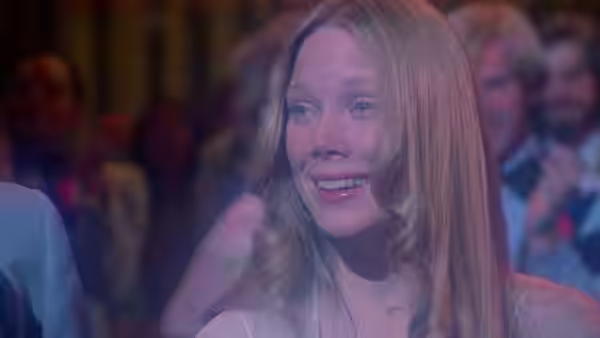
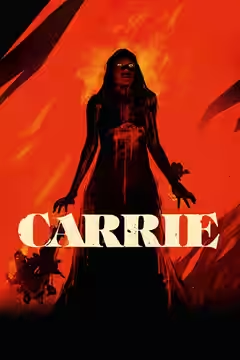
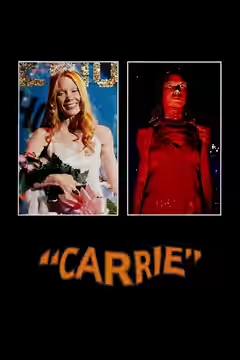
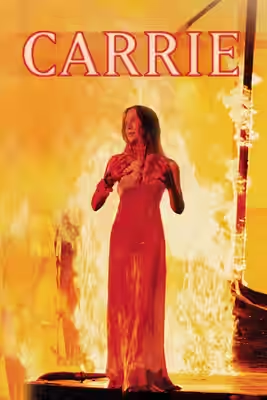
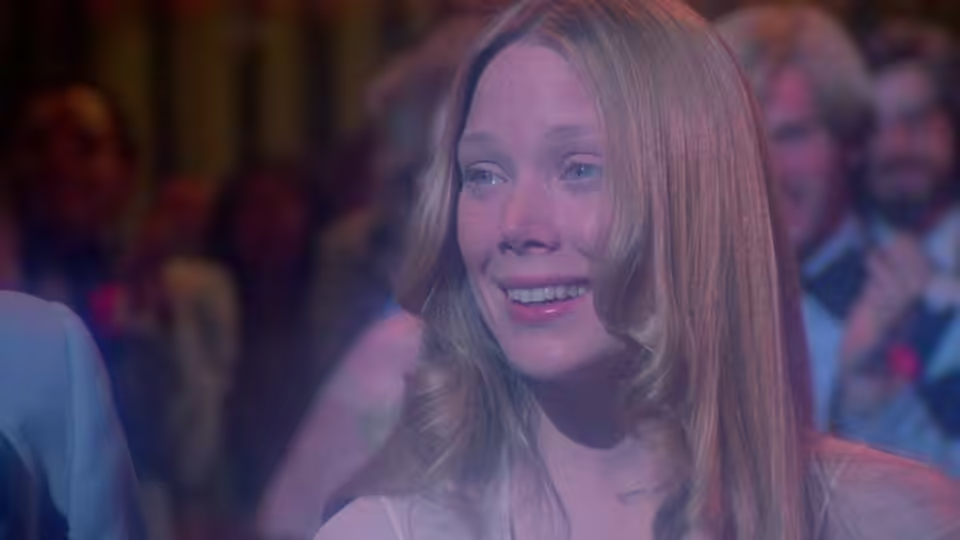
Carrie (Sissy Spacek) smiling at the prom with an audience behind her
Film review

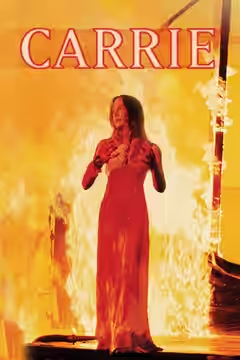
Carrie

1976 · Directed by Brian De Palma · 1h 38m · MPA R

In a sentenceCarrie needs a different school, a different mother and considerably less attention

Carrie (Sissy Spacek) is a shy high-school pupil with telekinetic powers, caught between bullying at school and clashes with her mother, Margaret White (Piper Laurie). She wants to belong, but neither home nor school offers much reassurance. A humiliating episode in the school showers puts her fear of her own body in front of the other girls. Sue Snell (Amy Irving) and Tommy Ross (William Katt) are among the people around her as the prom approaches. At home, Margaret’s religious beliefs make the tensions between mother and daughter harder to escape.

Plays from YouTube when you press play; nothing loads from them until then.

Fi1m review

Brian De Palma’s Carrie is frightening because Sissy Spacek makes its bullied schoolgirl matter. We recommend it warmly, with a reservation about a camera that sometimes seems as interested in girls’ bodies as their distress.

Carrie is a gripping horror film that takes a schoolgirl’s wish to belong seriously, with Sissy Spacek giving us good reason to worry about her. Brian De Palma directs Lawrence D. Cohen’s adaptation of the Stephen King novel with a relish for cruelty that is sometimes troubling. Carrie has telekinetic powers, but the ordinary people around her supply plenty of fear without supernatural assistance. The film understands how much can depend on being treated kindly when kindness has been scarce.

Sissy Spacek makes shyness look exhausting. Her Carrie seems to expect other people to know rules she has never been taught, and the effort of keeping up is painful to watch. We found the shower scene upsetting, because her bewilderment makes the bullying feel like an attack on someone who cannot yet understand what is happening. Spacek also gives her enough stubbornness to keep the performance from becoming a prolonged appeal for pity.

Piper Laurie plays Margaret White with a religious certainty that leaves little space for her daughter. The clashes between them are frightening because Carrie ought to be able to trust the person causing her distress. Laurie can be too emphatic, particularly beside the smaller changes in Spacek’s performance, and Margaret occasionally becomes easier to dismiss than she should. The gothic art direction is suitably oppressive, though these arguments need little help from their surroundings. The relationship remains troubling even when the acting grows broad.

Mario Tosi’s circling camera gives the film a restless elegance. The shower scene is also where the attention to girls’ bodies becomes difficult to defend: the camera lingers in a way that sits awkwardly beside the concern for Carrie’s humiliation. Being looked at can be frightening for this girl, and De Palma clearly understands that, but he spends too long enjoying the view himself. The scene would still hurt if the camera were less intrusive.

Paul Hirsch’s editing lets anticipation build around the prom, whose events we will not describe. The waiting becomes difficult to bear because the film has made acceptance so important to Carrie; an ordinary school occasion carries more weight than the adults might care to admit. Pino Donaggio’s music has a mischievous streak that helps the humour sit alongside the fear without making either feel misplaced. Those changes of tone are welcome in a film whose central character has so much to endure. Across 98 minutes, the suspense rarely loosens its hold.

Carrie belongs among the coming-of-age horror films that take their teenagers seriously, including the parts of adolescence adults find embarrassing. Spacek gives her curiosity and resolve, and we want to see what she might be like without all this punishment. Even when De Palma is showing off, her performance keeps our attention on what this girl is feeling. Watch it for Spacek, but save it for another evening if school bullying is closer to home than you want horror to come.

Critical consensus AI synthesised

83
Positive
13
Mixed
0
Negative
1

Most critics strongly favour Carrie, with praise centred on Sissy Spacek’s vulnerability, Piper Laurie’s disturbing presence and Brian De Palma’s control of tension. The reviews repeatedly find that the horror draws its force from recognisable adolescent fears: bullying, sexual anxiety and conflict between mother and daughter. De Palma’s elaborate staging and vivid imagery attract broad admiration, while several critics value the uneasy mixture of sadness, humour and cruelty.

The main reservation concerns how the film looks at its female characters: Time Out finds the male gaze exploitative, despite admiring the direction and Spacek’s performance, whereas Slant Magazine praises its feminine perspective and sensual style. The spread is otherwise concentrated at the positive end, with one sharply negative dissent. The New York Times finds the film generally overwrought and messy, allowing that it is occasionally touching and that Spacek provides its chief interest.

Radio Times
★★★★★ · Alan Jones
100

De Palma's gothic fairy tale is praised as a tense and lyrical web of emotions with standout performances from Sissy Spacek and Piper Laurie. The symbolic crucifixion scene and overall package of pop psychology and psychic phenomena are highlighted as thrilling highlights in an unforgettable film.

Read the full review →
Empire
1 January 2000 · Andrew Collins
90*

The critic praises De Palma's directorial bravado in this masterwork, highlighting the unforgettable set-pieces like the shower scene, prom night, and dream ending, while noting its subtext on power, religion, and high school cruelty.

Read the full review →
RogerEbert.com
1 January 1976 · Roger Ebert
90*

Ebert calls the film an absolutely spellbinding horror movie and an observant human portrait of a shy, complicated high-school senior with telekinetic powers. He praises the performances by Sissy Spacek and Piper Laurie and notes how the horror grows organically out of the characters.

Read the full review →
Slant Magazine
20 August 2006 · Eric Henderson
90*

The critic calls Carrie De Palma’s first completely mature film and a profoundly sad horror comedy that synthesizes his destructive humor with graceful visuals. He singles out its insistently sensual style, feminine perspective, and bittersweet humor for praise.

Read the full review →
The Guardian
17 October 2024 · Peter Bradshaw
90*

The critic hails De Palma’s 1976 film as an insouciantly horrible masterpiece and a groundbreaking horror classic. They single out the staggering, drawn-out prom sequence for its evolving power and split-screen carnage.

Read the full review →
The New Yorker
15 November 1976 · Pauline Kael
90*

Kael praises the film as a terrifyingly lyrical thriller with a teasing mix of comedy, horror, and tension, calling it a new trash archetype and a menstrual joke in the form of a film noir in red. She highlights De Palma's baroque sensibility, the archetypal Cinderella-revenge plot, and strong performances by Sissy Spacek and Piper Laurie.

Read the full review →

Straight answers AI written, from our review

Is Carrie worth watching?
Carrie is worth watching for anyone who wants horror that takes a bullied schoolgirl seriously, and we scored it 86. Sissy Spacek gives the film its fear, making Carrie's shyness exhausting to watch, while Brian De Palma keeps the suspense tight across 98 minutes. Our reservation is a camera that lingers on girls' bodies longer than the concern for Carrie's humiliation can justify.
How long is Carrie, and what is it rated?
Carrie runs 1h 38m and is rated R by the MPA in the US. It is a horror and thriller film.
Where can I watch Carrie in the US?
Carrie is streaming on HBO Max, Hulu and The Roku Channel in the US. Availability is checked daily; the links above go straight to each service.
How violent or frightening is Carrie, and is it suitable for children?
Carrie is an 18 certificate in the UK and rated R in the US, and it is not suitable for children. The shower scene is upsetting, the bullying is cruel and the clashes between Carrie and her religious mother are frightening in their own right, before the telekinesis does anything. We would keep it from anyone for whom school bullying is close to home.
How does Carrie compare to Thelma & Louise?
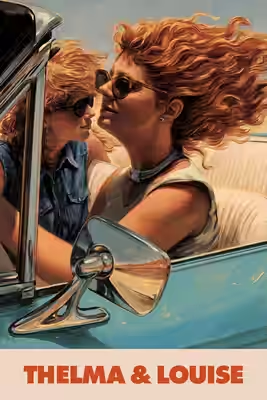
Carrie and Thelma & Louise are different kinds of film: one a horror about a bullied schoolgirl with frightening powers, the other a road film about two women whose friendship holds it together. We recommend both. Carrie is the more frightening and the more troubling in how it looks at its women; Thelma & Louise is funnier, warmer and easier to return to, though its male characters are more crudely written.
Is Carrie based on a true story or a book?
Carrie is based on the novel by Stephen King, not on a true story. Lawrence D. Cohen wrote the adaptation and Brian De Palma directed it. You do not need to have read the book: Sissy Spacek's performance carries everything a newcomer needs, and the film's suspense around the prom works entirely on its own terms.
What should I watch after Carrie?
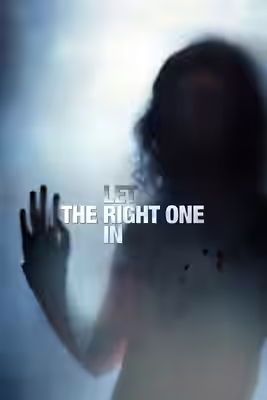
After Carrie, try Thelma (2017, Fi1m 85): Religious repression and frightening new powers, handled with a colder patience. Then Let the Right One In (2008, Fi1m 88): School bullying and unexpected tenderness make the vampire story hurt more.

Cast

Awards

Academy Awards, 1977

Nominated
Best Actress
Nominated
Best Supporting Actress

National Society of Film Critics Award for Best Actress, 1976

Won
National Society of Film Critics Award for Best Actress

If you liked this, try…

  1. Thelma (2017, Fi1m 85)Religious repression and frightening new powers, handled with a colder patience.

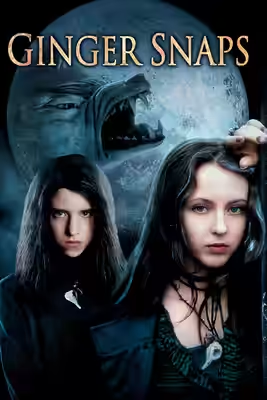
  2. Ginger Snaps (2000) · not reviewed yetPuberty becomes bodily horror, with two sisters allowed anger and bleak humour.

  3. Let the Right One In (2008, Fi1m 88)School bullying and unexpected tenderness make the vampire story hurt more.

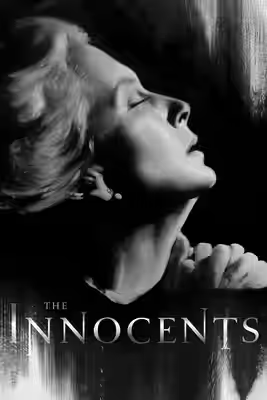
  4. The Innocents (1961) · not reviewed yetReligious conviction and adult anxiety make childhood frightening in a different way.

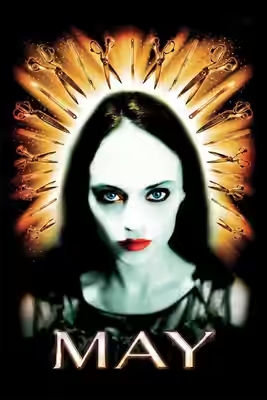
  5. May (2002) · not reviewed yetAn isolated young woman wants company; the film takes that need seriously.

Free account

Know what to watch tonight

Two lists that know where things are streaming, collections you can share, your own score beside ours, and Discover that remembers what you have seen.

  • Want to see, sorted by what is streaming now
  • Seen, with your score out of ten
  • No adverts, ever