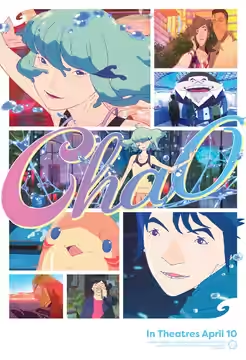
Yasuhiro Aoki’s animated romance has expressive, peculiar designs and enough energy to wear itself out. The animation earns an evening for enthusiasts, though the underwritten central relationship makes it a harder recommendation for anyone principally seeking a love story.
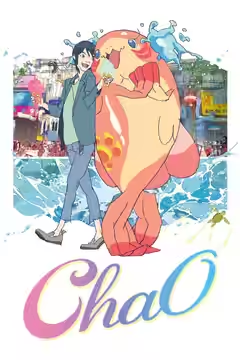
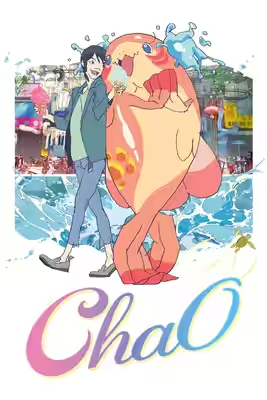
Yasuhiro Aoki directs ChaO with an appetite for visual invention that its romance cannot quite match. Animation enthusiasts will find plenty to enjoy, though the love story needs more work. Its near-future Shanghai accommodates humans and merpeople, giving the film plenty to play with before it has asked us to care about a couple. At 90 minutes, it ought to have room for both, but Saku Konohana’s screenplay keeps finding distractions when the central relationship needs attention.
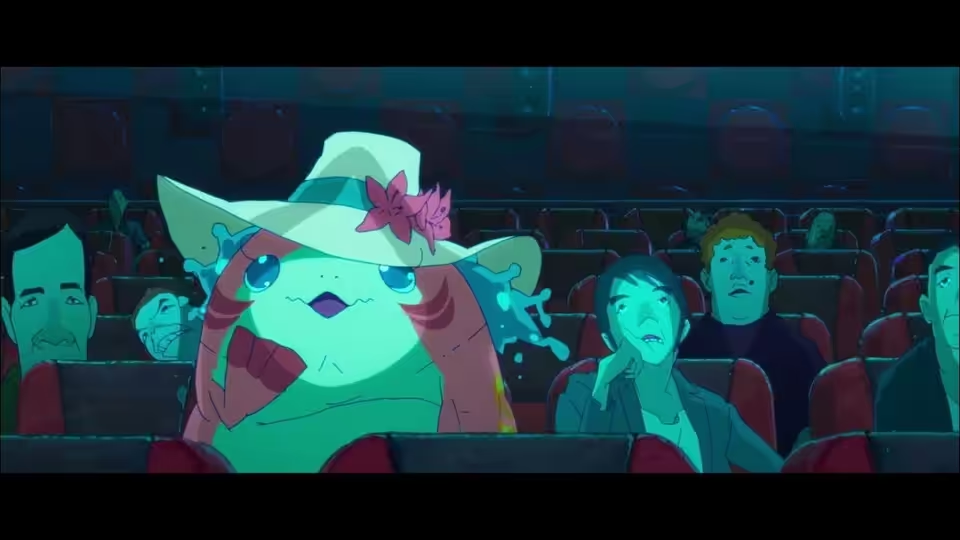
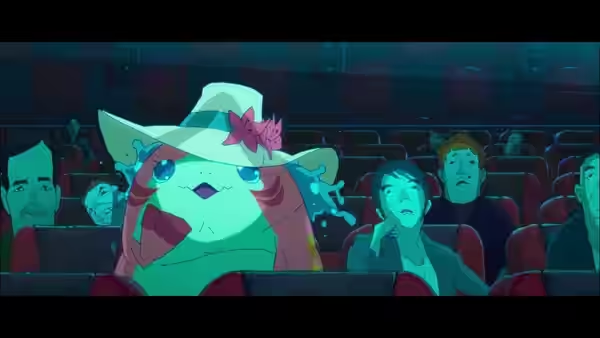
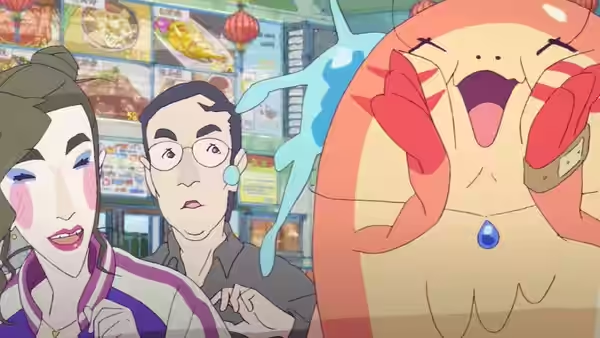
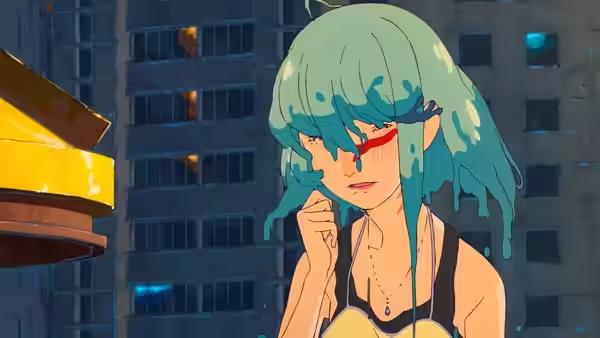
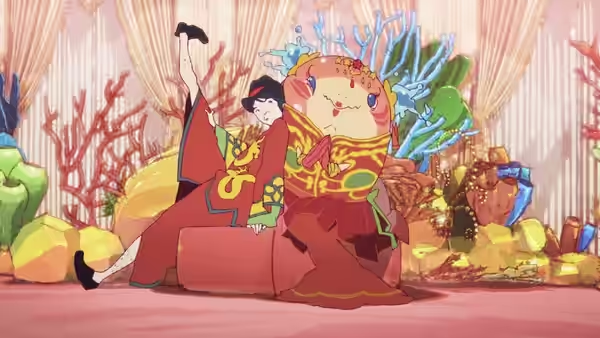
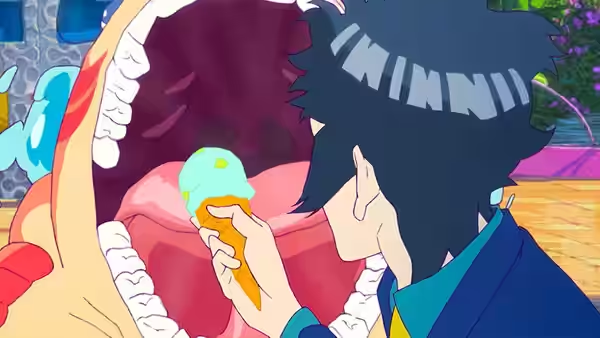
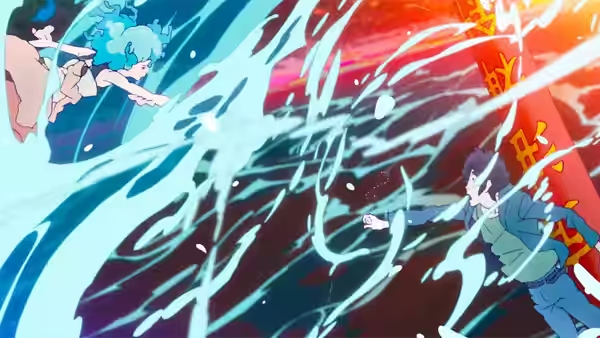
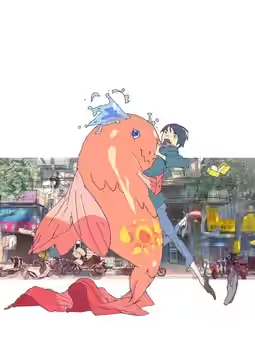
The hand-drawn animation is the strongest reason to stay. The character designs are peculiar and expressive, and the fluid movement gives the film a welcome sense of play. We were delighted by those faces and bodies; their expressiveness kept us interested even when the story became difficult to follow. Takanori Nakajima’s cinematography helps make a densely detailed world inviting to look around. There is enough variety in the drawing to reward attention without requiring the romance to supply every reason for watching.
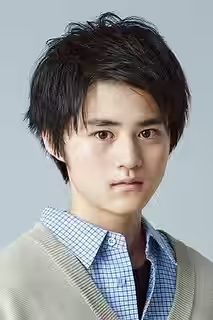
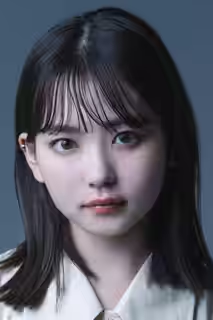
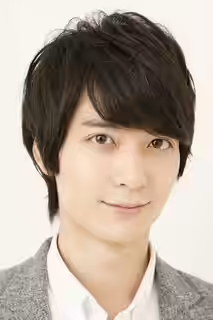
The difficulty is that a peculiar-looking couple still needs a persuasive courtship. Stephan, voiced by Ōji Suzuka, and Chao, voiced by Anna Yamada, have to carry a relationship that the screenplay develops too thinly. The comic situations keep offering new reasons to watch, but they do not consistently tell us what these two find in each other. We wanted the film to spend longer with them, without immediately looking for another burst of activity.
Saku Konohana’s screenplay is overfilled, and its shifts between comedy, fantasy and romance do not always work. A change of mood can make the next passage feel disconnected from the last, while the busy pacing leaves little opportunity to settle into either. The humour has a pleasing willingness to be silly, which matters in a story this far removed from ordinary life. Yet a fresh absurdity too often arrives before the previous one has told us much about the characters involved.
Takatsugu Muramatsu provides the music, but the film’s most persuasive rhythm comes from the animation. The warmth of the romance is welcome, and there is nothing embarrassed about the film’s wish to make an unlikely relationship matter. Romantic fantasy needs that confidence; explaining away every strange feature would only make this one less appealing. What it also needs is a clearer sense of attraction, built from the characters’ behaviour, rather than an assumption that their unusual circumstances will make us care.
That leaves a film with considerable charm and a limitation that matters. Its visual invention makes a familiar premise worth revisiting, and the humour supplies enough pleasure to keep the muddle from becoming a punishment. We cannot quite believe in the couple as strongly as the film would like, which is a substantial problem for a romance even when the drawings are this engaging. Choose it for an interest in unusual animation, with modest expectations of the courtship.