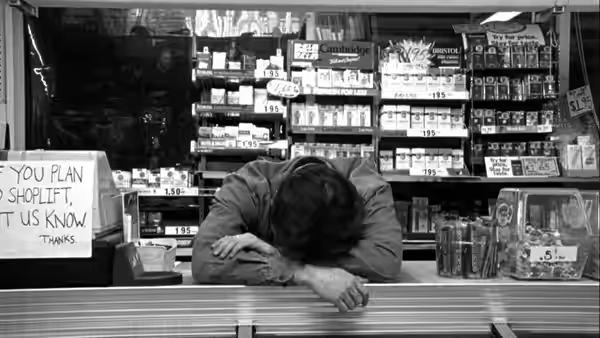
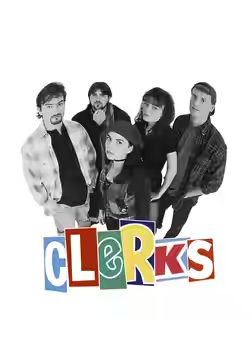
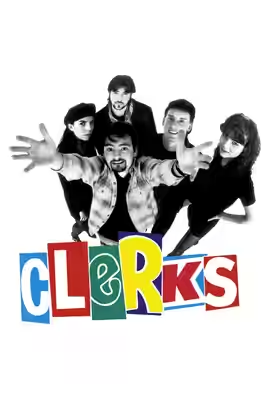
Dante (Brian O'Halloran) and Randal (Jeff Anderson) reclining on the floor of a convenience store amid scattered items
Film review

Clerks

1994 · Directed by Kevin Smith · 1h 32m · MPA R

In a sentenceA convenience store would be a perfectly pleasant place to argue if people would stop trying to buy things

Dante (Brian O’Halloran) spends a working day behind a convenience-store counter in New Jersey. Between customers, he and fellow clerk Randal (Jeff Anderson) discuss their careers, popular culture and personal relationships, with the conversations competing for attention with the business of serving people. The working day supplies a series of encounters with awkward customers as the pair consider what they want from their lives. Kevin Smith writes and directs the comedy, with Marilyn Ghigliotti as Veronica, Lisa Spoonauer as Caitlin, Jason Mewes as Jay and Smith himself as Silent Bob.

Plays from YouTube when you press play; nothing loads from them until then.

Fi1m review

Kevin Smith makes a convenience-store shift funny enough to sustain a film, largely by letting the clerks talk. The pictures offer less, and some sketches linger, but Brian O’Halloran and Jeff Anderson make the uneven stretches worth sitting through.

Kevin Smith’s Clerks is a funny, observant comedy, though some of its sketches could do with finishing sooner. He writes and directs a day in the lives of convenience-store clerks, and finds enough irritation there to keep a film going for 92 minutes. Work supplies an audience, a place to stand and frequent interruptions from people who expect to be served. Smith takes the talk seriously without requiring us to think that everything being said is sensible.

The subjects are careers, personal relationships and popular culture, but the pleasure is in the attention lavished on them. These are conversations with more energy than the working day seems able to absorb, and Smith understands how an idle discussion can acquire the urgency of an actual problem. We laughed at the seriousness of the pop-culture arguments while customers are treated as interruptions. The joke will be familiar to anyone who has been paid to remain somewhere while wishing they could get on with their own life.

Brian O’Halloran gives Dante’s dissatisfaction a recognisable weight, even when the complaint is becoming tiresome. Jeff Anderson’s Randal makes the exchanges less predictable, with a deadpan manner that helps the obscenity sound conversational rather than prepared for applause. Together they suggest people who have had plenty of practice talking, and considerably less practice listening. Their ease matters because the writing often builds an entire exchange around a comic proposition. Without it, we would simply be waiting for each speaker to deliver the next joke.

David Klein’s cinematography leaves the shop looking uninviting, which is right for people who would rather discuss their lives than get on with their work. The plain presentation keeps the performances legible, though the pictures seldom add much once we have understood the surroundings. Editors Scott Mosier and Smith allow the exchanges room to develop, preserving the feeling of time available to be wasted. That patience serves the actors, but it is less helpful when an encounter has given us its joke and continues anyway.

The coarseness is mostly funny because it belongs to the talk, rather than arriving as a separate attraction. Sometimes, though, Smith seems so pleased to have found an indecent subject that he does not ask enough of the joke attached to it. The sketch-like construction makes those stretches conspicuous: once an exchange has stopped amusing us, there is not much else happening to distract us. We would lose a little of the hanging about, even if hanging about is plainly part of the reason for making the film.

As a workplace comedy, Clerks is unusually willing to stay with people whose main occupation is discussing something other than work. Smith understands that such talk can be a way of enjoying another person’s company, even when neither speaker is being particularly generous. That keeps the film from becoming merely a collection of complaints about the public. We can recognise the clerks’ boredom without being asked to admire every response to it, and the leads give us enough human warmth to stay interested.

There is enough laughter here to justify tolerating the ragged stretches. The 18 certificate is worth noticing before settling down for an evening of obscene shop talk. We would happily spend another shift with O’Halloran and Anderson. Just do not expect them to be pleased to serve us.


Critical consensus AI synthesised

80
Positive
10
Mixed
1
Negative
0

The reviews lean strongly positive and have done since the first festival showings. Most critics agree it is funny, and that the comedy comes from the talk: arguments about work, sex and pop culture between two clerks stuck behind a counter for a day. The praise clusters on Kevin Smith’s script, on the pairing of the leads, and on how much he gets from a black-and-white film shot in one New Jersey shop on next to nothing. Several notice a sweetness under the rudeness.

The reservations are about the same things. A few find it crude and built as a string of sketches rather than a story; The AV Club goes furthest, calling it an assemblage of vignettes with dubious sexual politics and little substance beyond its DIY roots. The spread is otherwise narrow. The warmest notices are the earliest; later pieces run cooler, and some, The Wrap among them, praise it as much for what it launched as for what it is.

RogerEbert.com
4 November 1994 · ★★★★/4 · Roger Ebert
100

Ebert praises the film's authentic portrayal of a day in the life of convenience store clerks, highlighting its grungy charm, inventive dialogue, and natural feel for human comedy despite its bare-bones production.

Read the full review →
Empire
1 January 2000 · Clark Collis
90*

The critic calls the film a triumph for its director and cast, praising its crackling script full of humorous gags and sharp observations alongside a brilliant central performance. It is described as a very hip, funny and cogent movie, hilariously funny and very rude.

Read the full review →
The Hollywood Reporter
28 January 1994 · festival review · Duane Byrge
90*

The film is a wonderfully screwy send-up of down-low Americana and a comedic breath of fresh/stale air. Kevin Smith’s low-key musings and loopy wisdom are wrapped with unaffected sweetness, and the leads bounce off each other with winning craziness.

Read the full review →
The New York Times
25 March 1994 · festival review · Janet Maslin
80*

Maslin describes the film as a buoyant, bleakly funny comedy about two clerks in a dismal New Jersey store, calling it an exuberant display of film-student ingenuity that spins straw into gold.

Read the full review →
Los Angeles Times
19 October 1994 · Kenneth Turan
70*

Turan calls the film rude, boisterous, obscene and irreverently funny, praising its crude energy, anarchic sketch humor, and hopeful example of the American independent film scene made on a tiny budget.

Read the full review →
Slant Magazine
10 September 2004
70*

Cheap, touching, and downright nasty, Kevin Smith’s first feature remains the ultimate cinematic tribute to slackers. It has aged surprisingly well and fits into his elaborate alternate Jerseyverse, with an entertaining duo of leads amid potty humor and pop-culture references.

Read the full review →

Straight answers AI written, from our review

Is Clerks worth watching?
Clerks is worth watching for anyone who enjoys people talking well when they ought to be working, and we scored it 82. Brian O’Halloran and Jeff Anderson carry a day of convenience-store shift-talk with real ease. Some sketches carry on after their joke has landed, so expect ragged stretches between the laughs.
How long is Clerks, and what is it rated?
Clerks runs 1h 32m and is rated R by the MPA in the US. It is a comedy film.
Where can I watch Clerks in the US?
Clerks is available to rent from Amazon Prime Video from $4.99. Availability is checked daily; the links above go straight to each service.
How violent or frightening is Clerks, and is it suitable for children?
Clerks is neither violent nor frightening, but its 18 certificate is earned by relentless obscenity, and it is not suitable for children. The coarseness sits in the conversation itself rather than arriving as a set piece, which makes it funnier and also inescapable. Anyone who dislikes indecent shop talk should choose another evening.
How does Clerks compare to Slacker?
Clerks is the tighter and funnier of the two, while Slacker wanders further and stranger through more company. Kevin Smith keeps two clerks behind one counter, so the pleasure comes from their practised bickering; Richard Linklater keeps changing speakers, which livens the talk and lets a few of them outstay their welcome. Pick Clerks for the sharper double act, Slacker for the digressions.
What should I watch after Clerks?
After Clerks, try Slacker (1990, Fi1m 81): More people talking instead of working, with room for stranger digressions. Then The Shop Around the Corner (1940, Fi1m 88): Shop-floor irritation and private longing, handled with more tenderness and better manners; and Tampopo (1985, Fi1m 84): Another business becomes a gathering place for appetites and comic digressions.

Cast

Awards

Sundance Filmmaker Trophy Dramatic, 1994

Won
Sundance Filmmaker Trophy Dramatic

If you liked this, try…

  1. Slacker (1990, Fi1m 81)More people talking instead of working, with room for stranger digressions.

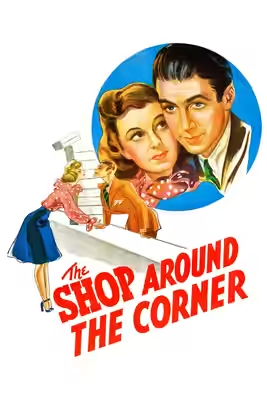
  2. The Shop Around the Corner (1940, Fi1m 88)Shop-floor irritation and private longing, handled with more tenderness and better manners.

  3. Tampopo (1985, Fi1m 84)Another business becomes a gathering place for appetites and comic digressions.

  4. Human Traffic (1999) · not reviewed yetDisenchanted workers save their enthusiasm for friendship, music and the weekend.

  5. Support the Girls (2018) · not reviewed yetCustomer service requires patience that the staff can scarcely afford to spare.

Free account

Know what to watch tonight

Two lists that know where things are streaming, collections you can share, your own score beside ours, and Discover that remembers what you have seen.

  • Want to see, sorted by what is streaming now
  • Seen, with your score out of ten
  • No adverts, ever