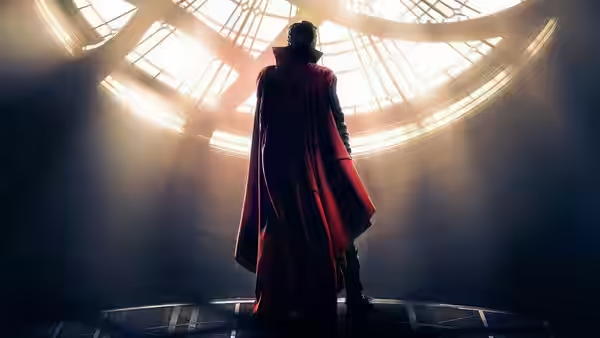
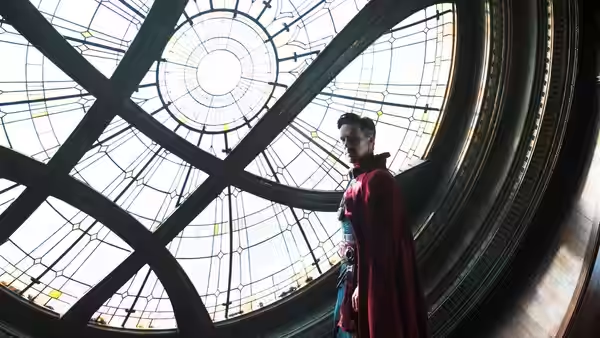
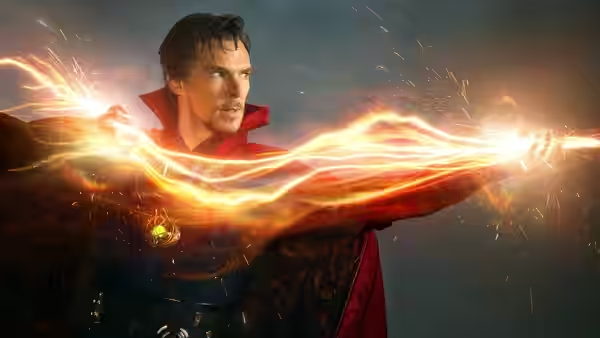
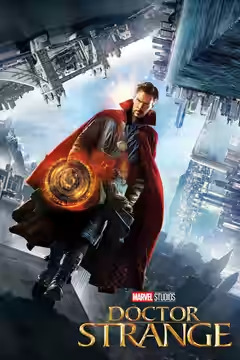
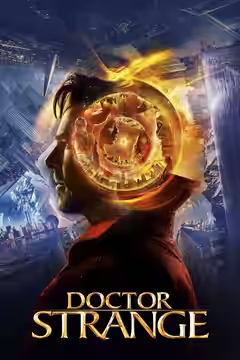
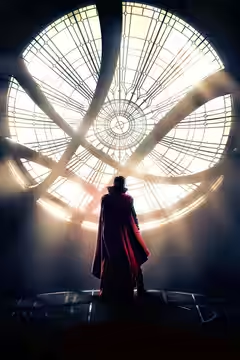
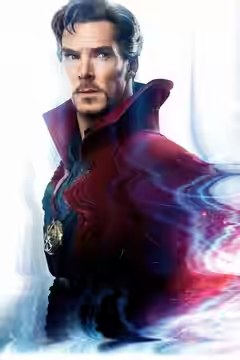
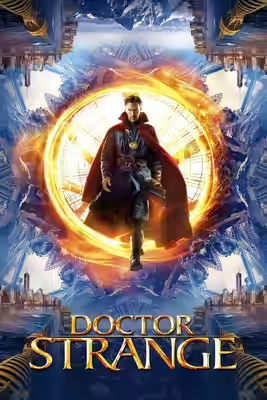
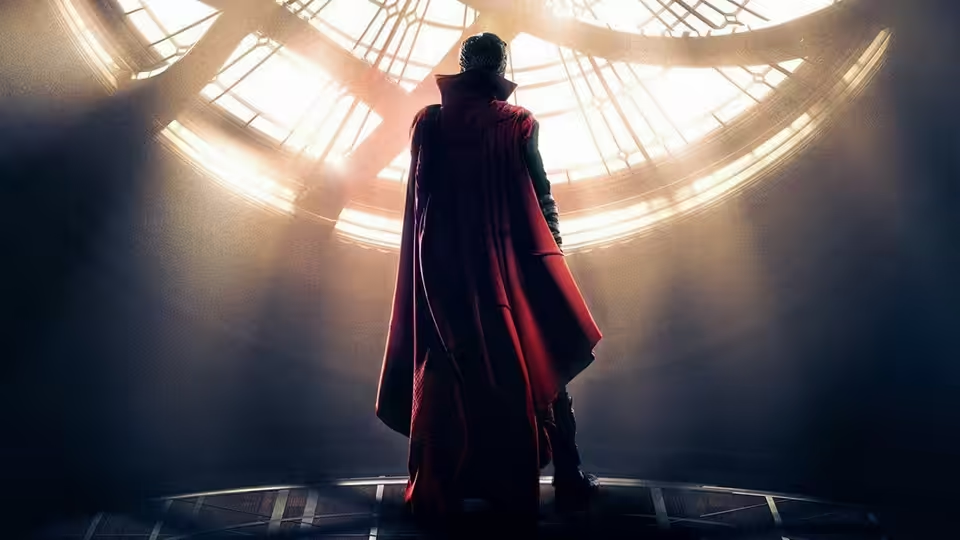
Doctor Strange (Benedict Cumberbatch) stands in a sunlit circular chamber
Film review

Doctor Strange

2016 · Directed by Scott Derrickson · 1h 55m · MPA PG-13

In a sentenceA surgeon loses his hands and gains a cape with more personality than the villain

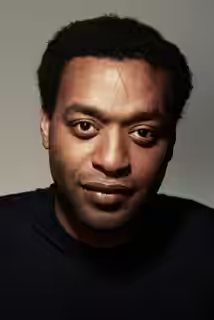
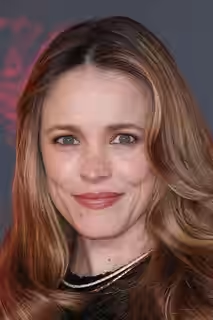
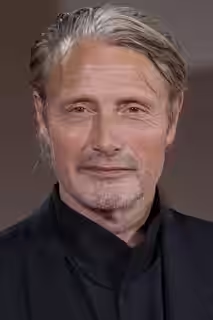
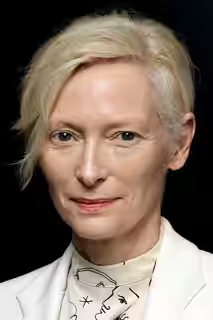
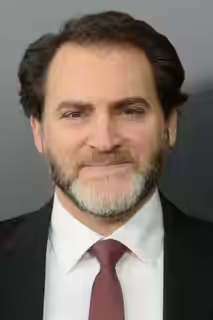
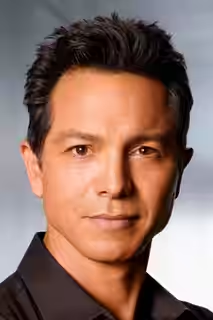
New York, the present day. Dr. Stephen Strange (Benedict Cumberbatch) is a neurosurgeon with a photographic memory, a wall of framed certificates and no patience for anyone who is not him. A car crash on a wet mountain road leaves his hands shaking too badly to hold a scalpel. Dr. Christine Palmer (Rachel McAdams), a colleague and former lover, sees him through a run of failed operations while he spends his fortune on experimental treatments. A former paraplegic, Jonathan Pangborn (Benjamin Bratt), tells him he was healed in Kathmandu. There Strange finds Kamar-Taj, a school of sorcerers run by The Ancient One (Tilda Swinton) and her disciple Mordo (Chiwetel Ejiofor), and learns that a former student, Kaecilius (Mads Mikkelsen), has stolen pages from her library and means to use them.

Plays from YouTube when you press play; nothing loads from them until then.

Fi1m review

Scott Derrickson folds New York like paper and gives Marvel its strangest pictures so far. Underneath them is the Iron Man story told again, with a villain who barely registers. Worth an evening for the sights; do not expect to be moved.

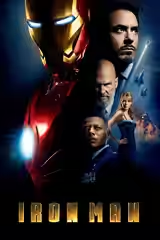
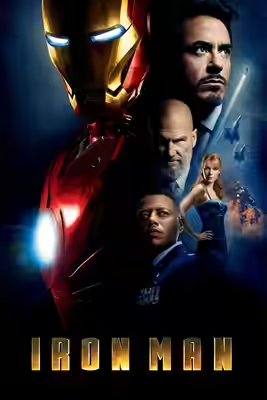
Dr. Stephen Strange (Benedict Cumberbatch) is a New York neurosurgeon who names the year of a pop song while he operates and keeps his watches in a drawer lit like a jeweller’s window. Then his car leaves a wet road, his hands are wrecked, and once the surgeons and the money have run out he goes to Kathmandu looking for a cure. Marvel has told this story before. Iron Man (2008) was also about a rich, clever, unpleasant man who is broken and rebuilt as a slightly less unpleasant one. What Scott Derrickson adds is sorcery, and with sorcery comes permission to fold buildings in half. The permission is the reason to watch.

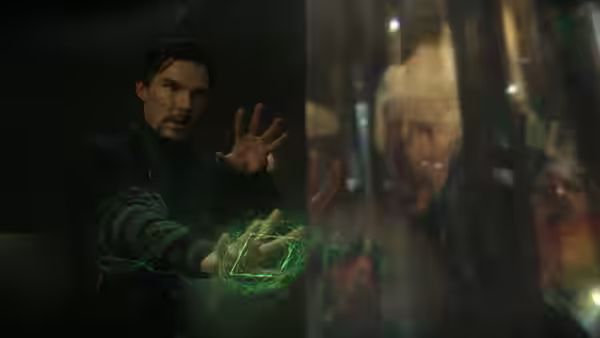
The scene that won us over comes early, at Kamar-Taj. The Ancient One (Tilda Swinton), shaven-headed and unbothered, presses a palm to Strange’s chest, knocks his spirit out of his body and sends it through a run of places that do not obey the rules: a tunnel of hands sprouting from his own fingers, an eye the size of a planet, a long fall through colour. We sat forward and grinned like children, which is not something we do often once the Marvel logo has come up. The sequence runs longer than the studio usually allows itself, and it is better for that.

Charles Wood’s production design gives Kamar-Taj worn timber, a library with the books chained to the shelves and doors that open onto a snowfield or a London street. Alexandra Byrne’s costumes do quiet work: The Ancient One in saffron, the students in layered tunics and sashes, and a red cloak with a high collar that turns out to have opinions and is the best supporting character in the film. Benedict Wong, as the librarian Wong, refuses to laugh at a single one of Strange’s jokes and is the funniest thing in it. Chiwetel Ejiofor plays Mordo as a true believer and plays him straight, and the script gives him too little back.

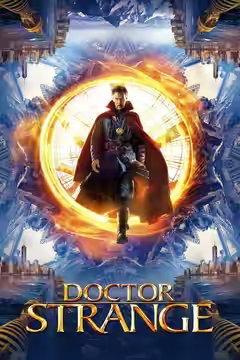
The big set piece is a chase through a New York turned into a kaleidoscope, streets rotating, walls arriving where floors were, all of it inside a sealed copy of the city so that nobody has to explain the damage afterwards. Ben Davis keeps the camera steady while the city turns around it, and Sabrina Plisco and Wyatt Smith cut it so you always know which way is up when the film wants you to. Michael Giacchino’s score puts a harpsichord under the mayhem, a sixties touch for a character who began there.

Then there is Kaecilius. Mads Mikkelsen, with bruised purple make-up round his eyes, wants eternal life and says so in paragraphs, and gets one good joke about Strange’s name. Mikkelsen can frighten a room by lifting an eyebrow. Here he stands still and states his aims, and we were bored during his speeches and slightly cross about it, because the film had just shown us it could do anything and chose to do this. Rachel McAdams’s Dr. Christine Palmer is an emergency doctor who exists to stitch Strange up and look worried. Her one good scene, operating on his body while his spirit argues with her from the ceiling, suggests a livelier film that was not made. Michael Stuhlbarg’s Dr. Nicodemus West, a rival surgeon, gets two scenes.

Cumberbatch is right for the part. The American accent holds and the arrogance comes easily to him. What the script by Derrickson, Jon Spaihts and C. Robert Cargill does not manage is the change of heart. The Ancient One tells Strange that it is not about him, and a few scenes later it is not, and we are asked to take the difference on trust. The finale does something clever with time that we will not describe, and it is the wittiest idea in the film. It comes after a fight in Hong Kong in which so much is happening at once that we had stopped following which of it mattered.

Most critics liked this more than we did, and we understand why. After eight years of men in metal suits, a studio film that spends its money on M. C. Escher is a relief. The pictures are new; the story under them is not. It is 115 minutes, a 12A, and the cape gives the best performance.
Critical consensus AI synthesised

77
Positive
17
Mixed
5
Negative
0

Most critics like Doctor Strange, and none of the 22 reviews dismisses it outright. The praise gathers almost entirely around the effects: the folding cities, the Escher-like architecture and the Mirror Dimension sequences are singled out again and again as a real departure for Marvel. Benedict Cumberbatch is the other constant, judged well cast and enjoyable in a vain, sardonic role, with Tilda Swinton the supporting player most often mentioned.

The reservations are as consistent as the praise. Several reviews find the story thin and the hero’s arc familiar, and Sight and Sound points to an underwhelming villain and an underused female lead. Time Out goes further, finding the lead unlikeable and the film short of tension, while The Independent thinks it lacks the emotional depth of Iron Man. The spread is narrow: the coolest verdicts, from Screen Daily and Collider, still admire the visuals and object mainly to the storytelling underneath them.

Radio Times
25 October 2016 · ★★★★★
100

The critic calls it a barnstorming origin story with dramatic heft and astounding visual dexterity, singling out the mind-bending effects and strong cast for praise. It is hailed as top-notch, innovative fantasy that stands out in the Marvel universe.

Read the full review →
The New York Times
4 November 2016 · Critic’s Pick · Manohla Dargis
90*

The film is a visually transfixing and giddily enjoyable origin story that stands out for its inventive spatial and temporal effects. Derrickson and the cast, led by Cumberbatch, elevate the familiar Marvel beats with strong performances and dazzling imagery.

Read the full review →
Vulture
3 November 2016 · David Edelstein
85*

Doctor Strange is an impressive cosmic spectacle with a dazzling kaleidoscopic palette that compensates for the thin story, thanks to Benedict Cumberbatch's entertaining lead performance and the director being freed to use his imagination. The visuals and wit make it a standout Marvel entry.

Read the full review →
Empire
24 October 2016 · James Dyer
80*

It successfully introduces sorcery and psychedelic visuals to the MCU in a confident stride that reinvigorates the formula. Cumberbatch brings easy charm while the gamble on new territory pays off despite some supporting roles feeling underused.

Read the full review →
Evening Standard
28 October 2016 · David Sexton
80*

It is the trippiest and most psychedelic Marvel film yet thanks to mind-bending special effects. Strong performances from Cumberbatch, Swinton and Ejiofor make the supernatural elements engaging and imaginative.

Read the full review →
Los Angeles Times
3 November 2016 · Justin Chang
80*

The movie offers pleasurably trippy, kaleidoscopic visuals and spatial-temporal shenanigans that feel true to the comic source, anchored by Cumberbatch’s fine performance as the vain, sardonic hero. It playfully embraces its geeky mysticism while delivering a rewarding story of personal growth amid the Marvel franchise machinery.

Read the full review →

Straight answers AI written, from our review

Is Doctor Strange worth watching?
Doctor Strange is worth an evening for its pictures, not its story, and we scored it 66. Scott Derrickson folds New York in half and sends Benedict Cumberbatch's spirit through a tunnel of hands and a planet-sized eye, and we grinned like children. Underneath is the Iron Man story told again, with a villain who barely registers.
How long is Doctor Strange, and what is it rated?
Doctor Strange runs 1h 55m and is rated PG-13 by the MPA in the US. It is a fantasy and adventure film.
Where can I watch Doctor Strange in the US?
Doctor Strange is streaming on Disney+ in the US, and it is also available to rent from Amazon Prime Video and Apple TV from $3.99. Availability is checked daily; the links above go straight to each service.
How violent or frightening is Doctor Strange, and is it suitable for children?
Doctor Strange is a 12A, and its fights are sorcery rather than gore: buildings rotate, streets turn kaleidoscope, and a car crash wrecks a surgeon's hands early on. The stranger sequences, hands sprouting from fingers and a long fall through colour, may unsettle younger children, but there is little here to trouble anyone over about ten.
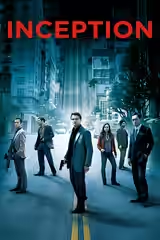
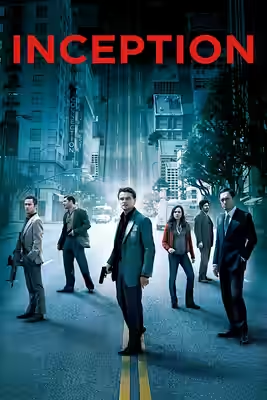
How does Doctor Strange compare to Inception?
Doctor Strange folds cities for the fun of it; Inception folds Paris with a straighter face and a stopwatch. Nolan's film is the tighter and more absorbing of the two, though it overexplains its rules, while Derrickson's has the odder pictures and the weaker story. Choose Inception for a heist you can follow, Doctor Strange for sights you have not seen.
What should I watch after Doctor Strange?
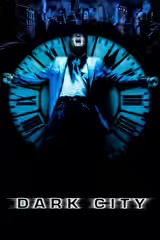
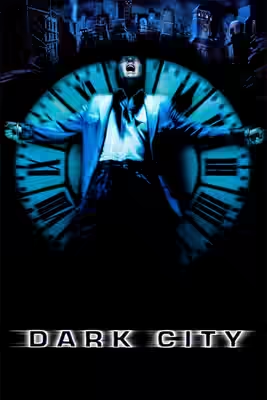
After Doctor Strange, try Inception (2010, Fi1m 80): Nolan folds Paris in on itself with a straighter face and a stopwatch. Then Paprika (2006, Fi1m 80): Satoshi Kon’s dream detective; the parade sequence makes Marvel’s kaleidoscope look tidy; and Dark City (1998, Fi1m 76): Alex Proyas rearranges a whole city every night, on a fraction of the money.

Cast

Awards

Academy Awards, 2017

Nominated
Best Visual Effects

If you liked this, try…

  1. Inception (2010, Fi1m 80)Nolan folds Paris in on itself with a straighter face and a stopwatch.

  2. Paprika (2006, Fi1m 80)Satoshi Kon’s dream detective; the parade sequence makes Marvel’s kaleidoscope look tidy.

  3. Dark City (1998, Fi1m 76)Alex Proyas rearranges a whole city every night, on a fraction of the money.

  4. Iron Man (2008, Fi1m 80)The same arrogant-man-humbled story, told the first time and with more bite.

  5. Everything Everywhere All at Once (2022, Fi1m 77)Hopping between realities as family therapy; sillier, sadder and just as busy.

Free account

Know what to watch tonight

Two lists that know where things are streaming, collections you can share, your own score beside ours, and Discover that remembers what you have seen.

  • Want to see, sorted by what is streaming now
  • Seen, with your score out of ten
  • No adverts, ever