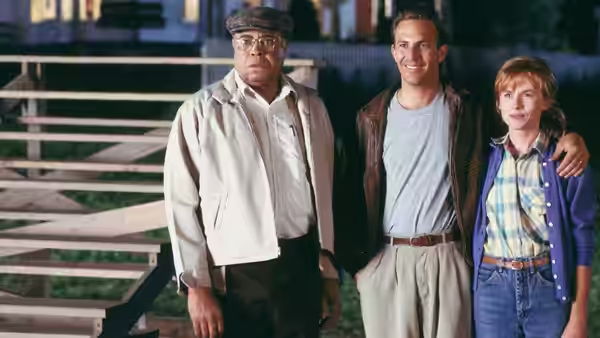
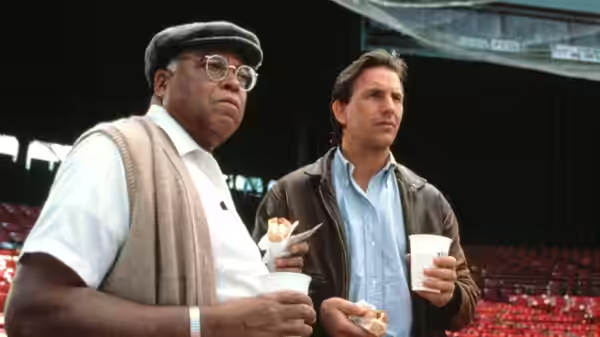
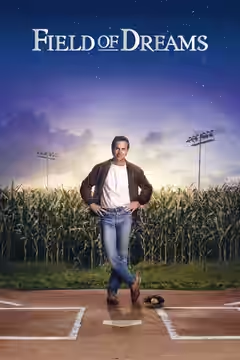
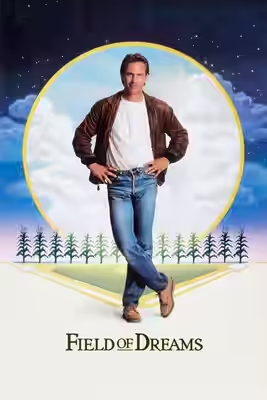
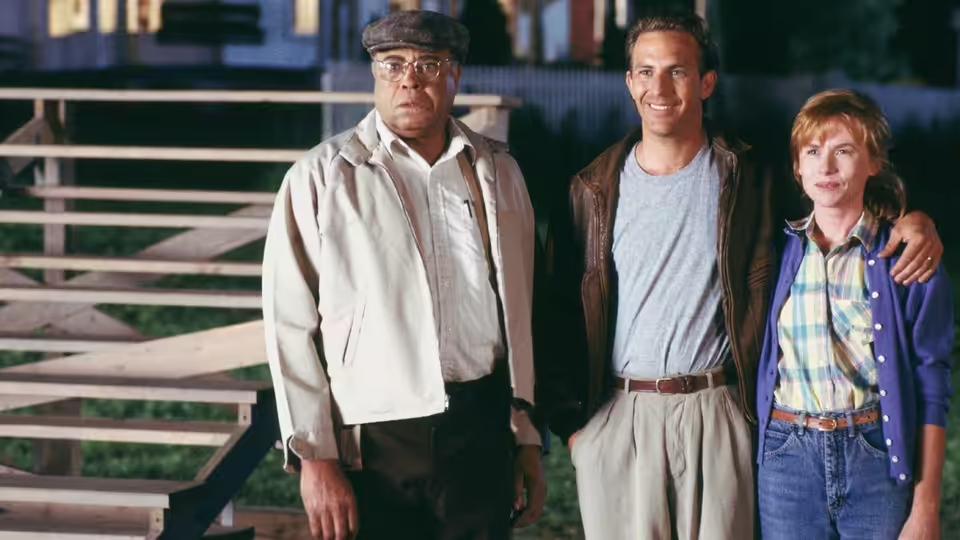
Terrence Mann (James Earl Jones), Ray Kinsella (Kevin Costner) and Annie Kinsella (Amy Madigan) stand on wooden bleachers
Film review

Field of Dreams

1989 · Directed by Phil Alden Robinson · 1h 45m · MPA PG

In a sentenceWe came ready to resist the baseball sermon and ended up needing a tissue

W.Ray Kinsella (Kevin Costner) and W.Ray Kinsella (Amy Madigan) share visions that draw baseball into their family life. Against a setting of American farmland, the game becomes bound up with memories, the relationship between fathers and sons, and the hope of second chances. Ray Liotta plays “Shoeless” Joe Jackson, alongside James Earl Jones as Terrence Mann and Burt Lancaster as Doc “Moonlight” Graham. Written and directed by Phil Alden Robinson, and adapted from a novel by W.Ray Kinsella, this fantasy drama follows people trying to recover something they fear the past has taken from them.

Plays from YouTube when you press play; nothing loads from them until then.

Fi1m review

Phil Alden Robinson’s baseball fantasy is warm, funny and more moving than its fondness for speeches might suggest. Kevin Costner and Amy Madigan make its faith in second chances convincing, though the script occasionally insists on explaining why.

Field of Dreams asks us to take baseball seriously as a way of thinking about fathers, regret and second chances. It is a moving fantasy, and we recommend it despite some dialogue that ought to have stayed in the notebook. Phil Alden Robinson, who writes and directs, commits to the fantasy without embarrassment. That helps, because constant jokes about how unlikely it all is would soon make the people believing in it look foolish. His humour leaves them their dignity.

Kevin Costner makes Ray Kinsella eagerness convincing without asking us to mistake it for wisdom. There is something touching about the effort he puts into believing, and something faintly worrying about it too. We were moved by the unguarded, almost childlike enthusiasm in Costner’s performance. He lets Ray’s investment in baseball and its promises look faintly embarrassing, which gives us a person to care about before we have accepted the fantasy. Robinson asks a great deal of our goodwill; Costner does much of the work of securing it.

Amy Madigan is just as important as Ray Kinsella, giving the couple enough ordinary credibility to make their shared visions bearable. Without that partnership, Ray could become the sort of dreamer whose charm depends on everyone else doing the washing-up. Madigan brings humour and firmness to the film’s sweetness, and Robinson gives her space to register as a person. James Earl Jones and Burt Lancaster also make the fantasy feel inhabited, even when the writing grows rather pleased with its own wisdom.

John Lindley’s cinematography makes the farmland feel welcoming, and the film needs that warmth. A baseball field has to be somewhere these people might invest unreasonable hopes, and his photography makes the attachment credible. Dennis Gassner’s production design similarly keeps the fantasy close to ordinary life, giving the setting enough substance to support the improbable things being asked of it. Their work helps us understand why this place matters to the characters without requiring us to share their feelings about the game.

Ian Crafford’s editing is less persuasive when the film pauses to underline what baseball is supposed to mean. Robinson’s screenplay has a weakness for the polished saying, and the rhythm can feel arranged around making sure we have heard one. James Horner’s music suits the dreaminess, though its sweetness sometimes makes those passages too insistent. These are the moments when the film seems anxious about whether we have understood it. Costner and Madigan have usually made the point already.

The film belongs comfortably in the tradition of American fantasies that give disappointed people another chance. Its innocence is appealing, though its reverence for baseball sometimes asks us to accept too much simply because the game matters deeply to the characters. We do not need every promise it makes about the sport to be credible. Regret about a parent needs little explanation, even if baseball means nothing to us. Robinson is on firmer ground when he trusts that recognition and lets the actors carry it.

At 105 minutes, Field of Dreams gives its people time to persuade us without making the fantasy feel laborious. There is pleasure in watching performers take such earnest material seriously, particularly when a defensive joke would be easier. The sweetness will be too much for some, and the speeches offer little protection against it. Watch it for Costner and Madigan, and be prepared to forgive Robinson those speeches.

Critical consensus AI synthesised

74
Positive
8
Mixed
1
Negative
1

Most critics take to it. Eight of ten come out in favour, several treating the film as a fable in the old Hollywood manner, using baseball as a way for fathers and sons to make peace. Kevin Costner is credited more than once with carrying the whole thing; Amy Madigan is noted for making the couple believable, and James Earl Jones and Burt Lancaster draw particular mention, Lancaster’s late turn especially. Many say the film turns sentiment into feeling rather than simply trading on it.

The reservations cluster on the script. Some find the aphorisms cloying and the sentimentality laid on thick, and one or two see the machinery working when it should be hidden. The spread is wide, from full marks to outright dismissal. The New Yorker is the lone hard dissent, calling the film manipulative and clichéd and objecting to its characters being flattened into feel-good types. Reviews written years after release are, if anything, fonder than those written at the time.

RogerEbert.com
21 April 1989 · ★★★★/4 · Roger Ebert
100

The critic praises the film's brave, Capra-esque embrace of fantasy and dreams centered on baseball as a symbol of innocence and redemption. Costner and Madigan ground the story as a believable couple sharing visions, with strong supporting turns from Jones and Lancaster.

Read the full review →
The New York Times
21 April 1989 · Critic's Pick · Caryn James
90*

The film is lauded as an idealistic work that turns sentimentality into true emotion through smart writing, beautiful filming, and perfect acting. It treasures American icons like baseball and farmlands while carrying their emotional weight into the 1980s.

Read the full review →
Time Out
10 September 2012 · CM
85*

The film is often beautiful and uses baseball as a metaphor for father-son bonding without sentimentality. It examines the ideological conflict between the 1960s and 1980s while balancing whimsy with gravity through humour and strong performances.

Read the full review →
Empire
1 January 2000 · Mat Snow
80*

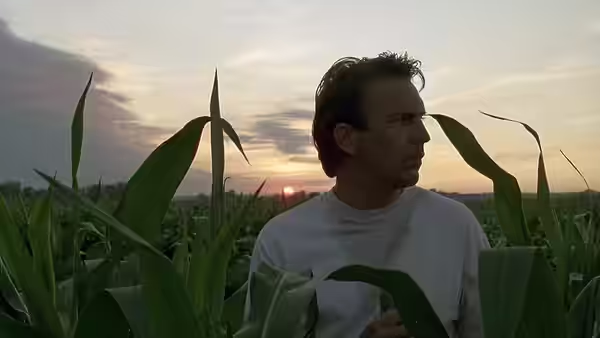
The critic finds the film a resonant fable about reconciliation, lost innocence and second chances that updates classic Hollywood magic. The healing climax scene against the cornfield at sunset is singled out as particularly moving.

Read the full review →
Los Angeles Times
21 April 1989 · Michael Wilmington
70*

The review calls it one of the most heartfelt major-studio films in recent memory, presenting baseball as a sacrament for generational reconciliation. However, it notes something tentative and uncertain in the execution, making the magic trick visible.

Read the full review →
The Hollywood Reporter
17 April 1989 · Duane Byrge
70*

The critic finds the film a big-hearted, fanciful story about life more than baseball that will divide viewers but succeeds thanks to Kevin Costner's leg-it-out intensity and kidlike enthusiasm. Costner's performance carries the film past its mechanical moments, with strong support from the cast and technical elements evoking a Spielberg glow.

Read the full review →

Straight answers AI written, from our review

Is Field of Dreams worth watching?
Field of Dreams is worth watching for anyone willing to take a baseball fantasy about fathers and second chances seriously, and we scored it 83. Kevin Costner and Amy Madigan make the couple's shared visions believable, and the farmland photography gives the place real warmth. The speeches about what the game means are laid on thick, so the sweetness will be too much for some.
How long is Field of Dreams, and what is it rated?
Field of Dreams runs 1h 45m and is rated PG by the MPA in the US. It is a drama and fantasy film.
Where can I watch Field of Dreams in the US?
Field of Dreams is streaming on AMC+, Netflix, The Roku Channel and Amazon Prime Video in the US, and it is also available to rent from Amazon Prime Video from $3.99. It leaves The Roku Channel on 22 September. Availability is checked daily; the links above go straight to each service.
How does Field of Dreams compare to A Matter of Life and Death?
Field of Dreams and A Matter of Life and Death are both fantasies that take human longing seriously without making belief compulsory, and both stop occasionally to labour their point in speeches. Powell and Pressburger's film is the wittier and the easier to recommend to almost anyone, its colour and performances carrying the case for being alive. Robinson's is the more earnest and the more American, best for those with a soft spot for fathers, farms and baseball.
Is Field of Dreams based on a true story or a book?
Field of Dreams is based on a novel by W.P. Kinsella, not on a true story; it is a fantasy in which baseball is bound up with memory and regret rather than a record of anything that happened. Phil Alden Robinson wrote and directed the adaptation, and knowing the book is not needed to follow the film. The characters' feelings about fathers carry it regardless of whether the game means anything to you.
What should I watch after Field of Dreams?
After Field of Dreams, try A Matter of Life and Death (1946, Fi1m 92): Another fantasy that takes human longing seriously without making belief compulsory. Then Local Hero (1983, Fi1m 86): Rural lives and improbable hopes, with more scepticism and a similarly generous heart; and After Life (1998, Fi1m 85): A quieter fantasy about memory, with equal faith in ordinary people’s feelings.

Cast

Awards

Academy Awards, 1990

Nominated
Best Original Score
Nominated
Best Picture
Nominated
Best Writing, Adapted Screenplay

If you liked this, try…

  1. A Matter of Life and Death (1946, Fi1m 92)Another fantasy that takes human longing seriously without making belief compulsory.

  2. Local Hero (1983, Fi1m 86)Rural lives and improbable hopes, with more scepticism and a similarly generous heart.

  3. After Life (1998, Fi1m 85)A quieter fantasy about memory, with equal faith in ordinary people’s feelings.

  4. Big Fish (2003, Fi1m 78)For more difficult fathers, improbable stories and emotion earned despite conspicuous sweetness.

  5. The Straight Story (1999, Fi1m 88)Family regret and rural America, handled with patience and considerably fewer miracles.

Free account

Know what to watch tonight

Two lists that know where things are streaming, collections you can share, your own score beside ours, and Discover that remembers what you have seen.

  • Want to see, sorted by what is streaming now
  • Seen, with your score out of ten
  • No adverts, ever