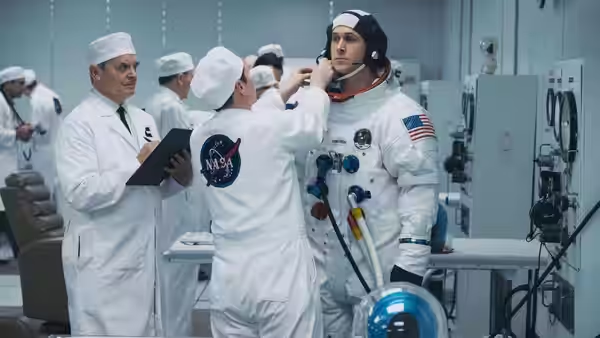
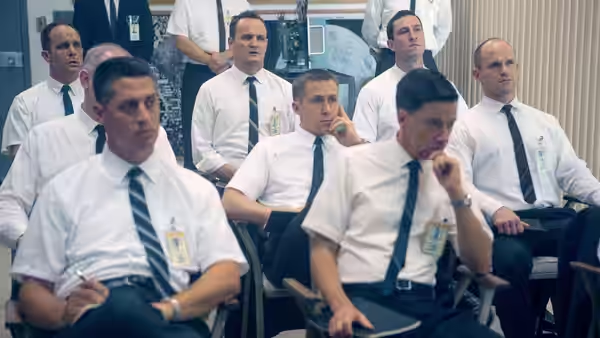
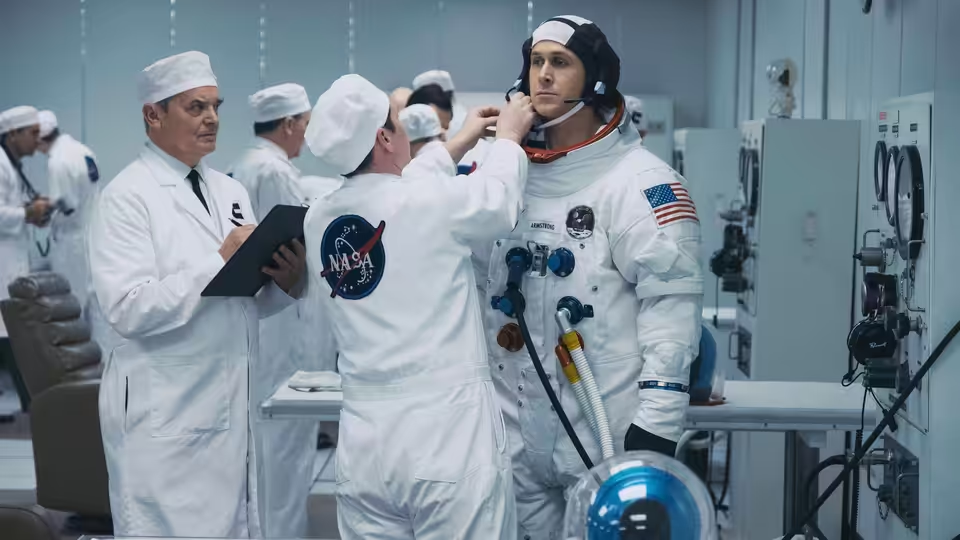
Technicians in white coats fitting an astronaut with helmet in a lab
Film review

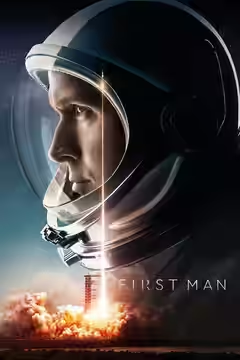
First Man

2018 · Directed by Damien Chazelle · 2h 21m · MPA PG-13

In a sentenceWe would like those spacecraft checked once more before anyone gets in

Neil Armstrong (Ryan Gosling) is a test pilot whose work is taking him towards the American space programme and a possible journey to the Moon. At home, he and his wife, Janet Shearon (Claire Foy), grieve for their daughter. A test flight nearly fails, making the risks of his profession immediate rather than theoretical. Ed White (Jason Clarke) is among the men sharing the demands of the programme. Neil wants to carry on with the work, but his reserve leaves Janet struggling to reach him as the couple face the prospect of further loss.

Plays from YouTube when you press play; nothing loads from them until then.

Fi1m review

First Man is a gripping account of spaceflight, led by Ryan Gosling and Claire Foy, that makes the risks painfully immediate. Its insistence on explaining Neil Armstrong through grief is the one substantial frustration.

Damien Chazelle approaches First Man with a useful suspicion of how reassuring a familiar achievement can become. Neil Armstrong’s story is easy to reduce to courage, competence and a destination; this film spends its time on the danger of the work and the difficulty of living alongside someone committed to it. We recommend it, with a reservation about how insistently it explains its central man through grief. The flights are gruelling, and the domestic scenes make clear how much his work asks of the family.

The near-disastrous test flight frightened us, because the confined space leaves so little room between a pilot and the machinery on which his life depends. Linus Sandgren’s cinematography makes us feel boxed in, denying us a comfortable distance from the danger. Tom Cross gives the flight sequences an urgent, unsettled rhythm while preserving the sense of people trying to do precise work. The tension comes from having to concentrate when everything around them feels threatening. Familiarity with the history offers surprisingly little comfort.

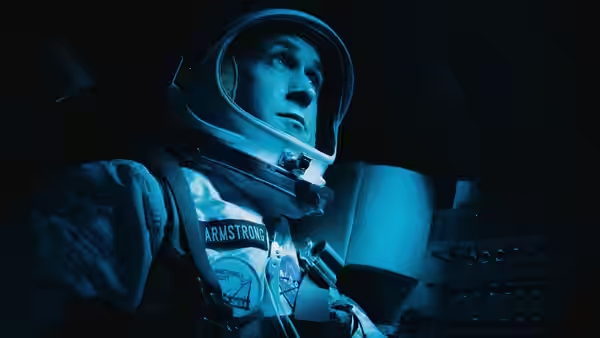
Nathan Crowley’s production design helps by making the spacecraft feel like working spaces with barely enough room for the people operating them. The cramped machinery earns our attention because it is what the men must trust. Sound makes that trust harder: spaceflight is punishing to listen to, and we never forget the effort involved in keeping these machines under control. Justin Hurwitz’s music supplies some of the tenderness that the central performance keeps contained. It is effective, though it sometimes presses an emotional point that the performances have already made.

Ryan Gosling gives Neil Armstrong a reserve that can be mistaken for a lack of feeling, and makes that mistake part of the performance. His concentration is convincing; we understand why this man might be trusted with dangerous work. With Janet Shearon, that same restraint becomes frustrating, because professional steadiness offers limited comfort to a grieving wife. The performance gives us enough to sense the effort of keeping emotion contained. A few of the quieter stretches still feel blank.

Claire Foy is essential here, bringing force and impatience to a part that could easily have been confined to worrying at home. She makes Janet Shearon’s need for a response seem reasonable even when the film is absorbed in what her husband has to do. Her impatience stops these scenes becoming a series of respectful looks at a troubled man. The supporting characters receive less room to develop, leaving the marriage to carry most of the film’s personal stakes.

The difficulty lies in Josh Singer’s screenplay, which returns to grief so often that it begins to narrow our understanding of its subject. The film gives too little attention to what else might drive this man towards such difficult work. Ryan Gosling can suggest private thought, but he cannot supply all the curiosity and contradictions that the writing leaves unexplored. At 141 minutes, the quieter passages can feel repetitive, despite Tom Cross’s control of the flight sequences.

As a space drama, First Man is unusually alert to how uncomfortable the work must be, and how much patience it demands before courage gets a chance. It also resists turning the people involved into a collection of speeches about national greatness. That restraint is welcome, even when the private drama leans too heavily on the same explanation. Save it for an evening when being frightened by machinery sounds more appealing than being cheered up.

Critical consensus AI synthesised

77
Positive
25
Mixed
0
Negative
2

Most critics respond warmly to First Man’s sober, intimate account of Armstrong and the space race. Praise centres on the claustrophobic flight sequences, with sound, cinematography and editing making the machinery feel precarious and the danger immediate. Gosling’s restraint and Foy’s portrayal of shared grief draw frequent approval. The reviews also welcome Chazelle’s attention to personal sacrifice and his avoidance of patriotic self-congratulation.

Reservations concern the emotional distance of the central character, slow stretches between missions and supporting relationships that receive too little attention. The spread is wide despite the strongly positive majority: some critics find the grief moving, while others think the film presses it too insistently. The New York Times finds Armstrong’s inner life elusive despite the strong performances; The New Yorker goes further, arguing that the emphasis on repression and sentimentality misrepresents his modesty. Even these dissenters acknowledge the convincing depiction of technical detail or danger.

Empire
11 September 2018 · John Nugent
90*

The film is a serious, dour study of obsession and ambition that marks a giant leap in Chazelle's cinematic scope. It succeeds through immersive craft, visceral sequences and intimate focus on Armstrong's personal sacrifices, with Gosling and Foy excelling.

Read the full review →
Sight and Sound
29 August 2018 · festival review · John Bleasdale
90*

The critic praises Chazelle’s elegant, intimate approach that makes the familiar Moon landing story feel fresh, highlighting Gosling’s mature performance as Armstrong and the film’s focus on personal grief alongside technical peril.

Read the full review →
The Hollywood Reporter
29 August 2018 · festival review · David Rooney
90*

Praises the sober, contemplative picture for its emotional involvement, visceral tension, suspense, and stunning technical craft. Singles out the film's refusal to engage in expected jingoistic self-celebration.

Read the full review →
The Times
12 October 2018 · ★★★★☆ · Kevin Maher
90*

The critic calls it a full-bodied space weepie that reconstitutes Armstrong as a man riven with grief, delivering a visually exquisite period drama with an emotional payoff. They single out the ending's image of parental grief as a perfect apotheosis.

Read the full review →
Vulture
12 October 2018 · festival review · David Edelstein
85*

Describes it as laborious yet stupendous, the most grounded space movie ever made. Singles out the intimate focus on family tensions and the exultant silence of the lunar landing.

Read the full review →
IndieWire
29 August 2018 · B+ · Michael Nordine
83

Calls it a thrilling Neil Armstrong biopic that meets sky-high expectations. Highlights the right stuff in Chazelle and Gosling's collaboration.

Read the full review →

Straight answers AI written, from our review

Is First Man worth watching?
First Man is worth watching for anyone who wants spaceflight shown as dangerous, cramped work rather than a triumph, and we scored it 80. Ryan Gosling and Claire Foy make the marriage carry the personal stakes, though the screenplay explains Neil Armstrong through grief so insistently that the quieter stretches of its 141 minutes start to repeat themselves. Save it for an evening when being frightened by machinery appeals more than being cheered up.

How long is First Man, and what is it rated?
First Man runs 2h 21m and is rated PG-13 by the MPA in the US. It is a history and drama film.
Where can I watch First Man in the US?
First Man is available to rent from Amazon Prime Video and Apple TV from $3.99. Availability is checked daily; the links above go straight to each service.
How violent or frightening is First Man, and is it suitable for children?
First Man is a 12A with no violence to speak of, but its test flight and spaceflight sequences are frightening in a sustained, claustrophobic way, and the loud, punishing sound makes the danger hard to shake off. The film also dwells on a couple grieving for their young daughter. Older children and teenagers should manage; younger or anxious viewers may find the confined cockpits genuinely distressing.
How does First Man compare to Apollo 13?
First Man and Apollo 13 both treat the practical terror of spaceflight seriously, but First Man is colder, staying close to a reserved Neil Armstrong and his grieving marriage, while Apollo 13 spreads its warmth across a whole ensemble solving problems together. Choose Chazelle's film for dread and discomfort, Howard's for company and momentum. Apollo 13 is the easier evening; First Man is the more unsettling one.
What should I watch after First Man?
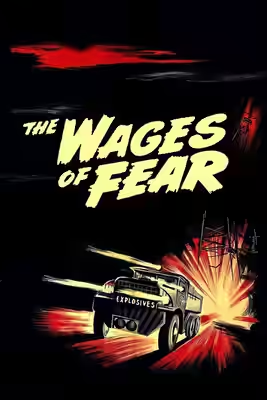
After First Man, try Apollo 13 (1995, Fi1m 84): The practical terror of spaceflight, with more warmth among the people enduring it. Then The Wages of Fear (1953, Fi1m 90): Men depend on dangerous machinery, and every small movement becomes difficult to watch; and The Wind Rises (2013, Fi1m 77): An engineer’s devotion to flight strains his private life, with consequences beyond it.

Cast

Awards

Academy Awards, 2019

Won
Best Visual Effects

If you liked this, try…

  1. Apollo 13 (1995, Fi1m 84)The practical terror of spaceflight, with more warmth among the people enduring it.

  2. The Wages of Fear (1953, Fi1m 90)Men depend on dangerous machinery, and every small movement becomes difficult to watch.

  3. The Wind Rises (2013, Fi1m 77)An engineer’s devotion to flight strains his private life, with consequences beyond it.

  4. Solaris (1972, Fi1m 87)In space again, with grief even harder to escape and considerably fewer reassurances.

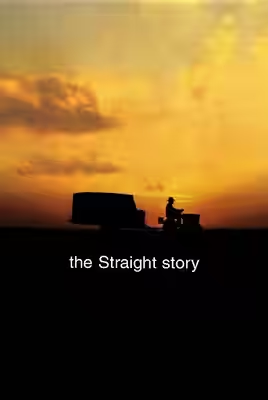
  5. The Straight Story (1999, Fi1m 88)Another reserved man makes an improbable journey, with considerably less terrifying transport.

Free account

Know what to watch tonight

Two lists that know where things are streaming, collections you can share, your own score beside ours, and Discover that remembers what you have seen.

  • Want to see, sorted by what is streaming now
  • Seen, with your score out of ten
  • No adverts, ever