Cristian Mungiu sets a devout Romanian father against the Norwegian child protection service and declines to say who is right. It is superbly acted and patiently built, and at 146 minutes its even-handedness starts to look like stalling.
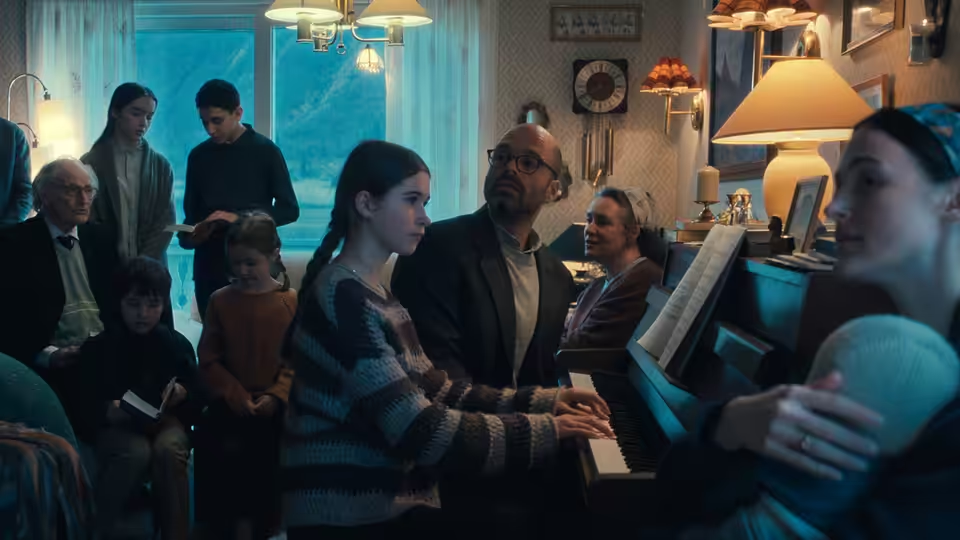
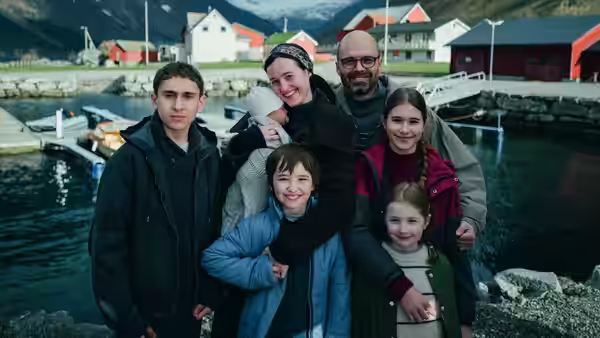
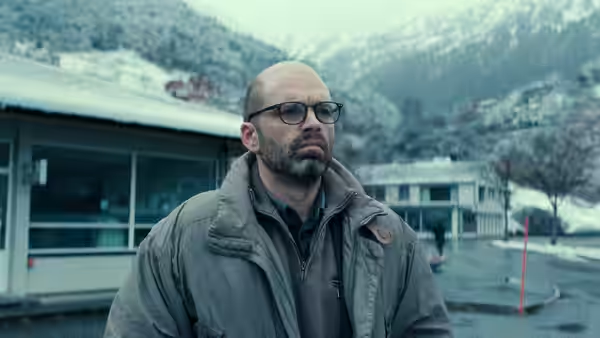
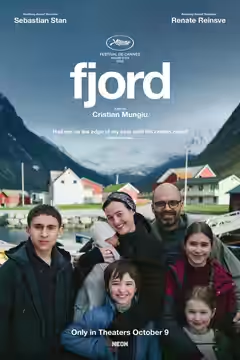
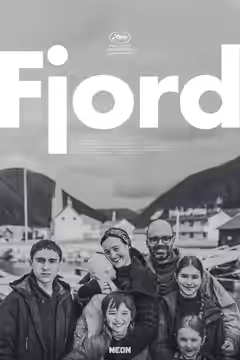
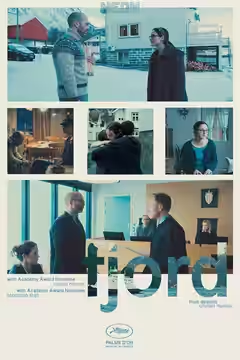
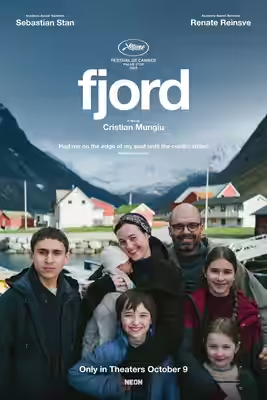
Cristian Mungiu has spent twenty years filming Romanians in small rooms with an institution leaning on them: the hotel in 4 Months, 3 Weeks and 2 Days (2007), the village meeting in R.M.N. (2022). Fjord takes the method to Norway. Mihai Gheorghiu (Sebastian Stan) is a devout Romanian father in a fjord-side village whose strict household comes to the attention of the child protection service over corporal punishment, and then to a courtroom. Mungiu wants us to change sides, and for an hour we did. Then the film keeps changing our minds for another hour and a half, and we began to suspect it did not have one of its own. It is good, it is long, and it is careful in a way that finally costs it.
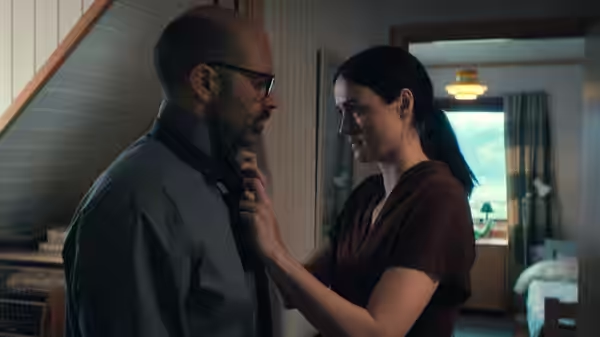
The acting is the reason to go. Stan plays Mihai without any of the usual signals for a screen zealot. He does not shout, he does not stare, he says please. The certainty does the frightening, not the voice. Renate Reinsve, as his wife Lisbet, has the harder job, a woman who loves the man and is watching what his convictions cost, and she plays most of it in the pause before she answers a question. Both work in three languages and neither seems to be acting the language. Lisa Carlehed, as Mia Halberg, is the Norwegian the film allows to be unsure, and hers is the face we kept looking for.
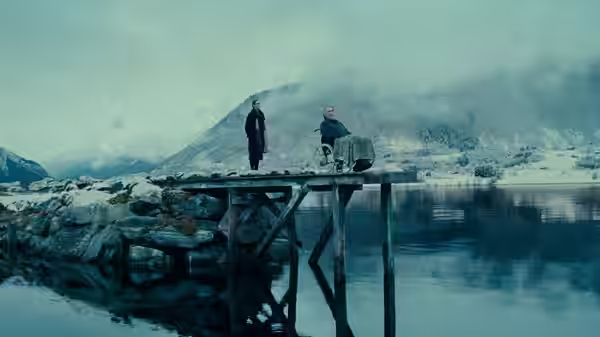
Tudor Vladimir Panduru shoots the way Mungiu has always liked to be shot: the camera set down in a room and left there while a conversation runs its full length, so nobody gets a close-up to win the argument with. Outdoors the water and the rock fill the frame and the people are small in front of them, which is the point. Marius Winje Brustad and Simona Pădurețu give the Gheorghius a warm, cluttered house and the state a set of pale, tidy offices, and the contrast does a good deal of the arguing. Kirsi Gum dresses the family plainly, buttoned to the neck. Kaspar Kaae’s music is scarce and better for it. Mircea Olteanu cuts seldom, and each cut carries weight.
Here is what we felt. In the first hour we were frightened, and not by anything violent. Two officials sit at a kitchen table with notebooks, and Reinsve’s face slowly registers that everything said in this room will be read later by someone who was not in it. Mungiu does the ordinary room in which a life is being decided better than anyone working, and this is one of his best. By the second hour the fear had turned into something less useful. Every scene sets one side’s reasonable case beside the other’s and ends with the scales level, and we noticed we had stopped feeling and started keeping count.
The trial scenes are the strongest writing in it, dry, procedural and properly tense, with Christian Rubeck’s Attorney Jacobsen arguing a case the film only half believes. Around them are strands involving the village that the film picks up, sets down and picks up again, and each time it does the central family cools a little. At 146 minutes, there was room to lose some of it.
Most critics have taken the even-handedness as the achievement, and a few have complained that it tips towards the Norwegians, or towards the Romanians. Mungiu would probably take both complaints as proof he got it right. We are less sure. A film can decline to judge because it has looked hard and found the question honestly difficult, or because judging would be rude, and by the end Fjord is closer to the second. The Norwegians, Carlehed apart, are given less inner life than the Romanians, so the film leans one way while telling us it does not.
Beyond the Hills (2012) took one moral problem and followed it to the end. Fjord has three languages, several families and a national argument to referee, and it referees rather than plays. See it for Stan and Reinsve, for the kitchen table and for the courtroom, and bring someone you disagree with. It carries a 15 certificate and will fill the evening and a fair part of the drive home.