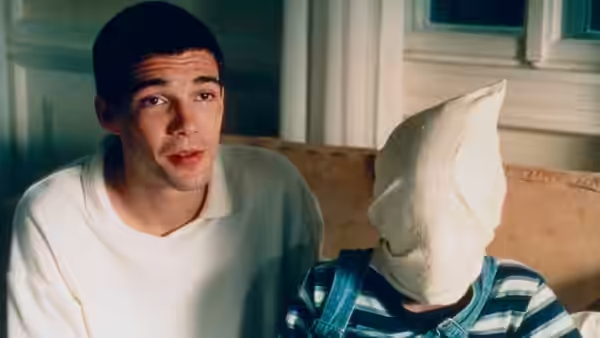
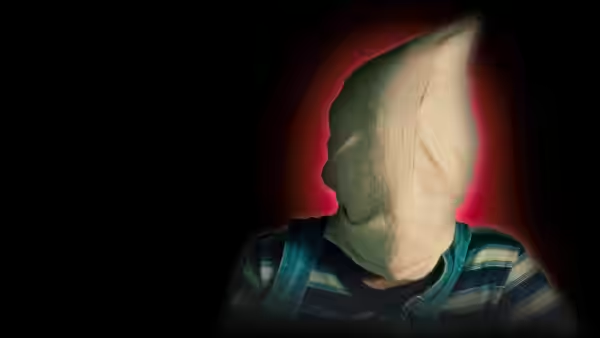
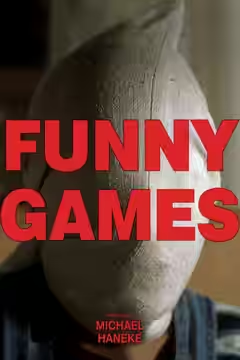
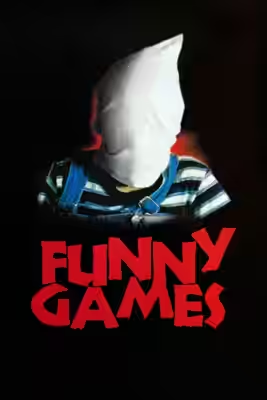
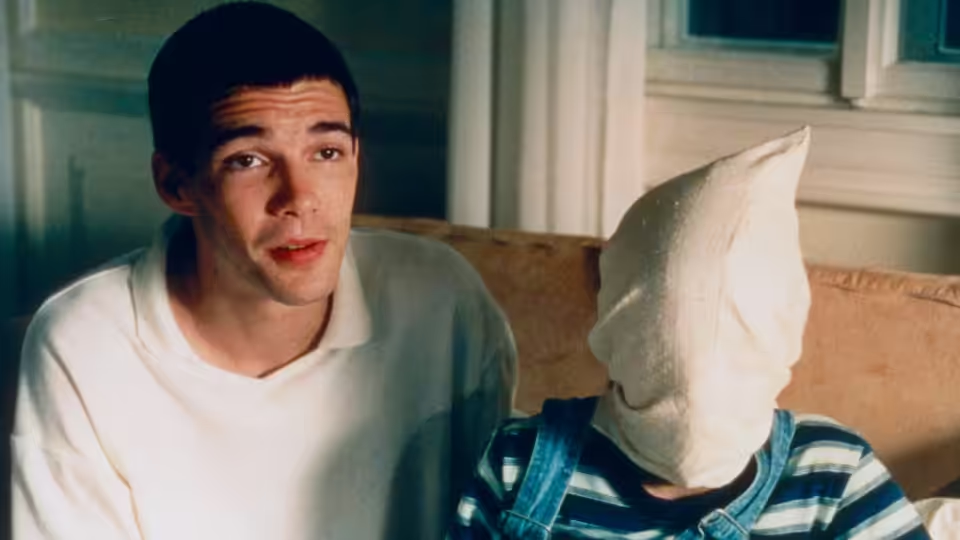
Paul (Arno Frisch) sits beside Georgie (Stefan Clapczynski) wearing a pillowcase over his head
Film review

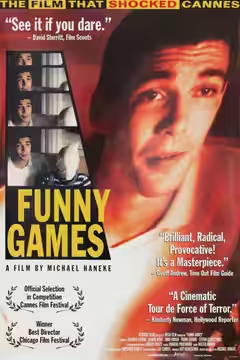
Funny Games

1997 · Directed by Michael Haneke · 1h 49m · MPA R

In a sentenceTwo polite young men make us long for someone with the decency to shout

A family encounters two polite young men whose interest in them turns into psychological torment. The men seek power over their victims and use humiliation to exercise it, leaving the family to face cruelty without an explanation that might help them understand it. Michael Haneke’s horror thriller follows this encounter while drawing attention to the audience’s position as spectators of violence. Susanne Lothar plays Anna and Ulrich Mühe plays Georg, with Arno Frisch as Paul, Frank Giering as Peter and Stefan Clapczynski as Georgie.

Fi1m review

Michael Haneke makes quiet cruelty almost unbearable, helped by performances that keep the victims painfully human. We recommend it for the dread, with reservations about the repeated lectures on why we are watching.

Michael Haneke’s Funny Games is a frightening horror film with a habit of lecturing its audience. We recommend it to those prepared for sustained distress, with reservations about its certainty that our interest in screen violence needs correcting. The premise is spare: two polite young men subject a family to psychological torment. Haneke, who also writes the screenplay, concentrates on power and humiliation rather than giving the tormentors a motive that might make them easier to understand.

Arno Frisch and Frank Giering make the menace feel horribly casual. The politeness of the two tormentors is the detail that gets under the skin: courtesy continues after any pretence of decent behaviour has gone. We were horrified by the way their quiet manner makes the family’s humiliation seem routine. That quietness gives us time to consider the cruelty, without the distraction of a villain performing rage or explaining himself.

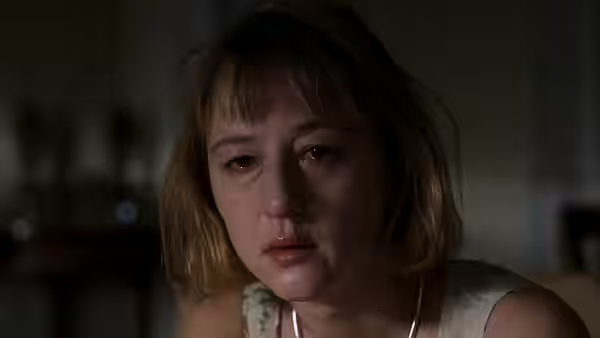
Susanne Lothar and Ulrich Mühe give the suffering a weight that the film needs if its ideas are to matter. Our attention stays with the family rather than drifting towards admiration for the tormentors’ cleverness. That is a considerable achievement in a film built around such an unequal struggle. The actors make it possible to care about the people even when Haneke seems most interested in what their predicament will do to us.

Jürgen Jürges’s cinematography works with the sparing display of violence, keeping the victims more important than the spectacle of injury. Christoph Kanter’s production design is unobtrusive enough that the people remain the source of unease. Neither contribution gives us the reassurance of a horror film proudly displaying its effects. Andreas Prochaska’s editing is more conspicuous: scenes last long enough for waiting itself to become distressing, and the attention paid to aftermath denies the easy escape of moving straight on. The lack of relief is exhausting.

The difficulty comes when Haneke treats that exhaustion as proof of something about the audience. We can be distressed by fictional cruelty without needing to be corrected for having watched it, and sympathy for these victims is hardly evidence of a secret appetite for their suffering. His screenplay allows too little room for that distinction. Once the point has registered, the insistence becomes wearing; the prolonged scenes sometimes make us conscious of a director pressing his case when we would rather stay with the family.

As a horror film, it gets much further with quiet coercion than many films get with elaborate injuries. The young men’s lack of motive leaves little to explain away, and their manners deny the useful warning of obvious rage. That is an unsettling choice, sustained with considerable discipline. Haneke’s skill at making fear last is the reason to watch, regardless of how much faith we place in his claims about the audience.

This is not an evening’s entertainment to choose casually. At 109 minutes, it asks more of our patience than the running time suggests. Choose it for the performances and the sustained dread, provided there is room tonight for a film this determined to be unpleasant.

Critical consensus AI synthesised

64
Positive
4
Mixed
2
Negative
2

Most critics agree that Funny Games is deeply disturbing, and that this is the point. The praise clusters on Haneke’s control: the violence kept off-screen so the audience has to imagine it, the long unbroken scenes of a family being tormented, and two polite young intruders who want nothing but power and humiliation. Several reviews single out the moments when the film turns to address the viewer directly, arguing that they make the audience complicit.

The spread is wide. The reservations cluster on the lecture underneath the thriller. Slant Magazine calls the film a bullying thesis that scolds viewers for enjoying what it shows and faults Haneke for exempting himself from the violence he condemns. The New York Times finds sophisticated cinematic sadism rather than a moral challenge, and Variety thinks it outstays its welcome and is too knowing about the genre. The dissent is entirely American; the British reviews are the warmest.

Empire
1 January 2000 · Kim Newman
85*

Haneke delivers a remarkable film that encourages identification with the victims while making the villains creepily unforgettable. Its sparing on-screen violence and protracted scenes make it one worth seeing despite being arguable.

Read the full review →
Little White Lies
18 May 2017 · Stephen Puddicombe
80*

The critic praises Haneke’s meta home-invasion film as a chilling, technically masterful satire on screen violence that still shocks through its naturalistic tension and fourth-wall breaks. It singles out the film’s ability to implicate viewers in the violence while delivering genuine horror despite its didactic intent.

Read the full review →
Total Film
30 October 1998
80*

Haneke subverts thriller conventions by keeping violence off-screen and forcing the audience to imagine terrors and witness aftermaths. The result is an immensely disturbing piece of cinema that makes viewers complicit through direct address and rewinding tricks.

Read the full review →
The AV Club
16 May 2006 · Scott Tobias
65*

Haneke's 1998 Funny Games is a masterful home-invasion thriller designed to drive people out of the theater or punish those who stay. It succeeds by being deeply unsatisfying through its relentlessly sadistic story of a bourgeois family tormented by two young psychos.

Read the full review →
Variety
25 May 1997 · festival review · David Rooney
50*

The film is a chilling psychological thriller about a family subjected to sadistic torment, continuing Haneke's examination of violence and media. However, it outstays its welcome and feels overly knowing in its manipulation of genre expectations.

Read the full review →
The New York Times
11 March 1998 · Stephen Holden
40*

The critic sees the film as a blood-curdling portrait that uses Brechtian devices to confront viewers with their voyeurism toward violence. It ultimately comes across as a sophisticated act of cinematic sadism rather than a genuine moral challenge.

Read the full review →

Straight answers AI written, from our review

Is Funny Games worth watching?
Funny Games is worth watching for anyone prepared for sustained distress, and we scored it 74. Arno Frisch and Frank Giering make two polite tormentors horribly casual, and Susanne Lothar and Ulrich Mühe keep the family human enough to care about. Our reservation is Michael Haneke's habit of lecturing the audience about why it is watching.
How long is Funny Games, and what is it rated?
Funny Games runs 1h 49m and is rated R by the MPA in the US. It is a drama and horror film.
Where can I watch Funny Games in the US?
Funny Games is streaming on HBO Max, Tubi, Hulu and The Roku Channel in the US. It leaves HBO Max on 30 September. Availability is checked daily; the links above go straight to each service.
How violent or frightening is Funny Games, and is it suitable for children?
Funny Games carries an 18 certificate and is not suitable for children. The violence is shown sparingly, but the film is built on prolonged psychological torment and humiliation, with long scenes in which waiting itself becomes distressing. We would not recommend it to the squeamish or to anyone wanting relief along the way.
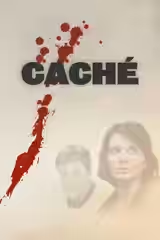
How does Funny Games compare to Caché?
Funny Games is the harsher of Michael Haneke's two ordeals, putting a family through direct psychological torment where Caché works through the slower pressure of surveillance on a comfortable couple. Both share his determination to direct our judgement, which wears in each. Caché is the more absorbing evening; Funny Games is for those who want the fear kept close and unrelieved.
What should I watch after Funny Games?
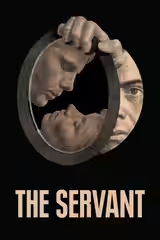
After Funny Games, try The Vanishing (1988, Fi1m 88): A disappearance thriller that makes curiosity feel like a dangerous personal weakness. Then Caché (2005, Fi1m 88): Another Haneke ordeal, with surveillance putting a comfortable household under pressure; and The Servant (1963, Fi1m 89): For class hostility and domestic power struggles conducted through careful manners.

Cast

If you liked this, try…

  1. Peeping Tom (1960) · not reviewed yetFor another uncomfortable encounter between watching violence and wanting to keep watching.

  2. The Vanishing (1988, Fi1m 88)A disappearance thriller that makes curiosity feel like a dangerous personal weakness.

  3. Caché (2005, Fi1m 88)Another Haneke ordeal, with surveillance putting a comfortable household under pressure.

  4. The Servant (1963, Fi1m 89)For class hostility and domestic power struggles conducted through careful manners.

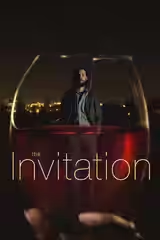
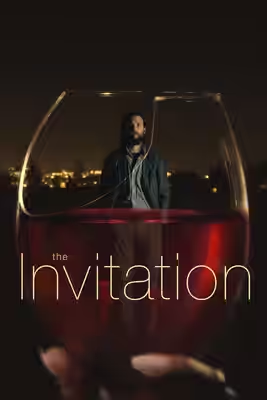
  5. The Invitation (2015) · not reviewed yetA dinner where good manners make it harder to admit something is wrong.

Free account

Know what to watch tonight

Two lists that know where things are streaming, collections you can share, your own score beside ours, and Discover that remembers what you have seen.

  • Want to see, sorted by what is streaming now
  • Seen, with your score out of ten
  • No adverts, ever