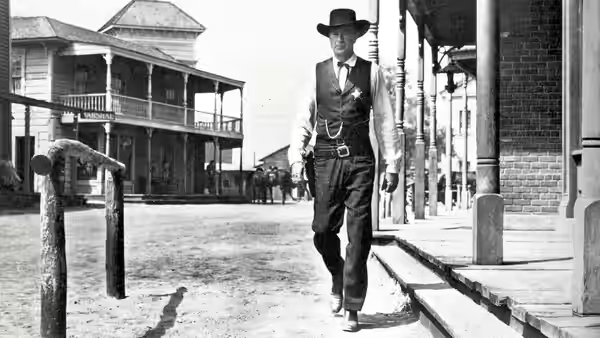
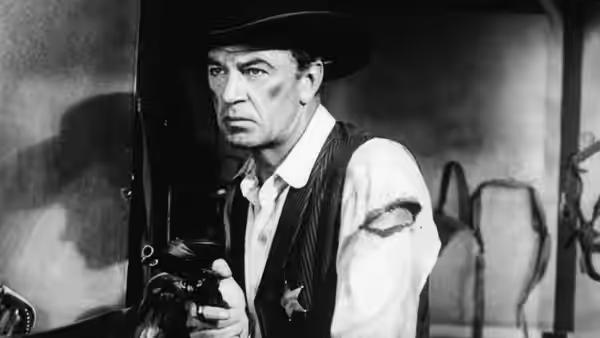
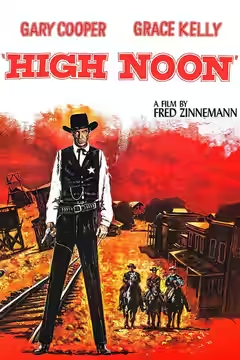
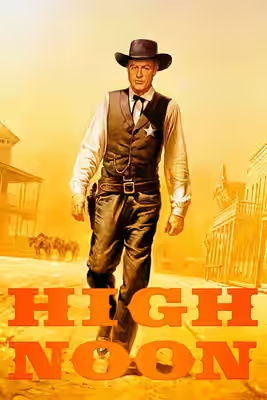
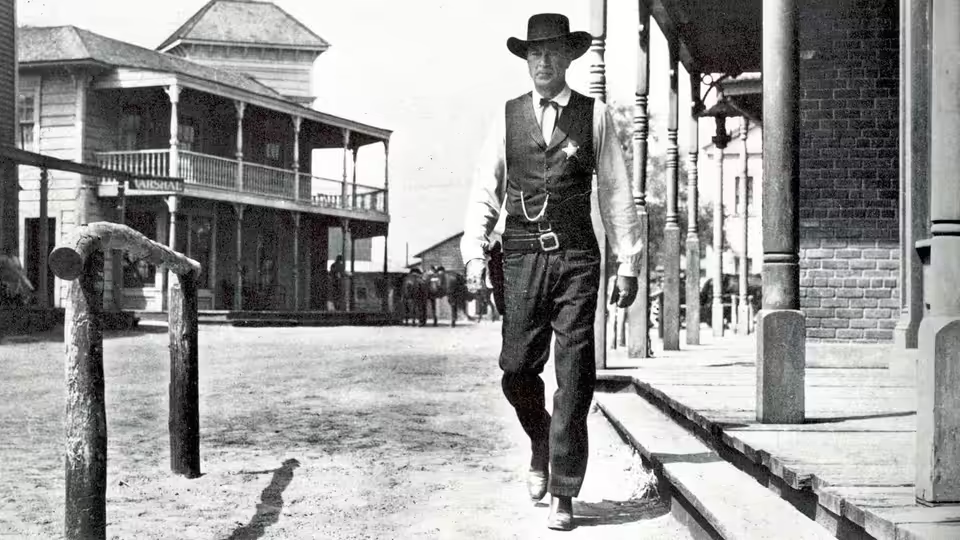
Will Kane (Gary Cooper) walking alone down the empty main street
Film review

High Noon

1952 · Directed by Fred Zinnemann · 1h 25m · MPA NR

In a sentenceA whole town discovers urgent reasons to leave Gary Cooper to it

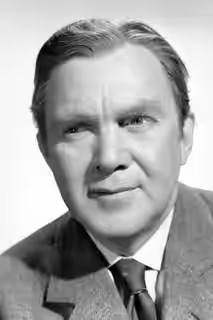
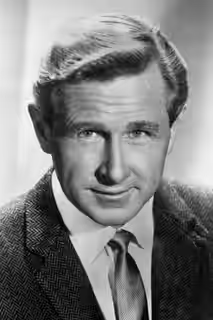
Marshal Will Kane (Gary Cooper) is nearing retirement when he faces a threat from outlaws. He needs help to confront them, but the townspeople are reluctant to stand beside him. Mayor Jonas Henderson (Thomas Mitchell) and Deputy Marshal Harvey Pell (Lloyd Bridges) are among those whose support matters as Kane tries to gather resistance. With a showdown drawing closer, Kane has to confront the possibility that the town will leave him to face the danger alone, while expecting him to keep them safe.

Plays from YouTube when you press play; nothing loads from them until then.

Fi1m review

Fred Zinnemann’s excellent Western makes its marshal’s fear painfully convincing. Gary Cooper keeps us worried for him, though Carl Foreman’s screenplay sometimes explains the townspeople’s failings more firmly than it needs to.

High Noon is an excellent Western about the disagreeable business of asking for help. Fred Zinnemann keeps the danger approaching while Marshal Will Kane tries to persuade his neighbours that protecting their town might require something of them. At 85 minutes, with the action unfolding close to real time, the film leaves little room for us to relax. That concentration suits a story in which finding somebody willing to help becomes almost as urgent as facing the outlaws.

Gary Cooper makes Kane worth worrying about. His dignity offers no assurance that he can control his nerves or survive the confrontation, and the performance never lets us confuse resolve with confidence. We were frightened for him: Gary Cooper shows the strain of remaining at his post without making the marshal seem incapable of doing his job. He looks scared enough to make us understand why the townspeople would rather leave him to it.

Floyd Crosby’s stark cinematography discourages us from settling back to enjoy the scenery, keeping the place as unwelcoming to us as its people are to Kane. Production designer Rudolph Sternad makes the town feel uncomfortably small for someone trying to find an ally, which strengthens the sense that Kane is asking people who ought to know him. The spare setting keeps our attention on the residents and their choices.

Elmo Williams gives the cutting a steady forward pressure. The near-real-time construction makes each failure to secure help feel costly: whatever Kane has gained or lost in an encounter, he has less time afterwards. Dimitri Tiomkin’s music can seem too insistent alongside Gary Cooper’s understatement, although it helps sustain our unease about the approaching showdown. We preferred the tension when the actor’s apprehension was allowed to do more of the work.

Carl Foreman’s screenplay is less persuasive when it seems determined to settle the case against the town before we have finished considering it. Self-interest is recognisable enough without being explained quite so firmly. There is a difference between declining to face outlaws and having no conscience, and the film sometimes makes that distinction harder to see than it should be. The supporting characters’ competing loyalties give us enough to question Kane’s demands, though. That uncertainty is welcome in a story which could otherwise congratulate us for having the right answer while risking nothing.

We expect Western lawmen to cope on their own, and Fred Zinnemann makes that expectation seem rather cruel. The approaching confrontation matters, but so does the uncomfortable process of discovering what neighbours believe they owe one another. We do not need to treat Kane as infallible to take his predicament seriously. Watch it for Gary Cooper, and allow for a screenplay that occasionally repeats what his face has already told us.
Critical consensus AI synthesised

80
Positive
9
Mixed
2
Negative
0

Most critics respond warmly to High Noon, with praise clustering around Gary Cooper’s understated portrayal of a frightened marshal and the suspense of the real-time structure. The reviews repeatedly admire the stark imagery, economical storytelling and pressure placed on a man whose neighbours refuse to help. Many also value its treatment of duty and collective responsibility, reading the blacklist allegory as a source of moral urgency rather than a distraction from the western.

The disagreement centres on how forcefully the film makes those ideas felt, with responses ranging from enthusiastic praise to two mixed assessments. The AV Club admires Cooper and the cinematography but finds the political allegory blunt and overinsistent. Slant Magazine likewise considers the film’s large claims disproportionate to its modest drama, while acknowledging the construction and cast. Even these dissenting reviews find craft worth admiring; they chiefly question whether the ideas justify the film’s reputation.

Radio Times
★★★★★
100

The review calls it a classic that revived careers and pioneered psychological westerns with its real-time suspense and strong performances. It singles out the controversial allegory of solidarity during the Hollywood blacklist as adding depth.

Read the full review →
The Times
20 September 2019 · ★★★★★ · Ed Potton
100

Few westerns convey fear as potently as this real-time story of a marshal facing outlaws alone after the townsfolk refuse to help. It singles out Gary Cooper’s performance of stoic terror and the theme of individual versus collective responsibility.

Read the full review →
Empire
1 January 2000 · David Parkinson
90*

The critic calls Zinnemann's film a neo-realist Western masterpiece with understated performances, stark imagery and real-time suspense that builds to a treatise on fidelity to principle. It highlights Gary Cooper's rare grit and dignity as the lawman and deems it a true classic and essential viewing.

Read the full review →
The New York Times
25 July 1952 · Bosley Crowther
90*

The critic calls it a Western drama of rare achievement and the best of its kind in several years, praising its honest and pertinent drama of moral courage in the face of bullying threats. He singles out the beautifully written script, brilliant presentation, and strong performances, especially Gary Cooper's, for making it a standout that challenges classics like Stagecoach.

Read the full review →
Time Out
29 June 2012 · SJo
90*

The critic hails it as a stark, classical western of suspense and moral conflict, with Gary Cooper's marshal confronting isolation as townsfolk abandon him. They single out the anatomy of pre-mythic manhood and Carl Foreman's blacklisted perspective.

Read the full review →
The Guardian
24 July 2022
80*

The film is a politically ambiguous proto anti-western that questions genre conventions through its real-time tension and focus on civic duty versus self-interest. It singles out the moral resolve of supporting characters and the way the story functions as a Rorschach test for audiences.

Read the full review →

Straight answers AI written, from our review

Is High Noon worth watching?
High Noon is worth watching for anyone who wants a Western more interested in fear than gunplay, and we scored it 88. Gary Cooper makes his marshal frightened enough to worry about, and the near-real-time cutting keeps the pressure on for all 85 minutes. Allow for a screenplay that sometimes explains the townspeople's cowardice more firmly than Cooper's face already has.
How long is High Noon, and what is it rated?
High Noon runs 1h 25m and is rated NR by the MPA in the US. It is a western film.
Where can I watch High Noon in the US?
High Noon is available to rent from Amazon Prime Video and Apple TV from $5.99. Availability is checked daily; the links above go straight to each service.
How does High Noon compare to The Ox-Bow Incident?
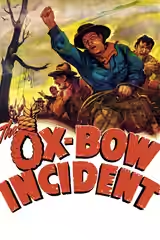
High Noon and The Ox-Bow Incident are both short Westerns about what decent townspeople permit when they are afraid, and we rate High Noon the better film. Zinnemann's is the more controlled, with Gary Cooper's strain carrying it; Wellman's lynch-mob drama is darker and more frightening because everyone in it sounds reasonable, though its sets look like sets and its ending is over-written.
What should I watch after High Noon?
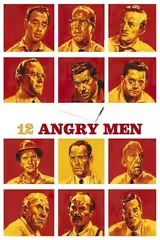
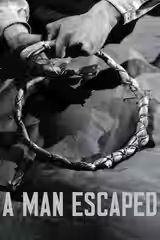
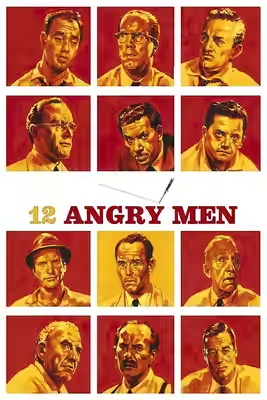
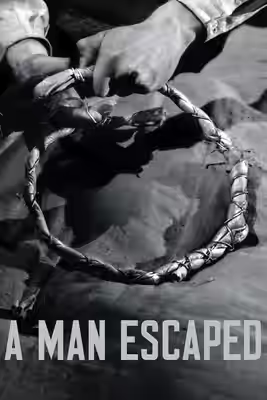
After High Noon, try The Ox-Bow Incident (1943, Fi1m 84): Another Western that asks what decent townspeople permit when fear takes charge. Then 12 Angry Men (1957, Fi1m 91): One stubborn man makes a group examine the convenience of its certainty; and A Man Escaped (1956, Fi1m 90): Patient, spare suspense built from practical decisions made under mortal pressure.

Cast

Awards

Academy Awards, 1953

Nominated
Best Director
Nominated
Best Picture
Nominated
Best Writing, Adapted Screenplay
Won
Best Actor
Won
Best Film Editing
Won
Best Original Dramatic or Comedy Score

If you liked this, try…

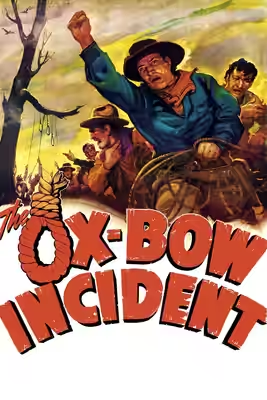
  1. The Ox-Bow Incident (1943, Fi1m 84)Another Western that asks what decent townspeople permit when fear takes charge.

  2. 12 Angry Men (1957, Fi1m 91)One stubborn man makes a group examine the convenience of its certainty.

  3. A Man Escaped (1956, Fi1m 90)Patient, spare suspense built from practical decisions made under mortal pressure.

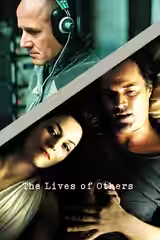
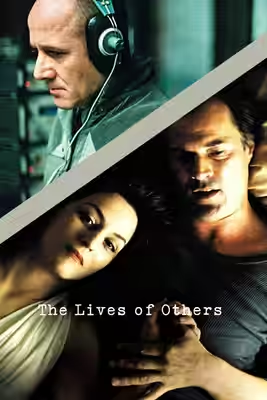
  4. The Lives of Others (2006, Fi1m 84)Duty becomes harder to define when obedience means betraying another person.

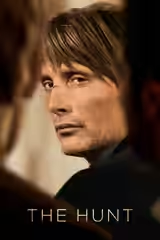
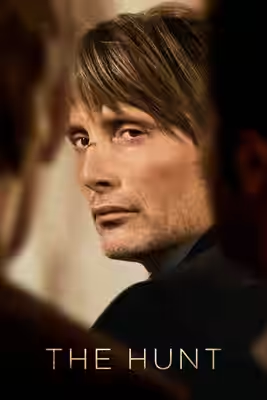
  5. The Hunt (2012, Fi1m 82)A close community turns hostile, with fear making good neighbours dangerously certain.

Free account

Know what to watch tonight

Two lists that know where things are streaming, collections you can share, your own score beside ours, and Discover that remembers what you have seen.

  • Want to see, sorted by what is streaming now
  • Seen, with your score out of ten
  • No adverts, ever