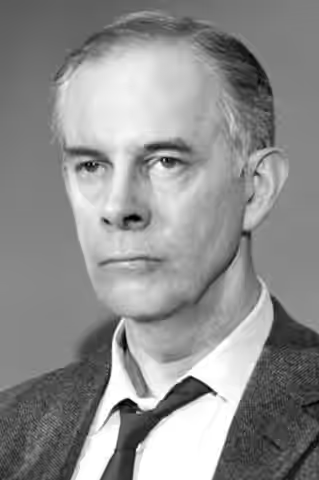
Harry Morgan spent three decades as the man beside the man, thugs and deputies and friends who fail you, before television found the part he was built for. His Colonel Potter in MASH* is steady without being dull, and that is harder than it looks.
Fi1m perspective
Colonel Potter walks into a scene in MASH* already in the middle of something, a form to sign or a complaint to hear, and he deals with it before he deals with the joke. That is the whole of Harry Morgan's method, and it took him three decades of supporting parts to get it. He is compact and gravel-voiced, and he plays authority as a man who has done the job before and expects to do it again tomorrow. The comedians around him get to be loud because he is not.
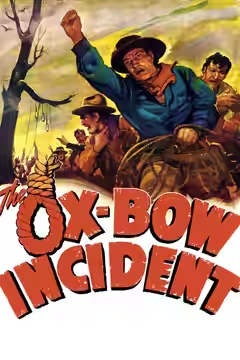
He came out of the Group Theatre in New York, with a Broadway debut in Golden Boy (1937), and into films in 1942 under the name Henry Morgan at Fox. For the next fifteen years he was the sidekick or the thug: Art Croft beside Henry Fonda in The Ox-Bow Incident (1943), then Sam Fuller in High Noon (1952), one of the friends who cannot quite bring himself to stand with Gary Cooper's marshal. Our review of High Noon did not stop to name him, and neither did our review of Cimarron (1960), where he is Jessie Rickey in a film we found handsome and slow. That is not a slight. It is what the job was: make the star's trouble look real and get out of the way.
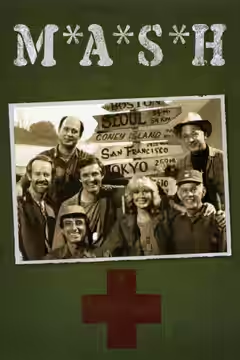
Television found him earlier than most, from the mid-1950s with December Bride, and then as Officer Bill Gannon opposite Jack Webb in the Dragnet revival (1967–70). When he joined MASH* in 1975 as the new commanding officer he had already spent thirty years standing next to the lead, and it shows. Potter is not written as a joke; he is written as a room the jokes happen in. Morgan gives him steadiness without draining the comedy out of a scene, and he directed episodes himself, so he knew what the others needed from him.
We grew fonder of Potter than we expected to, and we are fairly sure that is because Morgan never asks for it. The series' tenderness, as we said in our review, works best when it comes from how these people deal with one another rather than from a speech about why we should care, and Potter is the character most often on the receiving end of that. He grumbles, he signs the form, he stays. He played the part until 1983 and again in AfterMASH, and kept working in television and film into the 1990s.
The reservation, such as it is, is that the early films kept him in the margins, and anyone looking for a Harry Morgan performance to hang an argument on will find mostly good small ones. Start with Potter, then go back to The Ox-Bow Incident and watch the same face, thirty years younger, ride into a town about to do something terrible. He is easier to spot once you know what to look for.
Biography
Harry Morgan was an American actor whose career in film and television spanned six decades. Born Harry Bratsberg in Detroit, Michigan, he studied at the University of Chicago before turning to acting. He made his Broadway debut in 1937 and entered films in the early 1940s, initially billed as Henry Morgan. Early screen roles included The Ox-Bow Incident (1943) and Sam Fuller in High Noon (1952).
Morgan became widely recognised for his television performances. He played Officer Bill Gannon in Dragnet (1967–1970) and Colonel Sherman T. Potter in MASH (1975–1983), a role that earned him a Primetime Emmy Award for outstanding supporting actor in a comedy series in 1980. He also appeared in the spin-off AfterMASH* (1983–1985) and numerous other series and films.