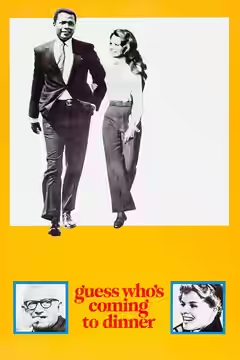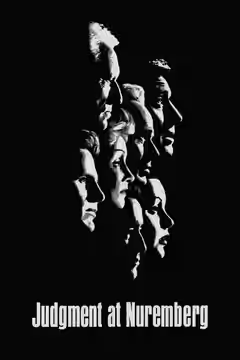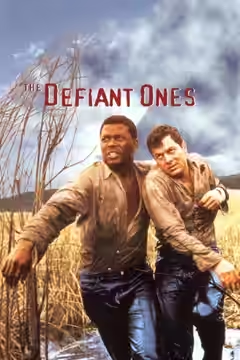
Stanley Kramer made films about the things America argued over, and then had his characters argue over them out loud. The speeches have dated; the questions under them, about what one person owes to conscience and to the state, have not.
Fi1m perspective
Sooner or later in a Stanley Kramer film, somebody stands up and says what the film is about. In The Defiant Ones (1958) it is said more than once, in words, while two convicts chained at the wrist run through a swamp. In Judgment at Nuremberg (1961) it comes from the bench and from the witness stand and runs, all told, to 191 minutes. Kramer did not trust an audience to reach the point unaided, and he was not embarrassed about it. He put it this way in 1970: "I’m not interested in message films—because I don’t have messages. I do have provocations, thoughts, doubts, challenges, and questions to offer." His characters did not always observe the distinction.
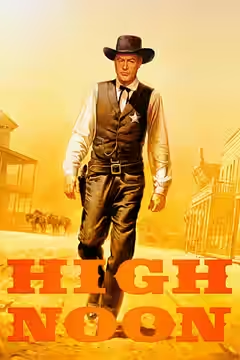
He came to directing late, having produced for a decade first. Champion and Home of the Brave in 1949 and High Noon in 1952 were made cheaply and outside the studios, about things the studios preferred not to touch, with Carl Foreman as his writing partner. He directed his first film, Not as a Stranger, in 1955, and by the end of that decade he had found the shape he would keep: a subject the country was quarrelling about, a cast of established stars, and a debate or a trial to hold them in one room. Racism in The Defiant Ones, nuclear war in On the Beach (1959), evolution in Inherit the Wind (1960), Nazi guilt in Judgment at Nuremberg, interracial marriage in Guess Who’s Coming to Dinner (1967). Spencer Tracy worked with him four times. Abby Mann wrote two of the scripts, Nuremberg among them.
The complaint against him was made at the time and most critics still make it: the films are earnest, the characters speak for positions rather than for themselves, and the camera does little but wait for the next speech. Some of that is fair. Mann’s script for Nuremberg tidies hard questions into points we are asked to accept, and the film’s confidence in its own decency comes too easily. But the same film asks how much responsibility a person can hand over to the state, and we went in braced for a lecture and came out, some way past the two-hour mark, unable to put that question down. Tracy and Montgomery Clift had stopped it being somebody else’s problem, which is more than most courtroom dramas manage.
Kramer’s gifts were a producer’s gifts: getting the subject, the stars and the backing into one place. The films are at their best when something else is happening while the speech is being made. The Defiant Ones wears better than the later, longer pictures because there is a chase under the argument, and when the argument runs out the chase keeps going. Start with the chain, then give the trial an evening when nobody is hoping for an early night.
Biography
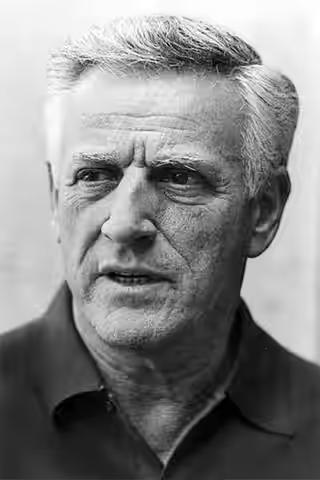
Stanley Kramer (1913–2001) was an American film producer and director. He produced and directed the 1961 film Judgment at Nuremberg.
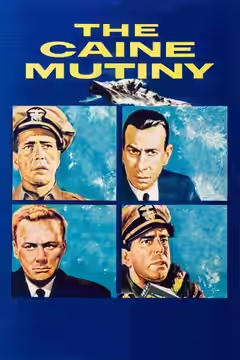
He is known for producing High Noon (1952), Champion (1949) and The Caine Mutiny (1954). As a director he worked on The Defiant Ones (1958), On the Beach (1959), Inherit the Wind (1960), It's a Mad, Mad, Mad, Mad World (1963) and Guess Who's Coming to Dinner (1967).
Kramer received the Irving G. Thalberg Memorial Award in 1961 and was nominated for nine Academy Awards.