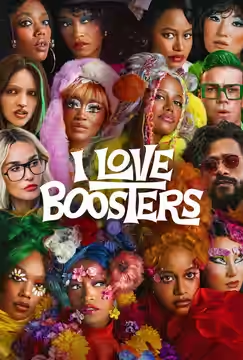
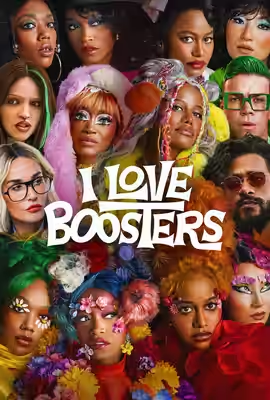
Boots Riley’s second film is loud, bright and often funny, and Keke Palmer holds it together for as long as anyone could. Then the science fiction arrives, and the argument about work and theft gets lost in the machinery.
Boots Riley’s first film, Sorry to Bother You (2018), was about having a job. This one is about shopping, or about the women who have decided not to pay for it. Corvette and her crew lift designer clothes and sell them cheap on their own streets; the film calls this community service, and for an hour it makes the case with enough good humour that we were happy to go along. Then it goes somewhere else entirely and leaves the argument on the shop floor. It is a comedy with a great deal on its mind and not enough of it written down.
Palmer is the reason to see it. She plays Corvette as a woman who moves through a shop the way other people move through their own kitchen, unhurried, already knowing where everything is, and she can turn a security guard’s approach into a small dance without the film stopping to point it out. Naomi Ackie’s Sade is the crew’s caution and Taylour Paige’s Mariah its appetite, and the three of them talking over each other in a car is the best writing in the film. LaKeith Stanfield, as a man the credits call only Pinky Ring Guy, does very little and is funny doing it, which has become his particular gift.
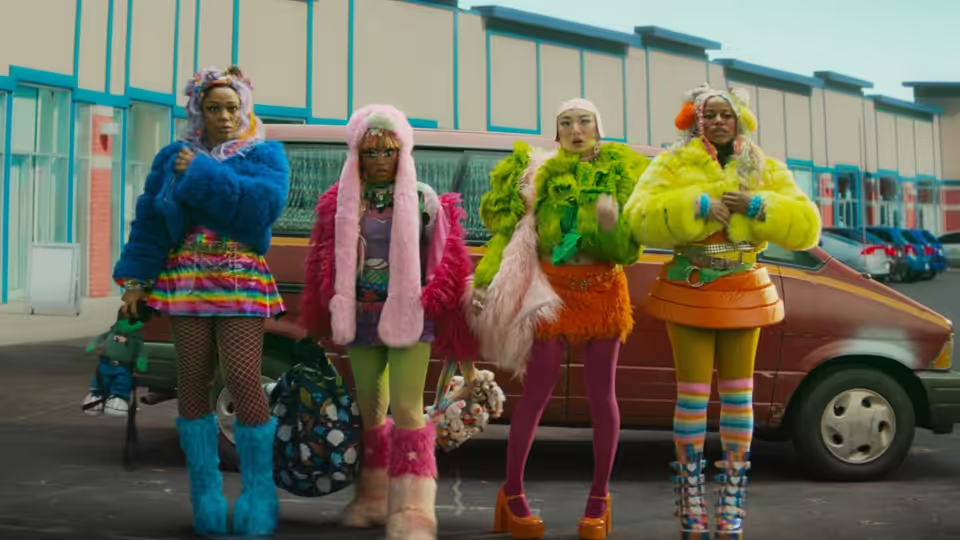
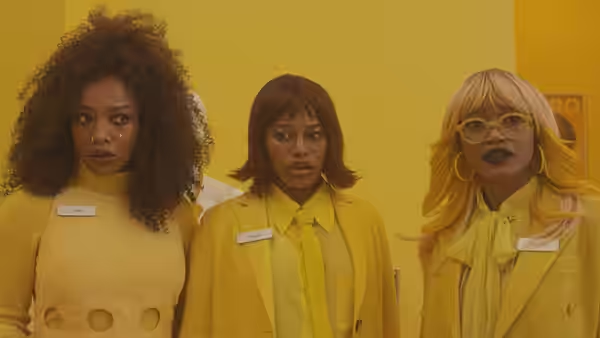
The film looks handmade, and that is a compliment. Natasha Braier shoots the boutiques in flat, expensive white and the neighbourhood in colours the boutiques would never stock, so that every stolen garment looks better once it has crossed the line. Christopher Glass builds shops with too much glass and too few exits and a police vehicle that is plainly a tank with a badge on it. Shirley Kurata’s costumes do a lot of the storytelling: the crew’s own clothes are louder and better than anything they steal. Matthew Hannam and Terel Gibson cut the boosts tight and the getaways tighter, and Merrill Garbus and Nate Brenner’s score bangs and squelches under them like a stereo in a car with the windows down.
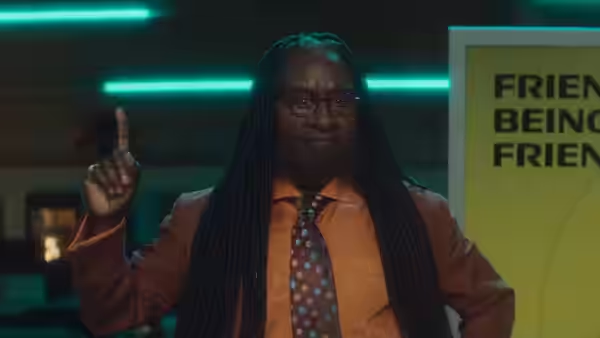
We laughed, properly and out loud, at the first big boost, which is built from sight gags rather than lines and which arrives at a police tank driven by Eric André with a straight face. Riley has a habit of naming minor characters for their job in the propaganda, and here Kara Young is credited as Crying Black Mother and Jason Ritter as Upstanding Community Member; both get a scene that is exactly as funny as those names suggest, and no more. That is the register throughout. The jokes are about systems, and the people in them are labels.
The trouble comes later, and we will not describe it. What we can say is that the film is billed as science fiction and eventually behaves like it, and that once it does it is far more interested in its own machinery than in the women we came in with. We felt the film slip out of our hands in its last stretch, and then we felt cross about it, because the first hour had earned better than a shrug.
Most critics have been kinder than this, and we can see why: nothing else looks or sounds like it, and the politics are stated with a directness that is rare. But Sorry to Bother You had one strange idea and kept a man’s job at the centre of the frame while it played out. This film has three or four strange ideas and no job, and by the end the shoplifting that gave it its title has become a rumour.
See it in a cinema, with people who will laugh at a tank, and go in knowing that the first hour is the part worth holding on to. It runs 113 minutes.