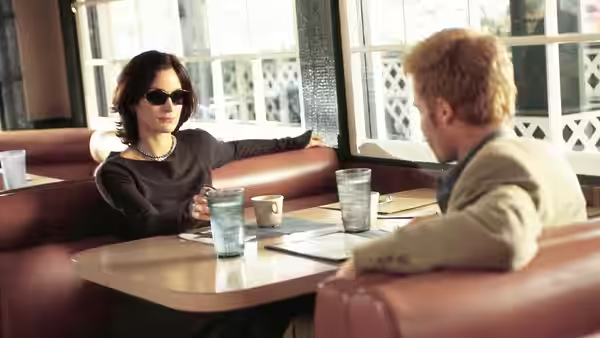
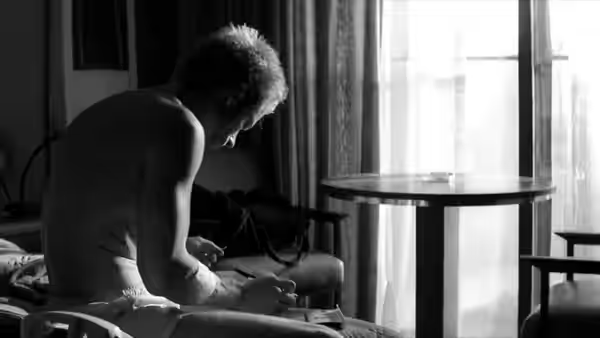
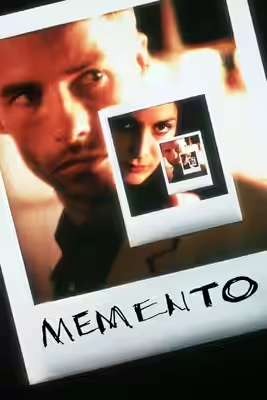
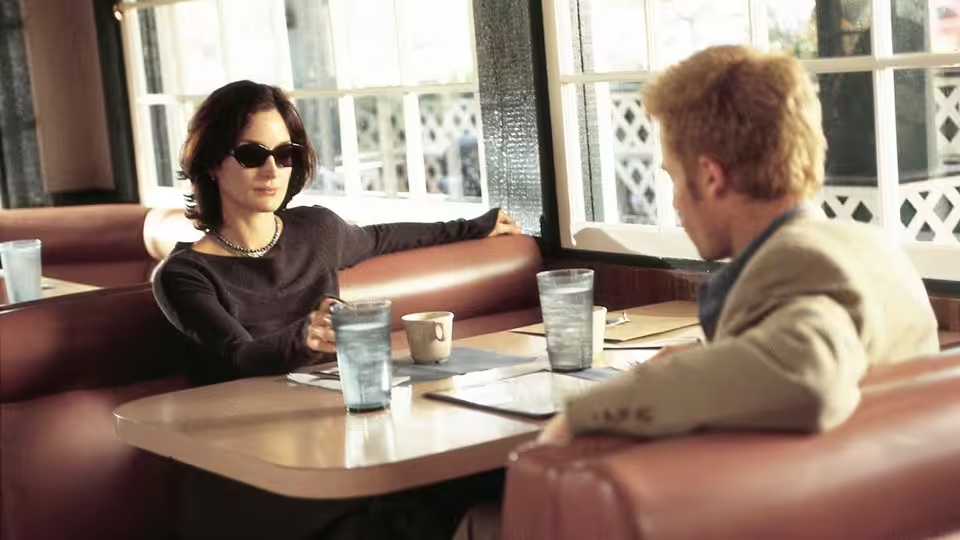
Natalie (Carrie-Anne Moss) sits across from Leonard (Guy Pearce) in a diner booth
Film review

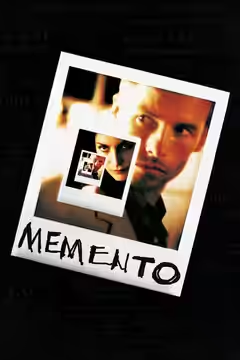
Memento

2000 · Directed by Christopher Nolan · 1h 53m · MPA R

In a sentenceA man with no short-term memory should not be this persuasive

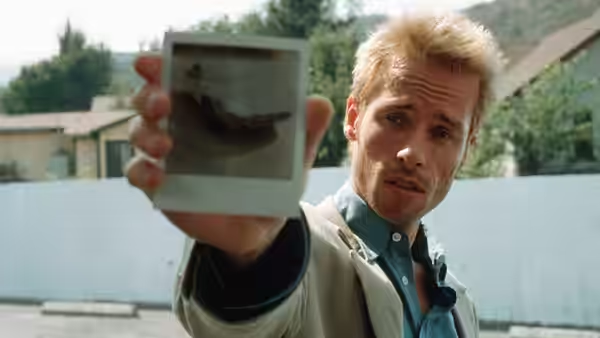
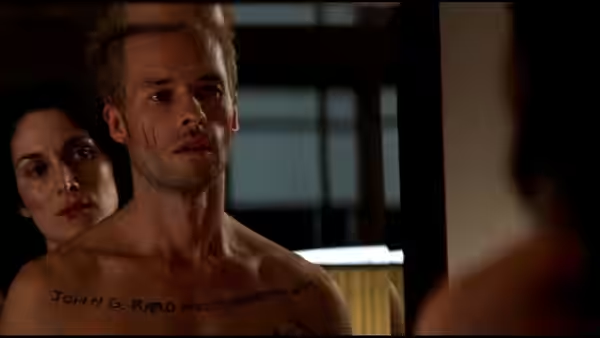
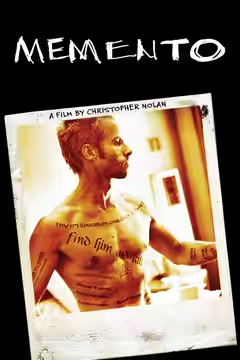
Leonard (Guy Pearce) searches for his wife’s killer while living with short-term memory loss. He relies on Polaroid photographs and tattoos to keep track of information he cannot hold in his head. His search unfolds backwards, with encounters presented before the events that lead to them, so the circumstances behind his actions emerge only afterwards. The question of what he can trust accompanies the search for the person he is pursuing. Carrie-Anne Moss plays Natalie and Joe Pantoliano plays Teddy in this mystery thriller written and directed by Christopher Nolan.

Fi1m review

Christopher Nolan’s backwards thriller is gripping, darkly funny and carried by Guy Pearce’s vulnerable Leonard. Some supporting characters exist chiefly to keep us guessing, but the difficult structure makes his memory loss frightening.

Memento makes us work for a simple reason: Leonard cannot retain new memories, and Christopher Nolan wants us to share his difficulty in judging what is happening. Guy Pearce plays a man pursuing his wife’s killer with Polaroids and tattoos to keep him on course. The story moves backwards, asking us to make decisions before we have the information that would usually support them. It is an excellent thriller, and its cleverness matters because being wrong feels dangerous.

Dody Dorn’s editing makes this difficult arrangement surprisingly easy to follow from moment to moment. We understand the immediate question even when we cannot place it in the larger story, so the suspense survives the effort of keeping track. As the order runs backwards, a judgement formed during one encounter becomes something to reconsider when we see what preceded it. That repetition could have been wearying; Dorn makes it an invitation to look harder. We keep returning to events with a little more information about the people involved.

Pearce keeps Leonard from becoming a walking explanation of his condition. His determination is persuasive, but he also allows a helplessness that makes the practical business of remembering hard to watch. We were frightened by his dependence on photographs and tattoos: these are the things he must trust when he cannot check his own recollection. Pearce makes that trust seem necessary, even when we want him to hesitate. He is convincing even when Leonard’s confidence seems least sensible.

Wally Pfister’s cinematography gives the dusty Los Angeles surroundings an unwelcoming plainness. There is little comfort in looking around, which suits a story in which getting your bearings is already hard work. Patti Podesta’s production design helps make the places Leonard passes through feel indifferent to him; nothing about the surroundings promises that somebody will take care of this man. The effect works because the physical world remains ordinary enough for his difficulty to seem worse.

David Julyan’s score keeps the anxiety close to Leonard, an effective choice when the editing could so easily monopolise our attention. There is dry humour, too, and Joe Pantoliano’s Teddy gives the film some welcome ease without making us relax. Carrie-Anne Moss’s Natalie is compelling for similar reasons: watching her means trying to judge someone with too little to go on. Both actors make that uncertainty entertaining.

The reservation is that Natalie and Teddy sometimes seem written chiefly to regulate what we know. Nolan’s screenplay gives us plenty to consider about them, but less reason to think about their lives outside Leonard’s search. The cast makes this easier to accept than it might have been, and a thriller is entitled to keep its secondary characters mysterious. Still, the film can narrow our attention so firmly to the next piece of information that we start watching these people chiefly for clues.

As a murder mystery, Memento asks more of concentration than of our familiarity with the genre. Its central pursuit is straightforward; the excitement comes from having to reconsider what we thought we understood, without losing sympathy for the man doing the pursuing. That is enough to make its 113 minutes absorbing, despite the limited space given to the supporting characters. Give it an uninterrupted evening, preferably with someone prepared to disagree about what was obvious.

Critical consensus AI synthesised

84
Positive
8
Mixed
1
Negative
0

Most critics greet Memento with strong enthusiasm, praising a reverse chronology that makes the audience share its protagonist’s uncertainty rather than merely admire a clever puzzle. The reviews repeatedly credit the structure with sustaining suspense and making questions about memory, identity and perception part of the thriller’s action. Guy Pearce’s performance draws particular praise, with Joe Pantoliano also singled out. Several critics find wit and humour alongside the disorientation, giving the intricate plotting some welcome lightness.

The main disagreement concerns what remains once the puzzle is solved. Most critics find substance in the film’s treatment of unreliable memory, but The New York Times admires the ingenuity while finding the confusion artificial and the insight limited. That is a distinct minority position in a strongly positive spread: the reservations concern the film’s lasting impact more than its ability to keep an audience occupied.

Radio Times
★★★★★ · David McGillivray
100

This dazzling, highly original anti-thriller features a complex jumbled narrative that moves backwards in time and is complicated by the protagonist's short-term memory loss. The ingenious structure rewards concentration and underscores that memory, though unreliable, shapes our sense of reality.

Read the full review →
The Guardian
20 October 2000 · Peter Bradshaw
90*

Bradshaw calls Nolan's follow-up to Following a terrific, exciting, demanding, agile, sly, witty and fun film that keeps viewers off-balance with its fragmented structure about memory, time and identity. He singles out the complex thriller plotting, performances (especially Guy Pearce and Joe Pantoliano) and the shocking twist for praise.

Read the full review →
Total Film
20 October 2000
90*

The review lauds the film's clever non-linear structure that mirrors the protagonist's memory loss, calling it a masterful execution of a complex concept with excellent leads and rewarding suspense and humor.

Read the full review →
Empire
1 January 2000 · Angie Errigo
85*

The critic praises Nolan's imaginative and challenging exploration of memory and time through a reversed narrative structure in this compelling murder mystery, highlighting the strong performances especially Pearce's.

Read the full review →
Los Angeles Times
22 January 2001 · festival review · Kenneth Turan
85*

The critic praises Nolan for succeeding with an intricate, despairing premise that increases tension by telling the story backward. It places the audience inside the protagonist's head, turning a simple story into something complex and disorienting.

Read the full review →
Variety
14 September 2000 · festival review · Lisa Nesselson
85*

The critic hails the film as a bravura, ingeniously structured puzzle with Einstein-caliber dexterity in deconstructing time for a disturbing revenge tale. Excellent performances and editing sustain the mystery until a punch-packing resolution.

Read the full review →

Straight answers AI written, from our review

Is Memento worth watching?
Memento is worth watching for anyone prepared to concentrate on a backwards murder mystery, and we scored it 88. Guy Pearce makes Leonard's dependence on Polaroids and tattoos frightening rather than merely clever, and Dody Dorn's editing keeps each scene easy to follow even when the whole is not. Watch it with someone willing to argue about it afterwards.
How long is Memento, and what is it rated?
Memento runs 1h 53m and is rated R by the MPA in the US. It is a mystery and thriller film.
Where can I watch Memento in the US?
Memento is streaming on Hulu, Peacock, Netflix, Tubi, The Roku Channel, Disney+ and Amazon Prime Video in the US, and it is also available to rent from Amazon Prime Video from $2.99. Availability is checked daily; the links above go straight to each service.
How violent or frightening is Memento, and is it suitable for children?
Memento carries a UK 15 certificate, so it is not for younger children. It is a thriller about a man hunting his wife's killer, and the fear comes less from what is shown than from watching Leonard trust photographs and tattoos he cannot check. Teenagers who can manage the backwards structure should find it gripping rather than upsetting.
How does Memento compare to The Conversation?
Memento is the faster and more demanding of the two, while The Conversation is quieter and more patient. Both follow an isolated man trying to make sense of evidence he cannot fully trust, but Coppola's film gives its central figure more room to hurt, and its supporting characters are less clearly there to feed the plot. Choose Memento for the puzzle and The Conversation for the loneliness.
What should I watch after Memento?
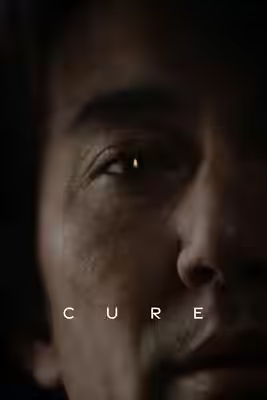
After Memento, try The Conversation (1974, Fi1m 92): Patient surveillance turns uncertain evidence into dread, with a similarly isolated central figure. Then The Vanishing (1988, Fi1m 88): A search for answers becomes frightening enough to make certainty seem overrated; and Cure (1997, Fi1m 85): A murder investigation grows stranger as memory and responsibility become harder to separate.

Cast

Awards

Academy Awards, 2002

Nominated
Best Film Editing
Nominated
Best Writing, Original Screenplay

The Waldo Salt Screenwriting Award, 2001

Won
The Waldo Salt Screenwriting Award

If you liked this, try…

  1. Following (1998) · not reviewed yetAnother Nolan thriller where watching closely offers less protection than expected.

  2. The Conversation (1974, Fi1m 92)Patient surveillance turns uncertain evidence into dread, with a similarly isolated central figure.

  3. The Vanishing (1988, Fi1m 88)A search for answers becomes frightening enough to make certainty seem overrated.

  4. Cure (1997, Fi1m 85)A murder investigation grows stranger as memory and responsibility become harder to separate.

  5. Last Year at Marienbad (1961, Fi1m 82)For the uncertainty of remembering, pursued through formal rooms and repeated conversations.

Free account

Know what to watch tonight

Two lists that know where things are streaming, collections you can share, your own score beside ours, and Discover that remembers what you have seen.

  • Want to see, sorted by what is streaming now
  • Seen, with your score out of ten
  • No adverts, ever